
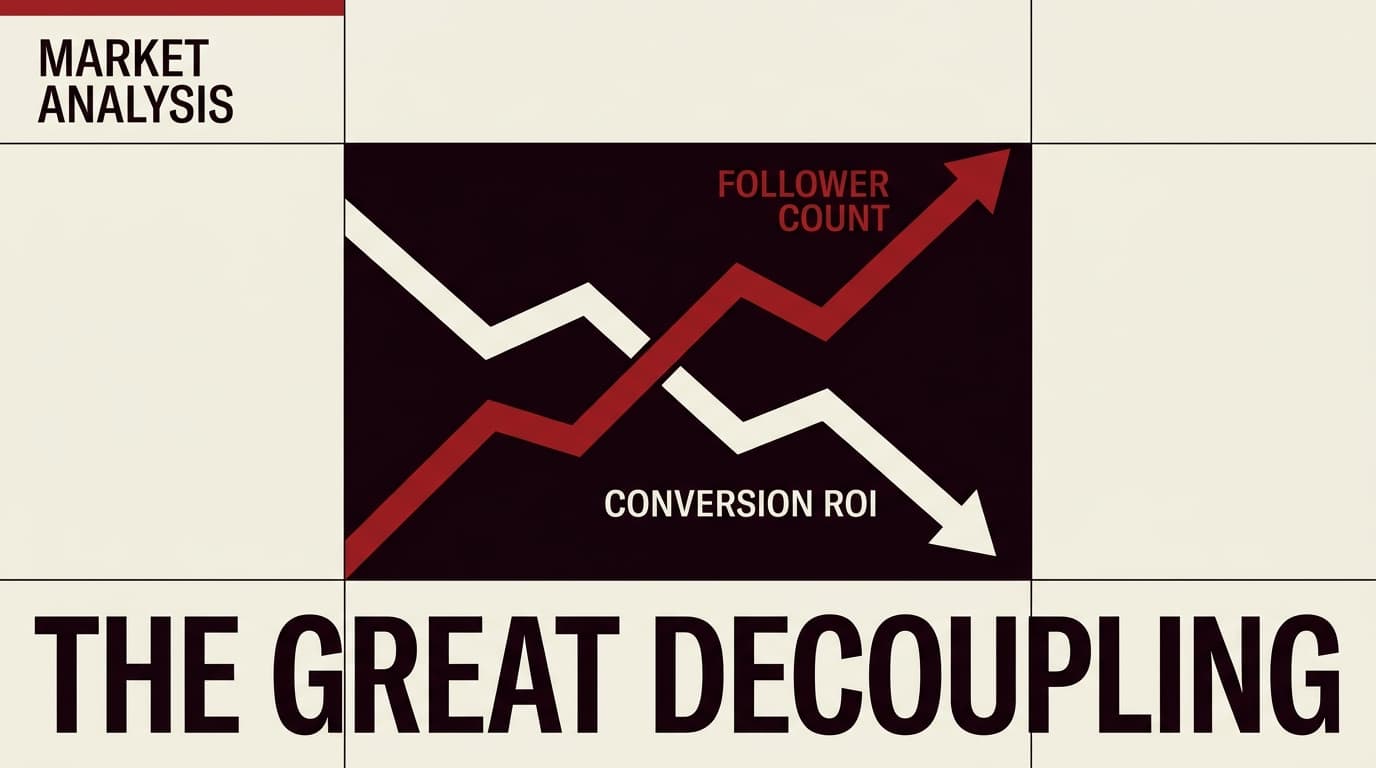
Why does a creator with two million followers often drive fewer sales than a niche expert with fifty thousand?
It's the question haunting every Q4 media plan. For years, the industry operated on a linear assumption: more followers equals more influence, which equals more revenue. But as we move through 2026, that logic has officially broken. Recent data from Sprout Social and HubSpot indicates a sharp decoupling of reach and ROI. We are currently witnessing a massive creator pricing arbitrage where the most expensive talent on the market is frequently the least efficient at moving product.
To understand this, you have to look past the vanity metrics. The 'sweet spot' for conversion efficiency has migrated down the long tail. While Meta's Q2 revenue jumped 28% year-over-year—hitting $60.8 billion per recent earnings reports—the cost of reaching an audience on these platforms continues to climb, making every wasted dollar on a low-converting influencer a liability for brand margins.
The Law of Diminishing Digital Intimacy
Think of a creator’s audience like a dinner party. When you’re hosting six people at a table, the conversation is intimate, focused, and persuasive. If one person recommends a wine, the other five are likely to try it. Now, imagine that dinner party scales to a stadium of 50,000 people. The person at the microphone is no longer a friend; they are a performer. The intimacy is gone, replaced by parasocial observation.
This is the mechanism behind the current shift in influencer ROI statistics 2026. As a creator’s follower count grows, the composition of their audience changes from 'active community' to 'passive consumers.'
Based on internal agency benchmarks and aggregated data from platforms like Sprout Social, we see a clear trend: once a creator crosses the 500,000-follower threshold, their engagement rate typically drops by 40-60%. More importantly, the intent of that engagement shifts. A micro-influencer’s comment section is filled with questions about product sizing and shipping; a mega-influencer’s comment section is filled with emojis and memes. You aren't paying for a referral anymore; you're paying for a billboard that people have learned to walk past.
The Data Behind the Decoupling: Reach vs. Resonance
In the first half of 2026, the discrepancy between follower count and conversion has become a quantifiable gap. According to HubSpot's latest state of marketing report, micro-influencers (10k-50k followers) are currently delivering a 20% higher conversion rate than their counterparts with over 1 million followers.
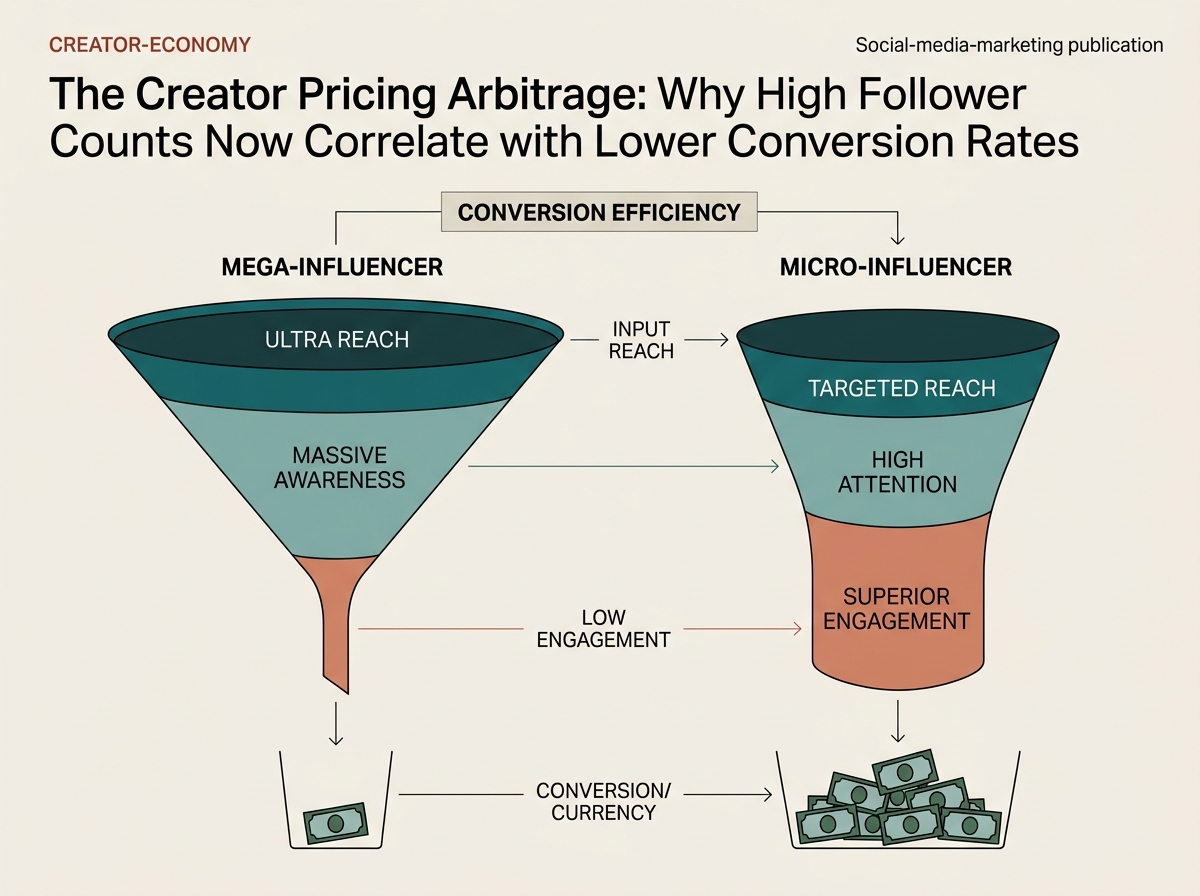
This isn't just about the algorithm favoring smaller accounts—though that plays a role. It’s about the fragmentation of attention. In an era where answer engine optimization (AEO) tools like Profound are changing how users discover information, the 'authority' of a creator is being re-evaluated. Users no longer look to the 'famous' for advice; they look to the 'competent.'
How AEO is changing creator discovery
When you analyze creator marketing benchmarks, the 'Efficiency Frontier'—the point where you get the most conversion for every dollar spent—now sits between 30,000 and 85,000 followers. Beyond this, the CPM (cost per mille) begins to outpace the growth in conversion probability. You are effectively paying a 'fame tax' that yields no tangible return on the bottom line.
Why Audience Expectations Shift at Scale
Why does this happen? The answer lies in the psychological contract between the creator and the follower.
- The Relatability Gap: As creators gain wealth and status through their success, their lifestyle becomes less relatable to the average consumer. A creator showing off a $5,000 handbag while pitching a $20 mascara creates cognitive dissonance.
- The Content Dilution: To maintain a massive following, creators must broaden their content to appeal to the 'lowest common denominator.' This dilution kills the niche authority that drove their initial growth.
- The Ad-Blindness Effect: Large creators are often 'saturated.' Their feeds are so full of #ad and #gifted content that the audience has developed a specialized form of banner blindness.
In contrast, the micro-influencer is still in the 'utility' phase of their career. Their content is often instructional or deeply rooted in a specific hobby or profession. When they recommend a tool, it’s perceived as a professional endorsement rather than a paid script. This is why micro-influencer conversion rates remain the gold standard for performance-oriented social buyers.
The Q4 Arbitrage: How to Spot the Efficiency Sweet Spot
As you head into the Q4 holiday rush, the temptation is to go big. You want the splashy name. You want the reach. But if your goal is ROAS (Return on Ad Spend), you should be looking for 'Arbitrage Creators.'
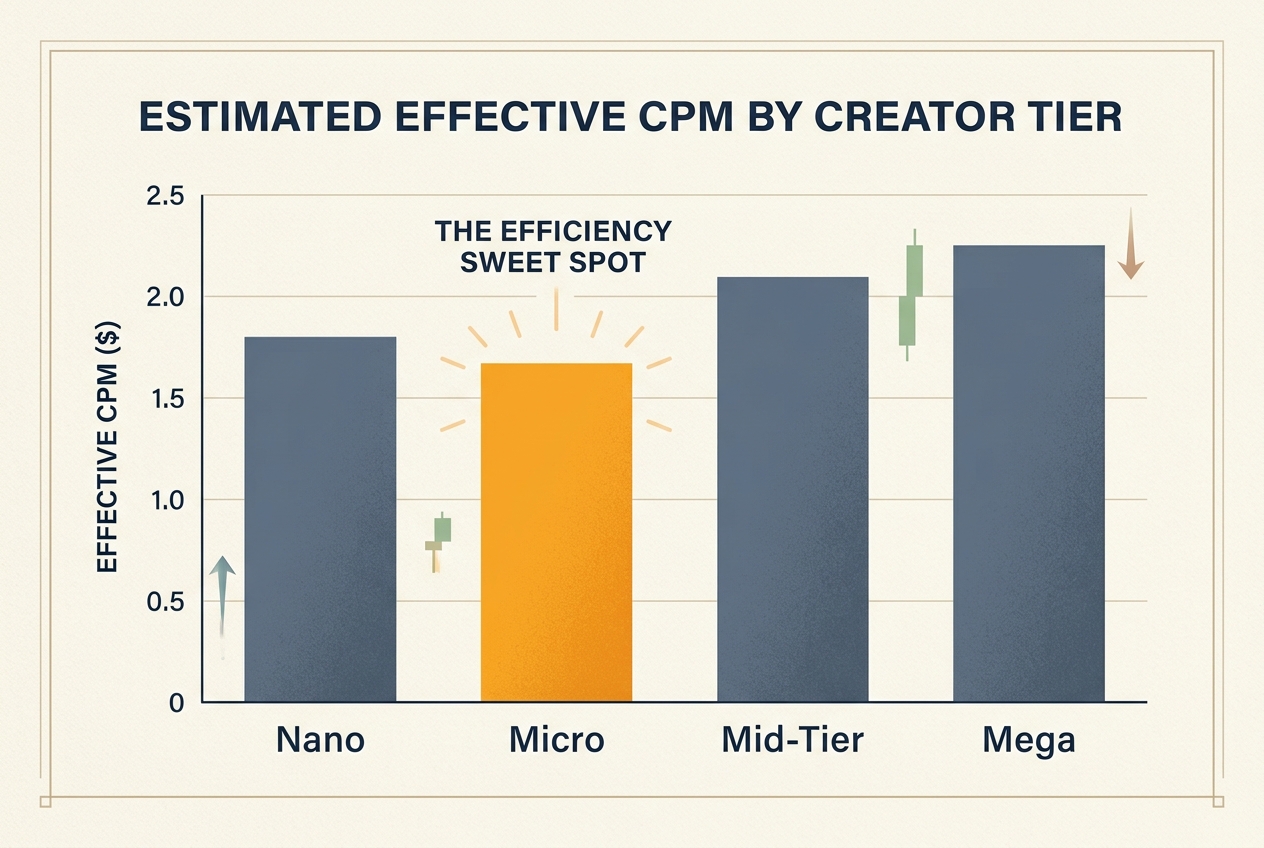
These are creators who have high technical authority but haven't yet adjusted their pricing to reflect their true market value. Look for these three signals:
- High Save-to-Like Ratio: A 'Like' is cheap. A 'Save' indicates the content was useful enough to revisit. Creators with a save rate above 3% are your conversion engines.
- Vertical Saturation: Does the creator own a specific keyword or niche? If you search for 'best hiking boots' on TikTok and the same creator appears in the top three videos, they have more conversion power than a lifestyle vlogger with 10x the followers.
- Comment Sentiment Analysis: Use tools like Brandwatch or Sprout Social to analyze the nature of the comments. You want to see 'Where did you get that?' not 'You're so pretty.'
Using social listening for creator vetting
The Algorithmic Reality: Why Reach is a Lie
We need to stop talking about 'Follower Count' as if it represents a guaranteed audience. Since the major algorithm shifts of late 2025, platforms like TikTok and Instagram have moved almost entirely to an interest-based graph rather than a follower-based graph.
When a mega-influencer posts, the algorithm doesn't show it to all 2 million followers. It shows it to a sample. If that sample doesn't engage immediately, the post dies. A micro-influencer with a highly engaged 50,000-person following might actually get more total views on a specific video than a stagnant mega-influencer because their initial 'seed' audience is more likely to trigger the algorithm's distribution signals.
This is why the follower count vs engagement debate is moving in favor of engagement. In 2026, reach is earned, not owned. Buying a post from a large creator is effectively buying a chance at reach, whereas buying from a high-engagement micro-influencer is buying a probability of conversion.
Strategic Pivot: From 'Influencer' to 'Content Partner'
If the traditional influencer model is failing, what replaces it? The most successful brands in 2026 are shifting their budget from 'Shoutouts' to 'Content Production.'
Instead of paying a mega-influencer $50,000 for one post that disappears in 24 hours, they are paying ten micro-influencers $5,000 each to create high-quality assets. These assets are then used as creative for Spark Ads or Meta Advantage+ campaigns. This allows the brand to control the distribution (the reach) while benefiting from the creator's inherent credibility (the conversion).
This 'Creator-Led Ad' strategy bypasses the diminishing returns of large accounts. You get the conversion efficiency of the micro-influencer and use the platform's paid tools to scale that efficiency to the millions of people the mega-influencer would have reached anyway—but at a lower effective CPA.
What This Means for Your 2026 Strategy
To capitalize on this arbitrage, you must change how you measure and procure creator talent.
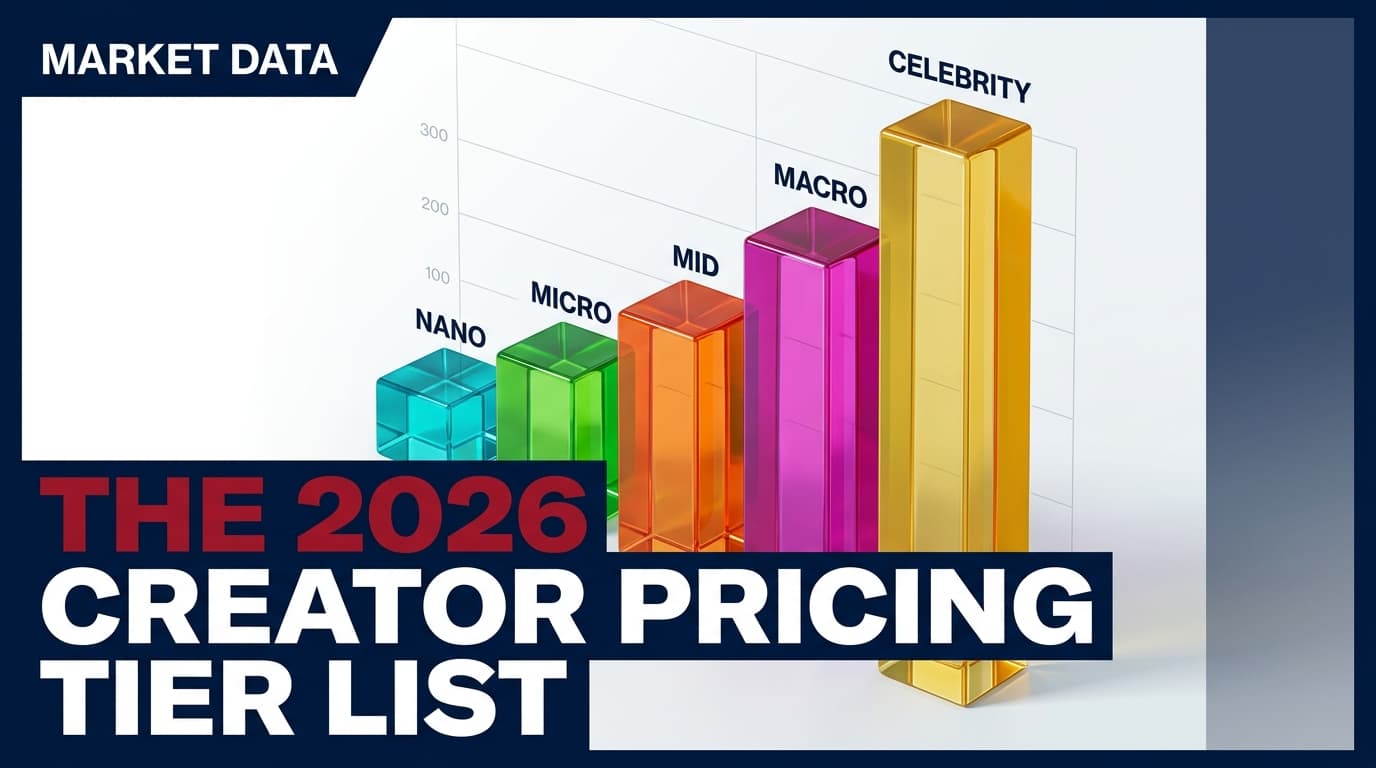
- Kill the 'Follower' Tiering: Stop grouping creators by 100k, 500k, and 1M. Group them by 'Conversion Category' (e.g., Educational, Aesthetic, Entertaining).
- Benchmark Against Paid Social: If a creator’s organic reach results in a higher CPM than your average Meta ad set, and their conversion rate isn't at least 2x higher, they are overpriced.
- Prioritize Long-Term Whitelisting: Negotiate whitelisting (or 'Partnership Ads') rights into every contract. The value is no longer in their feed; it’s in their face and their voice being used in your optimized funnels.
- Focus on 'Searchable' Creators: With the rise of AEO and TikTok Search, creators who produce evergreen, searchable content provide a much higher long-term ROI than those who chase trending audios.
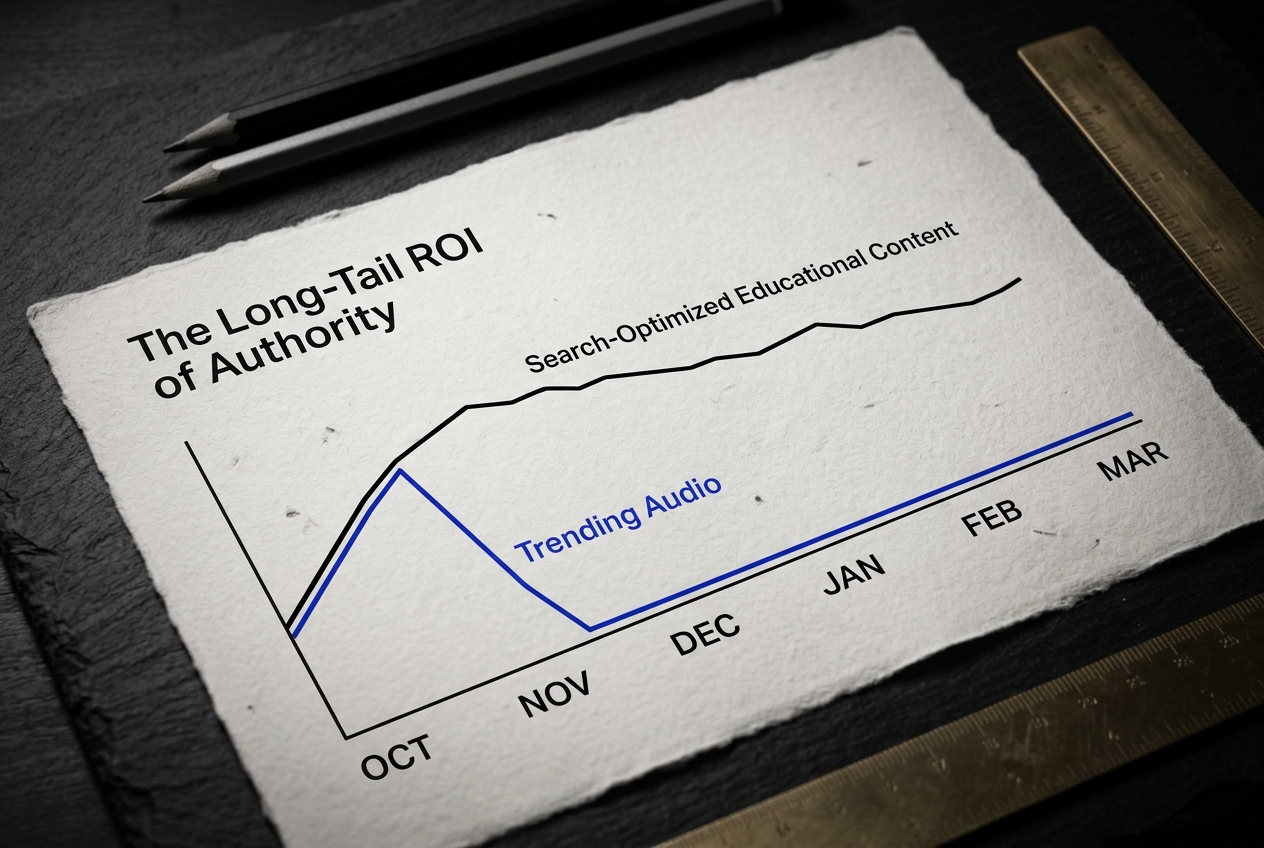
The decoupling of reach and ROI isn't a temporary glitch; it's the natural maturation of the creator economy. The brands that stop paying for the 'stadium' and start paying for the 'dinner table' are the ones that will win Q4.
FAQ