
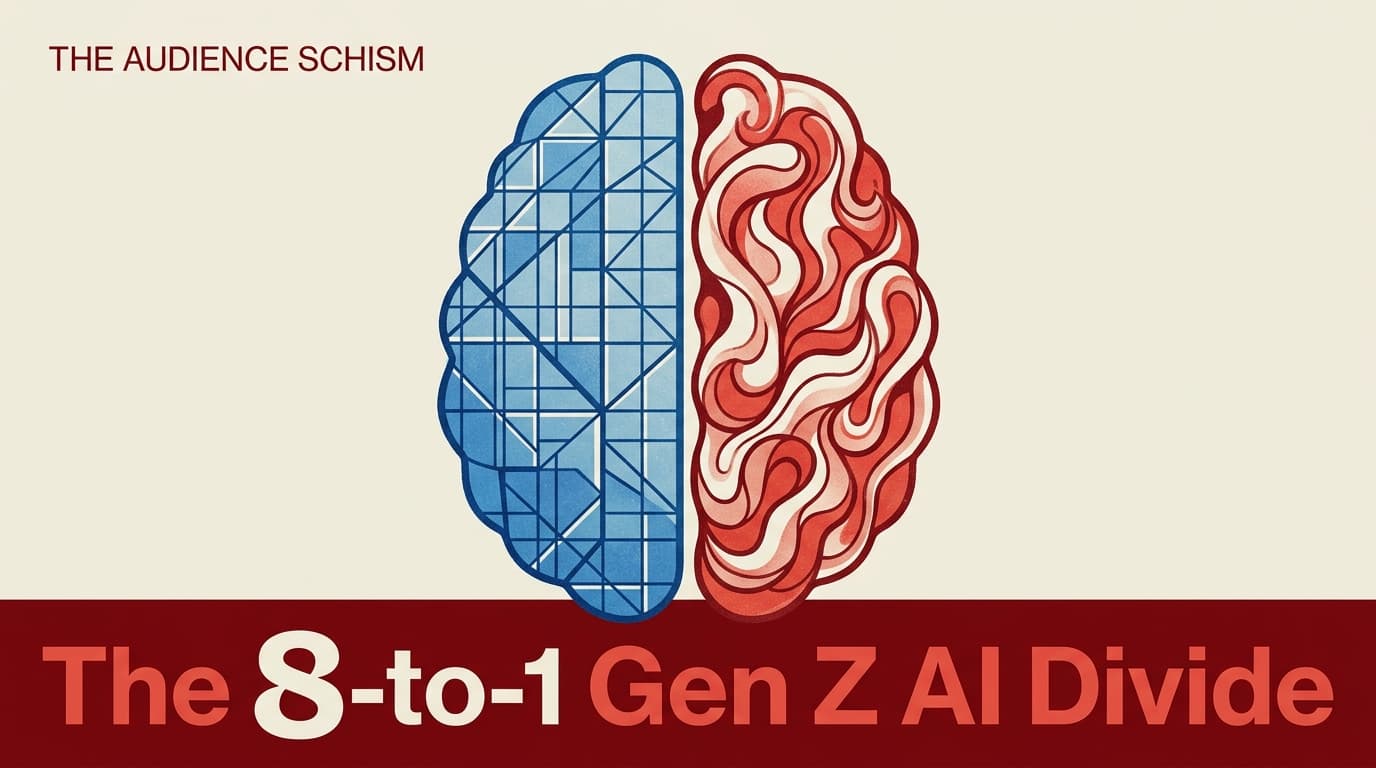
New data from Search Engine Journal reveals a startling generational schism in the AI landscape: Gen Z users now favor Anthropic’s Claude by an nearly 8-to-1 margin compared to Boomers. While OpenAI’s ChatGPT remains the household name for legacy demographics, the shift suggests that younger consumers are gravitating toward Claude’s more nuanced, human-like reasoning and creative capabilities.
For social media marketers and brand strategists, this isn't just a stats curiosity—it's a directive to stop treating "AI Search" as a monolith. If your target audience is under 25, optimizing for ChatGPT’s more literal, structured responses might mean you’re invisible where they are actually searching. You've spent years segmenting social ads by age; it's time to apply that same rigor to how your brand appears in LLM-generated recommendations.
Key takeaways
- The Claude Surge: Gen Z preference for Claude outpaces Boomers by a factor of 7.8, indicating a deep divide in how different age groups interact with generative agents.
- Optimization Divergence: ChatGPT favors structured, data-heavy inputs; Claude rewards narrative depth and context-rich brand storytelling.
- Beyond Keywords: Effective LLM optimization now mirrors the move toward building content briefs around people rather than just chasing search volume.
- Ad Vulnerability: Early tests of ChatGPT ads show poor contextual alignment, making organic LLM visibility the more reliable play for high-trust brands.
The Data Behind the Generational AI Schism
Writing for Search Engine Journal, Greg Jarboe highlights a trend that should worry OpenAI’s growth team. The data suggests that while ChatGPT has the "first-mover" advantage, it is increasingly viewed as a utility tool by older users—a more conversational Google. In contrast, Gen Z appears to use Claude as a creative partner. The 8-to-1 lead among Gen Z isn't just about market share; it's about the nature of the interaction.
Per the SEJ report, this preference is tied to Claude’s "Constitutional AI" framework, which often results in less robotic, more empathetic-sounding prose. For a generation raised on the authenticity of TikTok and the conversational intimacy of Discord, the "As an AI language model" stiffness of early ChatGPT iterations was a turn-off. Even as GPT-4o closes the gap, brand perception has already solidified. Claude is the "cool" alternative; ChatGPT is the "homework" tool.
This mirrors shifts we've seen in social media. Just as Gen Z moved to platforms that allowed for more raw, unpolished expression, they are now choosing the LLM that feels less like a database and more like a peer. This has immediate consequences for TikTok's expansion of ad placements and how brands must bridge the gap between social discovery and AI-driven validation.
Why LLM Optimization for Brands Must Fragment
If you are a brand marketing lead, you can no longer afford a "one-size-fits-all" approach to Generative Engine Optimization (GEO). The technical requirements to rank in a ChatGPT "Search" result differ fundamentally from the requirements to be the top recommendation in a Claude conversation.
ChatGPT’s architecture, particularly with its browsing features, heavily weights authoritative, structured data. It looks for clear hierarchies, bulleted lists, and explicit claims backed by high-domain-authority citations. If you want to be the "Best Eco-Friendly Running Shoe" in a ChatGPT query, your technical SEO and schema markup need to be flawless.
Claude, however, excels at synthesizing sentiment. Because Gen Z uses it for more complex, subjective queries—"Help me find a brand that actually cares about sustainability and doesn't just greenwash"—Claude looks for narrative consistency across the web. It analyzes long-form interviews, Reddit threads, and detailed reviews to build a "personality profile" of a brand. To win here, you need a depth of content that keywords alone cannot provide.
The Failure of Contextual AI Advertising
While brands scramble to optimize for organic AI mentions, the paid side of the house is hitting significant roadblocks. Recent reporting from Adweek reveals that OpenAI is testing exclusion targeting for ChatGPT ads, a move prompted by research from SE Ranking and Seer Interactive showing that current AI ads have "little to no connection to the conversation they appear alongside."
This is a critical warning for paid-social buyers. If the most advanced AI in the world can't reliably place an ad next to a relevant conversation, the "spray and pray" approach to AI advertising is a guaranteed budget sink. For Gen Z, who are already adept at filtering out irrelevant digital noise, a misplaced ad in a private Claude or ChatGPT session feels like a violation of the medium’s utility.
Instead of waiting for ad products to mature, savvy strategists are focusing on "Brand Mention Velocity." This involves seeding the training data—not through hacking, but through high-quality, human-centric PR and social proof that LLMs ingest during their training cycles. If Bowen Yang and Ana Gasteyer are helping Estée Lauder "enter the group chat" (as recently covered by Adweek), that cultural footprint becomes the data that Claude uses to recommend Estée Lauder to a Gen Z user asking for skincare advice.
Moving From Keywords to Situational Content Briefs
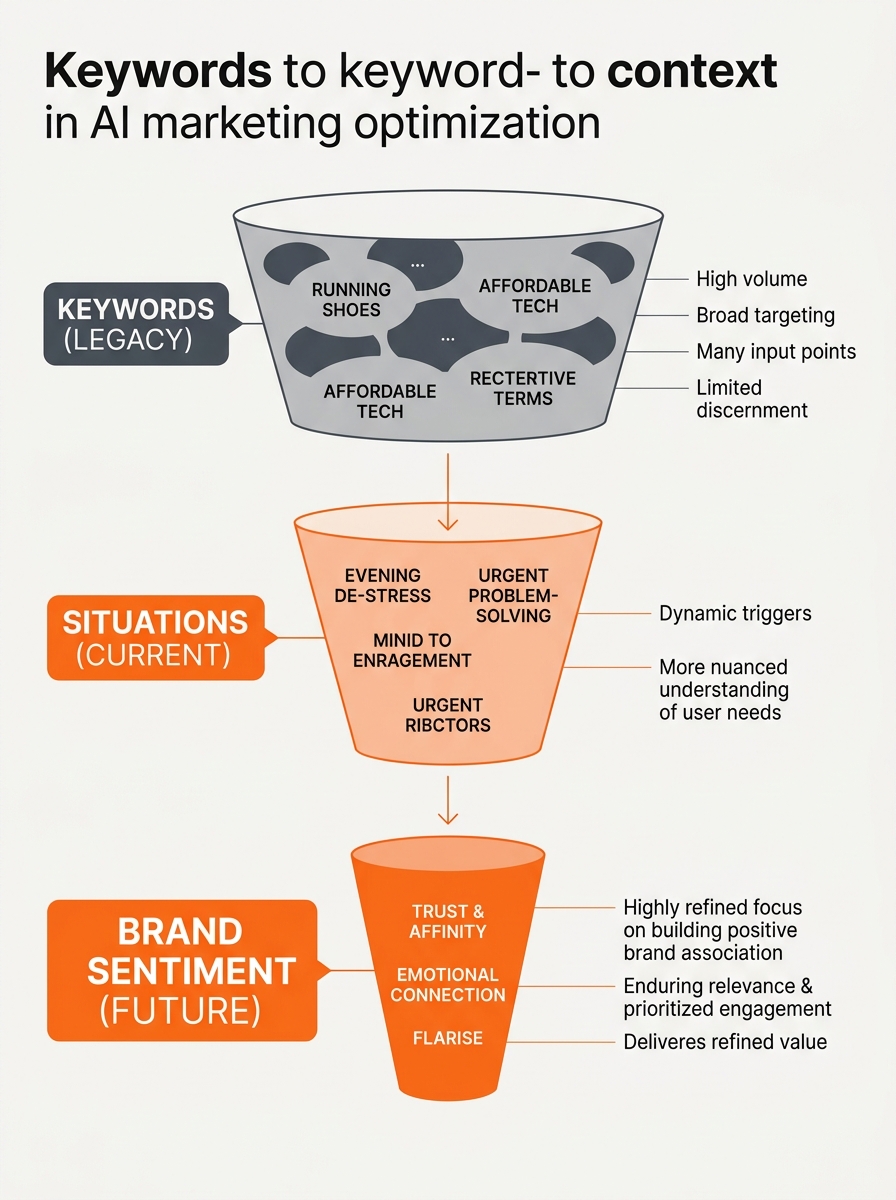
To capture the Gen Z audience on Claude, marketers must shift their content production. As MarTech recently noted, the most effective content briefs are now built around people and situations, not just keywords. This is the secret sauce for LLM visibility.
An LLM doesn't just look for the word "laptop." It looks for the brand associated with "the best laptop for a nomadic graphic designer who needs 10-hour battery life and a screen that works in sunlight." When you build content around those specific situations, you provide the LLM with the context it needs to make a high-confidence recommendation.
For the social media manager, this means your captions and community management are now part of your SEO strategy. The way you describe your product in a TikTok caption—using the specific vernacular and situational context of your audience—is the exact data that next-generation scrapers will use to categorize your brand in the AI ecosystem.
What to Watch Next: The Trust Gap
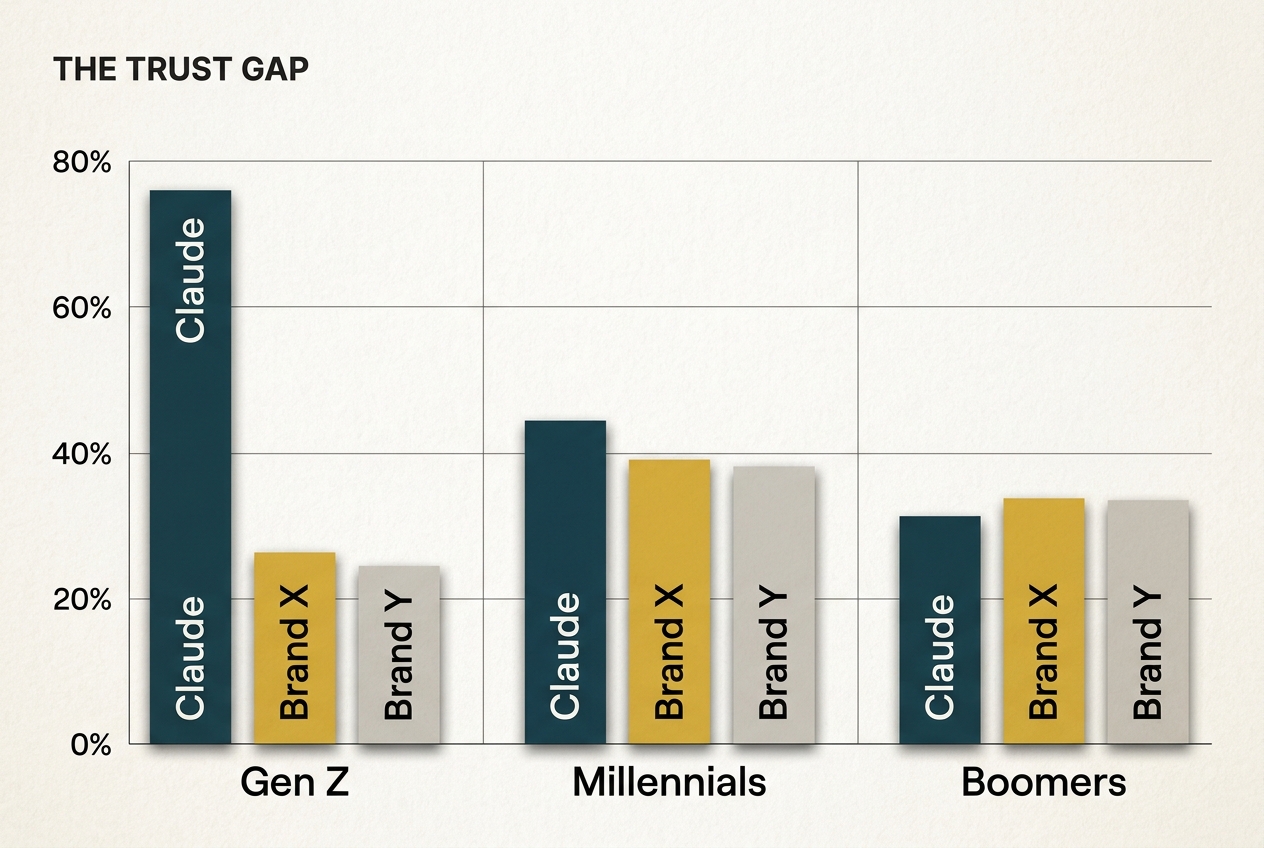
The most telling part of the SEJ report is the mention of a "chicken salad chain's rise," which demonstrated that high consideration scores in AI results do not automatically equal user trust. You can optimize your way into a recommendation, but if the "vibe" of the brand doesn't match the user's expectation, the conversion will fail.
As we move into the latter half of 2026, expect to see:
- Platform-Specific AI Briefs: Agencies will start delivering separate optimization strategies for "ChatGPT (Legacy/Utility)" and "Claude (Gen Z/Creative)."
- The Rise of 'Vibe SEO': A focus on sentiment analysis and brand voice consistency to satisfy Claude’s more sophisticated personality-matching algorithms.
- AI-First PR: Public relations efforts specifically designed to generate the kind of long-form, authoritative mentions that LLMs use to build brand profiles.
You've already seen how Gen Z changed the face of social media marketing by demanding authenticity. Now, they are doing the same to the AI landscape. If you're still optimizing for the LLM of 2023, you're already invisible to the consumer of 2026.
How to Apply This Tomorrow
Start by auditing your brand's presence in both Claude and ChatGPT. Ask both platforms the same five questions your customers typically ask. Note the differences. Does ChatGPT give a dry, factual summary while Claude ignores you entirely? Or does Claude capture your brand's "voice" better than the competition?
Update your content briefs to include a "Situational Context" section. Stop asking for 2.5% keyword density and start asking for 100% situational relevance. If you aren't describing the feeling and the moment of using your product, you aren't giving Claude anything to work with. The 8-to-1 lead isn't just a number—it's a reflection of a generation that expects their AI to understand them, not just answer them.
FAQ