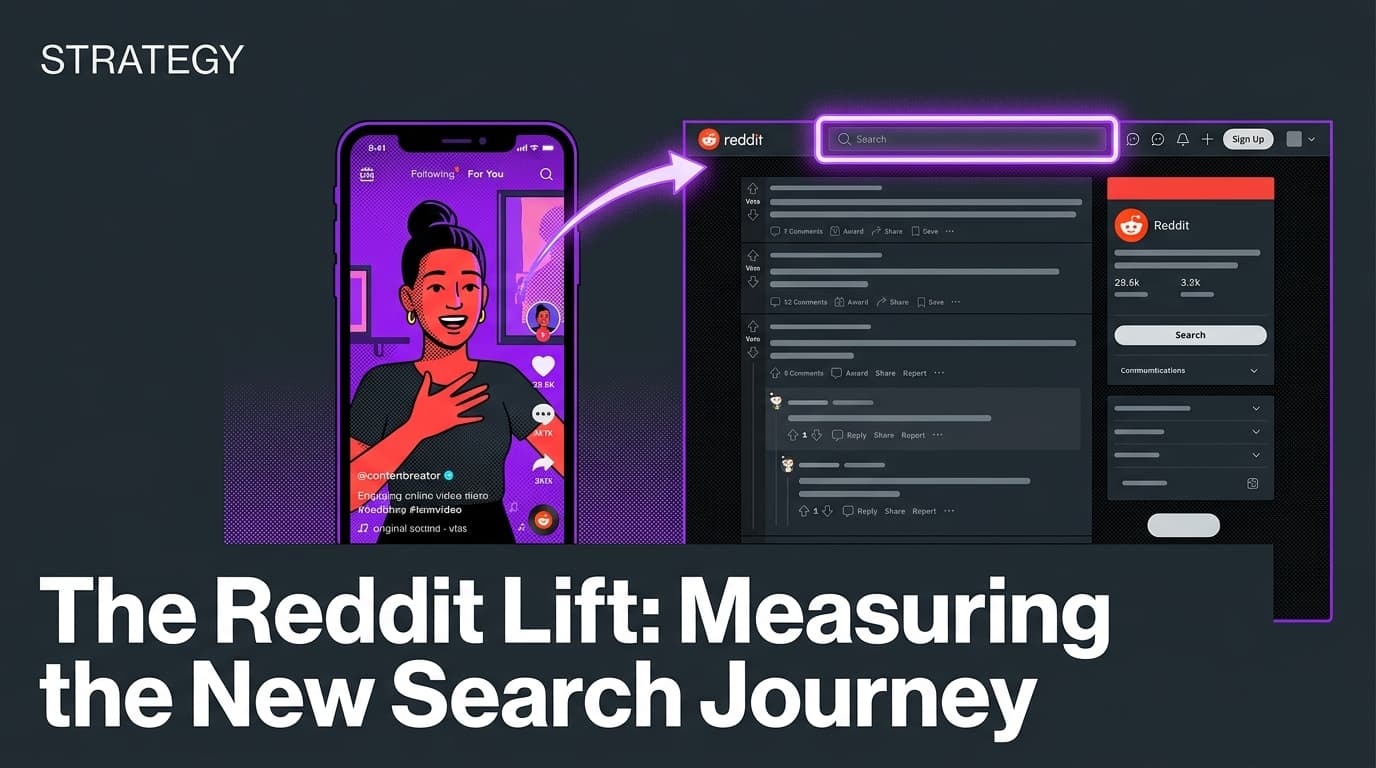

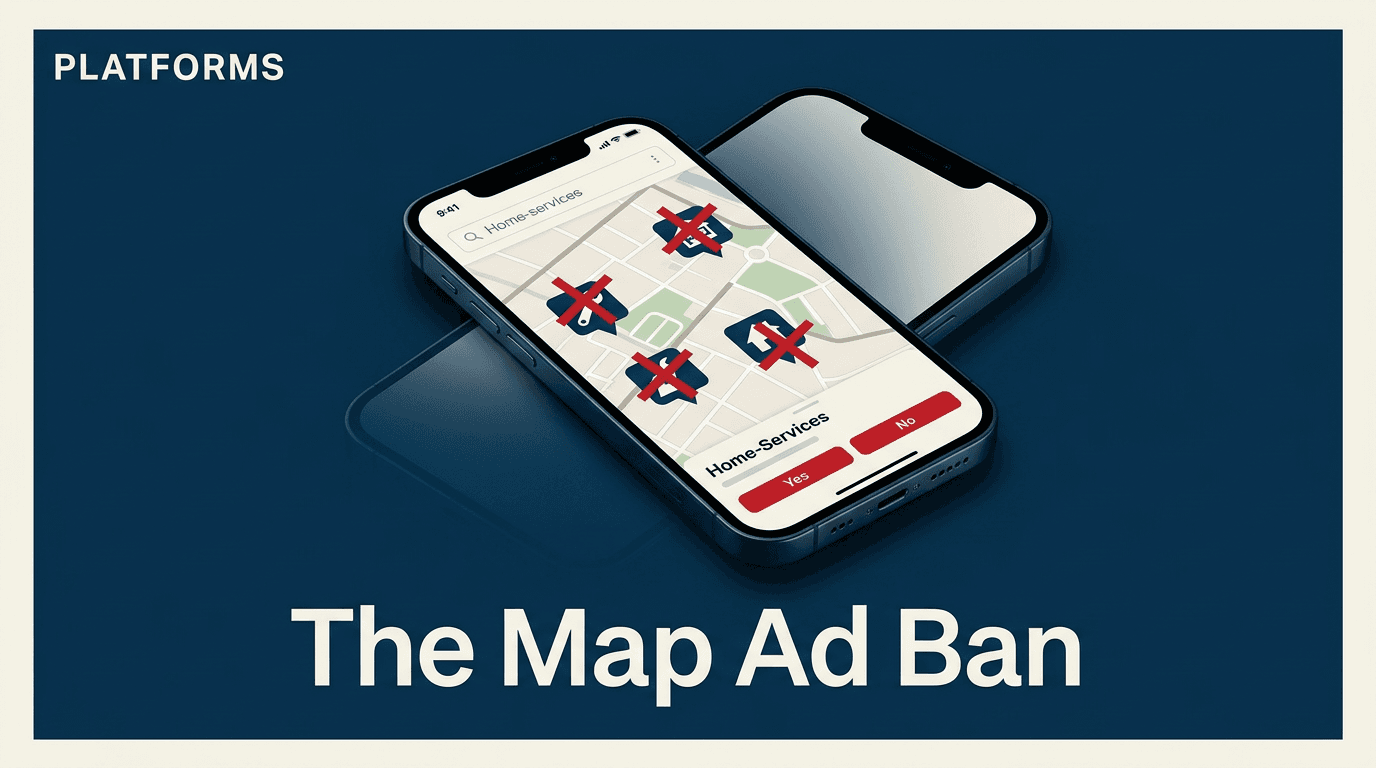
Apple’s recent decision to restrict high-intent verticals like home services and bail bonds from its emerging Maps ad ecosystem isn't just a policy tweak—it is a fundamental redirection of how local businesses will find customers in 2026. By ceding the 'emergency' search territory, Apple has effectively handed a multibillion-dollar gift to Meta and Nextdoor. For marketers, the play is no longer about winning the map pin; it is about capturing urgency within the social scroll before the user ever thinks to open a search bar.
Why it matters: When high-intent search inventory disappears, the demand doesn't vanish; it migrates. Local service providers—plumbers, HVAC techs, and locksmiths—who relied on Google LSAs or hoped for an Apple alternative now face a 'social-first' mandate. You aren't just competing for attention anymore; you are competing for the first-responder slot in a fragmented local ecosystem.
TL;DR
- The Ban: Apple is restricting 'sensitive' local service categories from its ad inventory to maintain a 'clean' UX, mirroring some of Google’s strict LSA verification hurdles but without the infrastructure to support them.
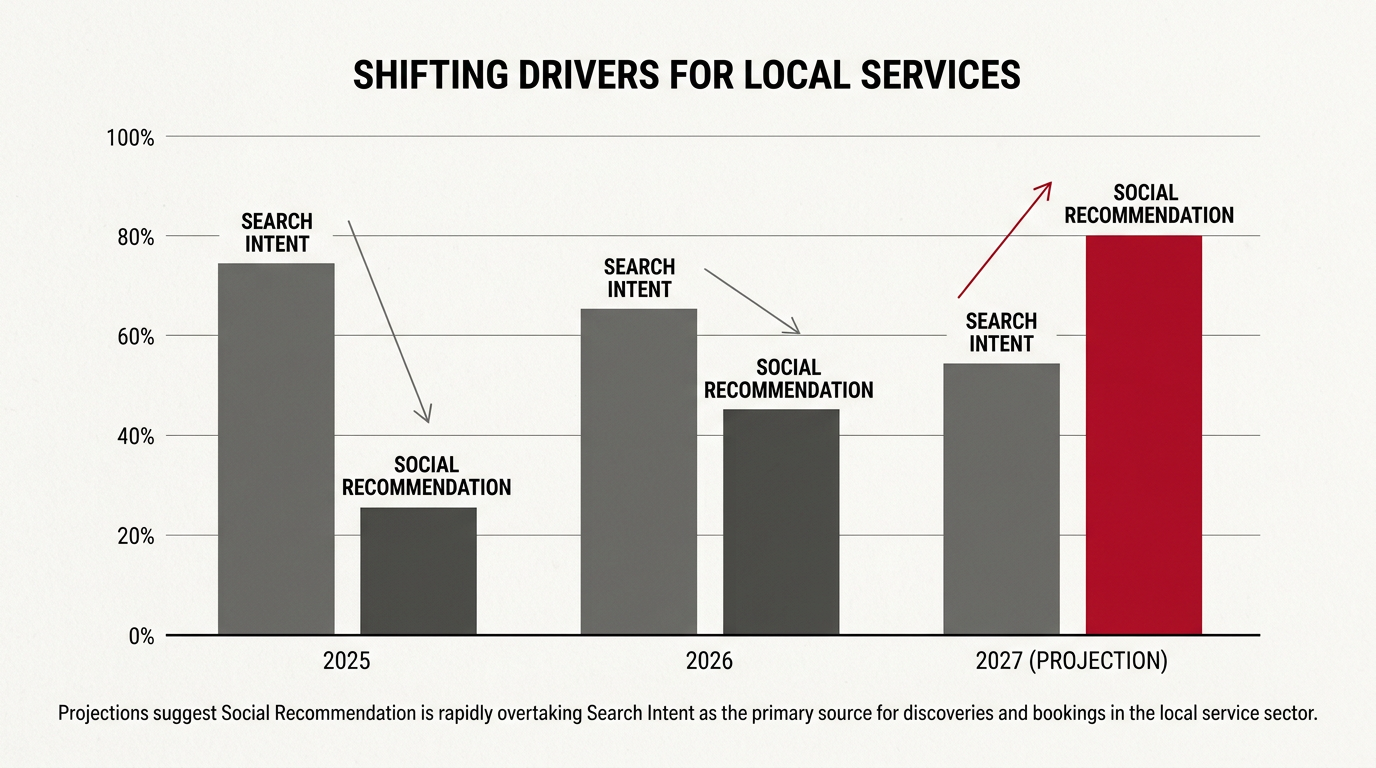
- The Shift: Demand is moving from 'pull' (search) to 'push' (social), making Meta’s local awareness ads and Nextdoor’s sponsored posts the primary beneficiaries.
- The Cost: Expect a 15-25% spike in local lead-gen CPMs on social platforms as home service budgets flood these smaller, geo-fenced auctions.
- The Strategy: Marketers must pivot from keyword-based intent to behavioral signals and 'community-validated' creative.
The Death of the Map-First Emergency
For years, the industry assumption was that Apple would eventually build an ad product to rival Google’s Local Services Ads (LSAs). We expected a system where a burst pipe lead to an Apple Maps search, followed by a click on a 'Siri Verified' plumber. Instead, Apple is moving in the opposite direction. By banning or heavily restricting home services and other 'urgent' categories, Apple is signaling that it values aesthetic utility over the messy, high-fraud world of local lead generation.
This creates a massive vacuum. Per internal benchmarks from agency partners, home services traditionally carry some of the highest CPCs in the digital world, often exceeding $50 for a single 'plumber near me' click in competitive metros like Chicago or Los Angeles. With Apple Maps off the table, that capital is looking for a home.
We are seeing a transition from the 'Utility Map' to the 'Social Map.' When a homeowner sees a leak, they used to go to a search engine. Now, they go to a neighborhood group or a trusted social feed. If your brand isn't already there—pre-empting the crisis—you've already lost the lead to whoever has the most active presence on Nextdoor.
Why Meta and Nextdoor are the New Yellow Pages
Meta has been quietly preparing for this. While the industry fixates on TikTok Shop’s move into AI video TikTok Shop embraces AI video for commerce, Meta has been refining its 'Local Awareness' objectives. The goal is no longer just 'reach'; it is 'proximity-based trust.'
Nextdoor, meanwhile, remains the most undervalued asset in the local marketer's toolkit. Despite its reputation for neighborhood drama, its intent data is unparalleled. When someone posts about a fallen tree, the ad auction for arborists should be instantaneous. Apple's retreat from this space allows social platforms to monopolize the 'local recommendation' signal.
Consider the economics. Since Meta deprecated certain granular targeting features in response to privacy shifts, they’ve leaned heavily into 'Broad' targeting powered by AI. For a local roofer, this means Meta’s algorithm is often better at finding a 'homeowner with an old roof' based on browsing patterns than Apple Maps is at showing a pin to someone who just typed 'roofing.'
The Counterargument: Is Search Still King?
Critics will argue that 'emergency intent' cannot be manufactured on social media. If your basement is flooding at 2:00 AM, you don't scroll Instagram hoping for a sponsored post from a restoration company; you go to Google and click the first number you see.
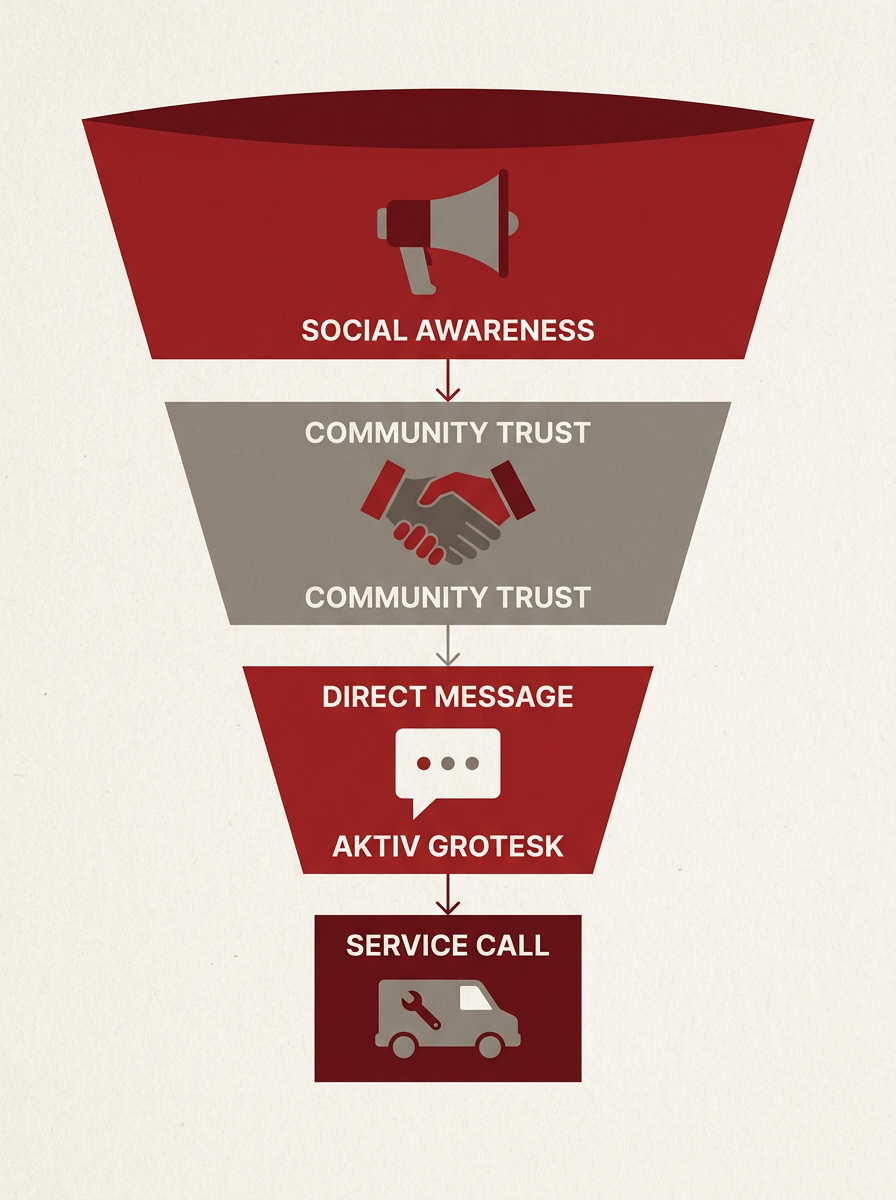
This is a fair point, but it ignores the 'Pre-Need' phase of marketing. The most successful local brands in 2026 are using social to build 'mental availability.' When the emergency happens, the user doesn't search for 'plumber'; they search for 'Jones & Sons Plumbing' because they saw a helpful reel about DIY pipe insulation three weeks ago.
Furthermore, Google’s own search dominance is being cannibalized by its AI integrations. As noted by Search Engine Journal, Google’s Nick Fox recently claimed AI features in Search send 'billions of clicks' to websites, yet the data remains opaque Google AI search click data transparency issues. If marketers can't trust the attribution or the volume coming from AI-generated search summaries, they will naturally gravitate toward the deterministic, click-to-call interfaces of social platforms.
The 'Trust Tax' and the Rise of Community Validation
Apple’s ban is likely a response to the 'Trust Tax.' Local services are rife with 'white label' lead-gen schemes—companies that buy ads only to sell the lead to a third party. Apple, obsessed with its premium brand image, likely doesn't want to be the middleman for a predatory locksmith.
Social media solves this through community validation. A Meta ad for a local contractor is often accompanied by comments from actual neighbors. This 'social proof' acts as a decentralized verification system that a static map pin simply cannot provide.
To win in this environment, you must:
- Aggressively monitor brand mentions. Use tools like Brandwatch's topic-clustering to see what neighbors are saying about your service quality.
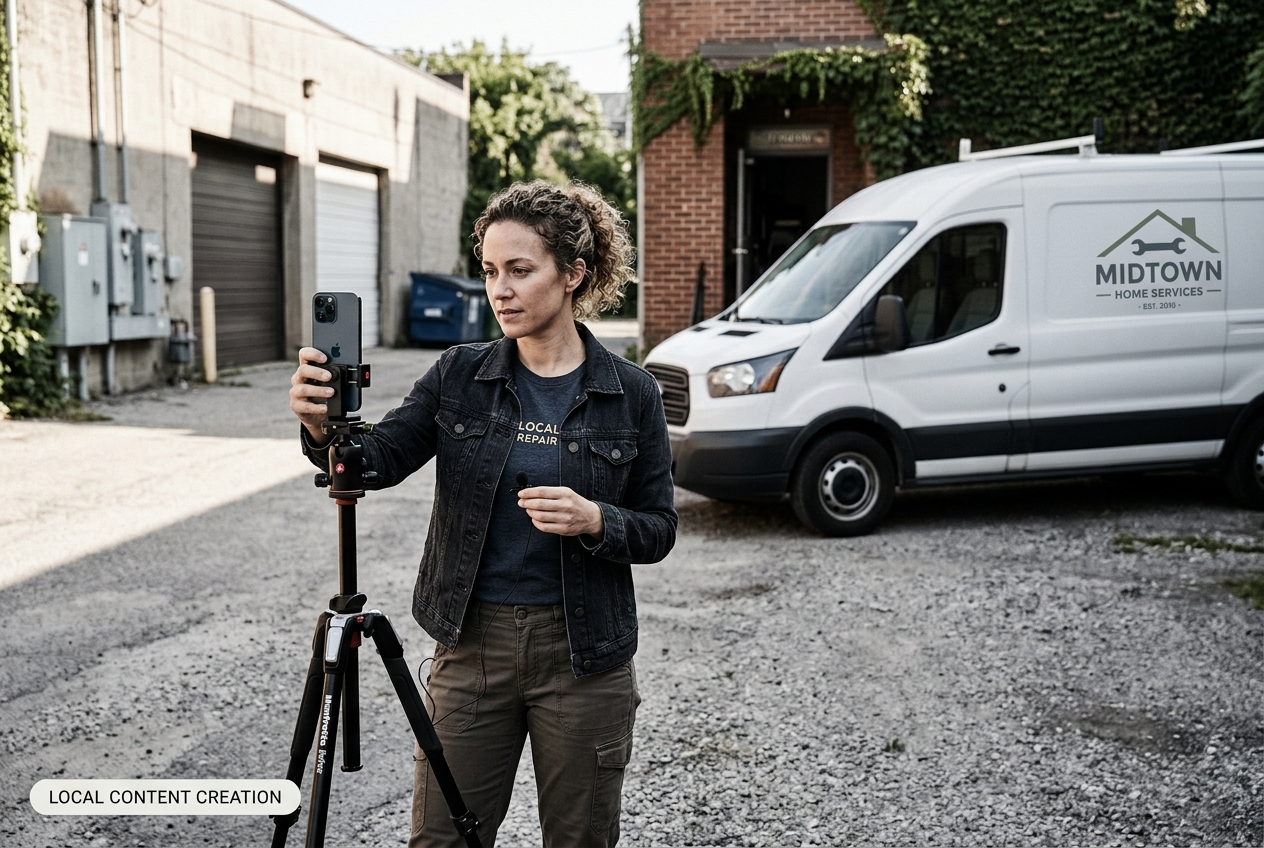
- Deploy 'Service-as-Content'. Don't just run an ad saying 'We fix heaters.' Run a 15-second clip of a technician explaining why a specific model of furnace always breaks in January.
- Leverage Local Influencers. Not the Kardashian-level creators, but the local 'moms of the neighborhood' who have 5,000 highly engaged followers in your specific zip code.
Reallocating the 'Apple That Never Was' Budget
If you had a line item in your 2026 budget for 'Apple Maps Search Ads,' move it now. But don't just dump it into Google Search where the CPAs are already bloated. Instead, split the reallocation:
- 40% to Meta Local Awareness: Focus on 'Advantage+ Local' campaigns that optimize for 'Get Directions' or 'Call Now' buttons.
- 40% to Nextdoor Sponsored Posts: Target by 'Neighborhood' rather than just 'Zip Code' to get closer to the hyper-local conversation.
- 20% to Organic Community Management: Hire a part-time 'Community Manager' whose only job is to respond to 'Does anyone know a good...?' posts in local Facebook groups within 10 minutes.
This 10-minute response window is the new SEO. It is the social equivalent of being the top result on a map.
The Prediction: A 2027 Consolidation
I predict that by mid-2027, we will see a major social platform—likely Meta—launch a dedicated 'Service Directory' tab that mimics the utility of a map but is powered entirely by social recommendations and paid 'Verified' status. Apple’s refusal to get its hands dirty with local services has left the door wide open.
By the time Apple realizes it has missed out on the most lucrative segment of local intent, the 'Trust Graph' will have already moved to the social feed. Marketers who wait for Apple to 'fix' its local ad product will find themselves priced out of the social auctions that are currently being settled at a discount.
How to Apply This Tomorrow
Don't wait for your lead volume to drop. Audit your current local strategy against the 'Social-First' reality. If 80% of your leads come from search, you are vulnerable to the AI-scraping trends that are already devaluing traditional web traffic Google NotebookLM and the risk of AI scraping.
Start by building a 'Social Emergency' kit: a library of high-quality, short-form videos that address the top five most common 'urgent' problems your customers face. When the next storm hits or the next heatwave arrives, your social ads should be live before the first person even thinks to open a map app. The battle for local supremacy isn't happening on the streets anymore; it’s happening in the palm of the hand, three inches below a notification from a neighbor.
FAQ