
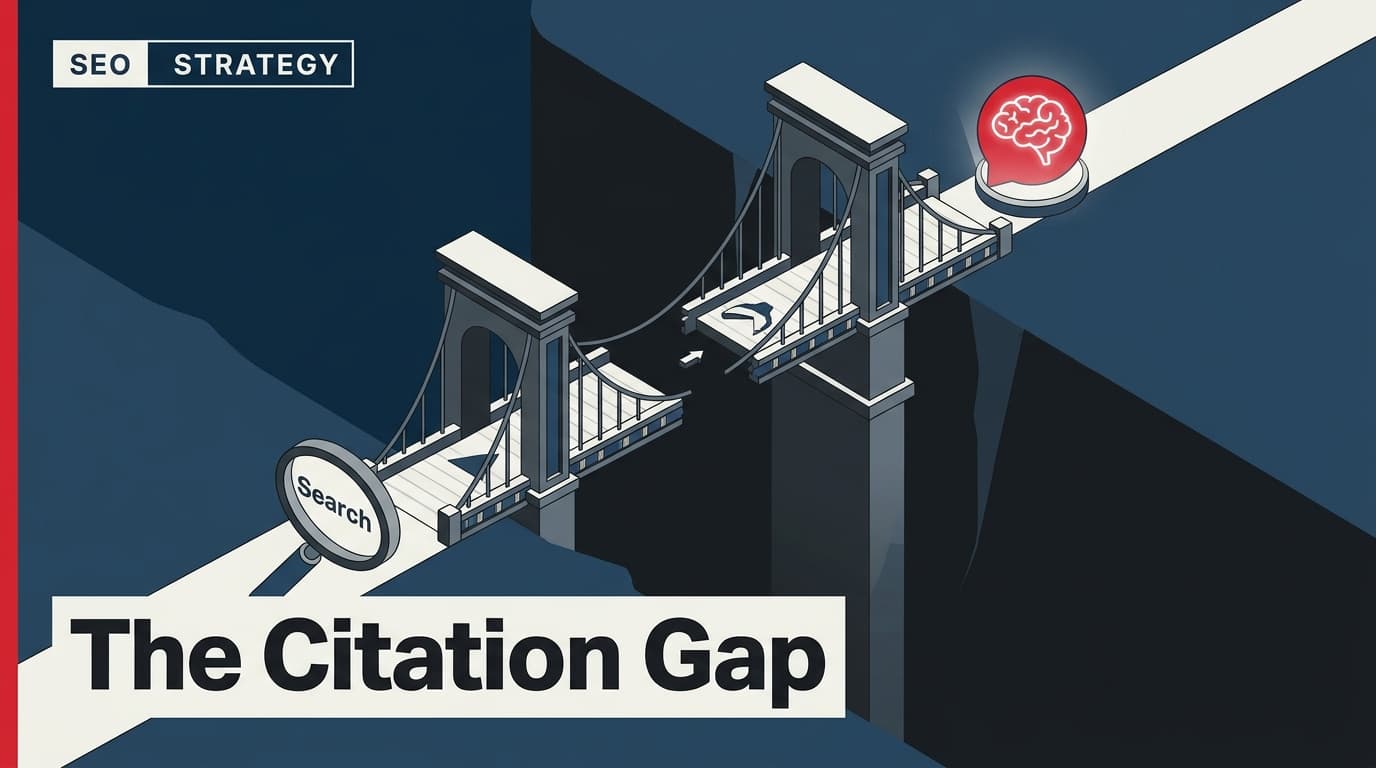
Why does ChatGPT seem to love travel bloggers but ignore peer-reviewed academic white papers? If you've spent any time using SearchGPT or Perplexity for research, you've likely noticed a frustrating inconsistency. One query returns a rich list of cited sources; another provides a confident answer with zero attribution.
Recent industry benchmarks suggest this isn't random. Travel-related queries are currently seeing nearly triple the citation density compared to education and deep B2B sectors. For a brand marketing lead, this isn't just a technical curiosity—it’s a visibility crisis. If the AI doesn't cite you, you don't exist in the referral funnel.
We are entering the era of Answer Engine Optimization (AEO). The goal is no longer just ranking blue links; it’s becoming the 'high-confidence' source that the LLM chooses to validate its response.
Key takeaways
- Structured Data is the New SEO: Travel brands win because their data (prices, dates, locations) is highly structured, whereas education and B2B content is often trapped in unstructured 'narrative' formats.
- The Confidence Score Gap: LLMs favor sources that provide verifiable, atomic facts over those offering broad, subjective analysis.
- Technical Hygiene Matters: As seen with recent Claude chat indexing issues, robots.txt and noindex headers are being interpreted differently by AI crawlers than traditional search engines.
- Actionable Pivot: Marketers must shift from long-form 'guides' to 'atomic content blocks' that AI agents can easily parse and attribute.
The Citation Gap: Why Travel Brands Are Winning the AI War
To understand why travel dominates, we have to look at the 'Atomic Fact' density. When a user asks ChatGPT for the best time to visit Tokyo, the AI pulls from sources that provide specific, non-negotiable data: weather patterns, flight pricing, and festival dates. These are facts with a high degree of consensus across the web.
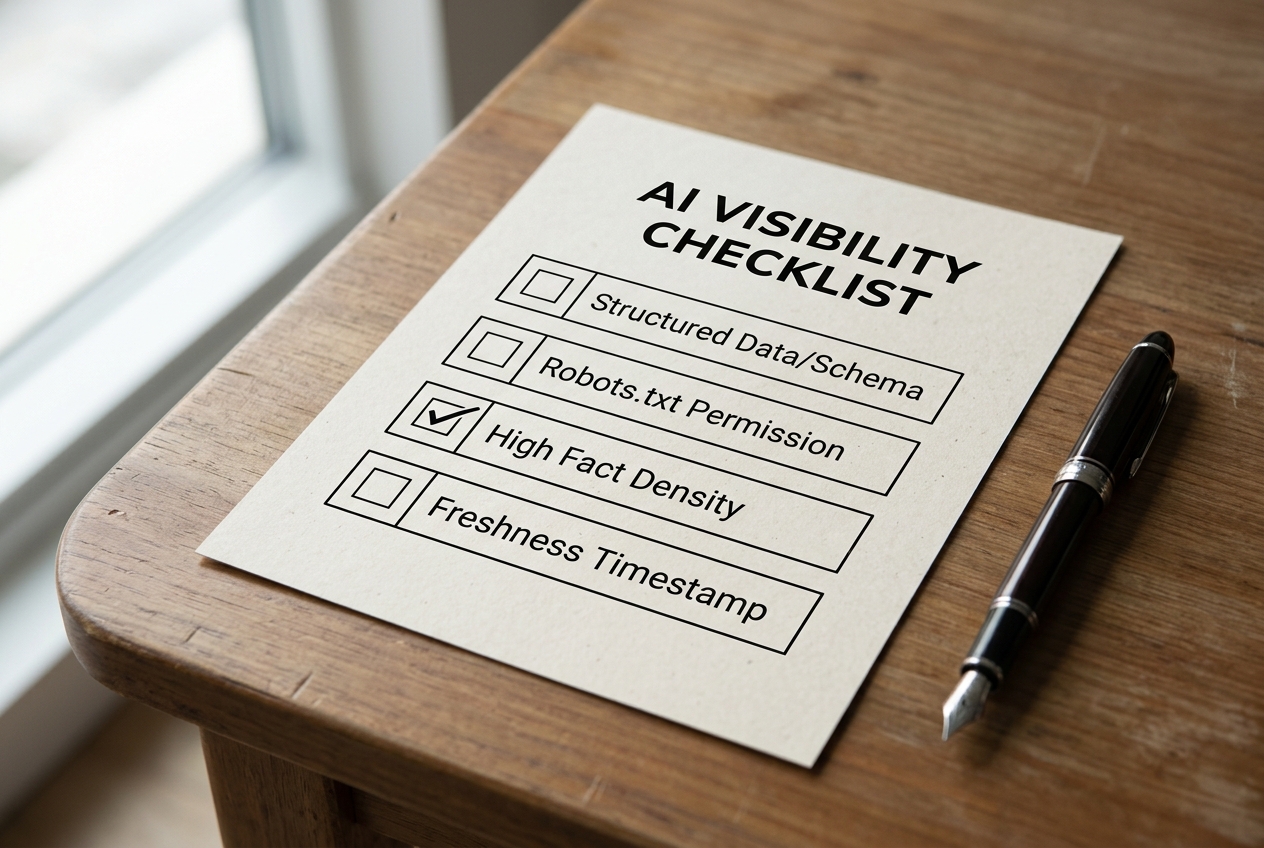
Travel brands like TripAdvisor, Expedia, and even niche travel blogs have spent a decade optimizing for Schema.org. They speak the language of machines. When an LLM crawls a travel site, it finds clearly labeled entities. The AI doesn't have to 'guess' what the price of a hotel is; the metadata tells it explicitly.
Contrast this with the education sector. A university’s page on 'The Future of Macroeconomics' is a sea of subjective prose. There are few 'atomic facts' for an AI to grab onto without performing heavy synthesis. Because the AI is doing the synthesis itself, it feels less 'indebted' to a single source, leading to fewer citations.
If you're in B2B or Higher Ed, you're likely providing 'Expertise, Experience, Authoritativeness, and Trustworthiness' (E-E-A-T), but you're delivering it in a format that is difficult for an LLM to cite. You are providing the vibe, while travel brands are providing the data.
The Mechanism of Attribution: How LLMs Choose Their Sources
Think of an LLM like a high-end chef. In traditional SEO (Google), the chef points the customer to a specific grocery store (your website). In AEO, the chef buys the ingredients from you, cooks the meal, and—if you’re lucky—lists your farm on the menu.
For that citation to happen, the AI must cross a 'Confidence Threshold.' During the retrieval-augmented generation (RAG) process, the AI looks for documents that match the user's intent. If your content is buried in a 3,000-word PDF or a gated white paper, the AI’s 'retriever' might find it, but the 'generator' might find it too complex to summarize accurately.
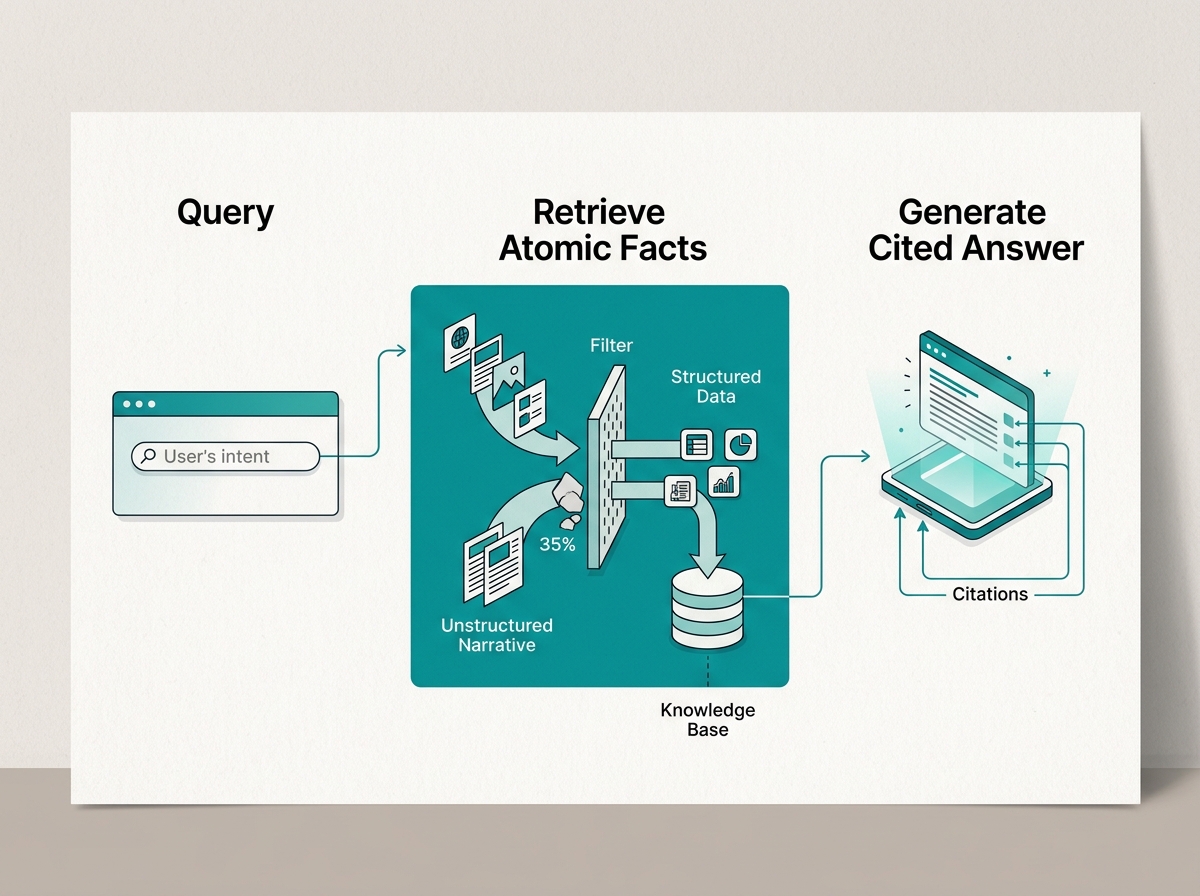
Perplexity and SearchGPT favor sources that are:
- Verifiable: The information can be cross-referenced with other high-authority nodes.
- Current: As we saw with the recent Google update removing the $50K spend rule for lead form ads [S1], information changes fast. AI agents prioritize recent crawl dates.
- Accessible: If your robots.txt is misconfigured, you're invisible. A recent report from Search Engine Journal [S3] highlighted how shared Claude chats were indexed by Google because the 'noindex' tag was hidden behind a robots.txt block. This technical friction is a citation killer.
The 'Subjectivity Trap' in Education and B2B Content
Education and B2B marketers often fall into the 'Subjectivity Trap.' They write for humans who enjoy nuance. However, LLMs are currently optimized to avoid 'hallucinations' by sticking to consensus.
When a B2B brand writes about 'The Best CRM Strategy,' they are offering an opinion. When a travel brand writes about 'The 10 Best Hotels in Paris,' they are offering a list of entities. AI loves entities. It struggles with abstract strategy.
This is why we see travel sources cited 3x more. They provide 'Entity-Dense' content. To compete, education and B2B brands need to 'entitize' their knowledge. Instead of a broad article on 'Leadership,' create a structured database of '10 Leadership Frameworks Used by Fortune 500 CEOs,' complete with structured data for each framework.
Recent trends in 'Moment Marketing,' such as brands latching onto Christopher Nolan’s The Odyssey [S4], show that even creative campaigns need a factual anchor to be picked up by the news-cycle-aware AI crawlers. If the AI can't link your creative campaign to a specific, dated event or entity, it won't cite the source; it will just mention the trend.
Technical Barriers: Robots.txt and the Claude Indexing Lesson
We cannot ignore the plumbing. You might have the best content in the world, but if the LLM's user-agent is blocked, you're out of the game.
There is a growing tension between protecting IP and gaining AI visibility. Many publishers are blocking GPTBot or CCBot to prevent their data from being used for training. However, this often has the unintended consequence of blocking the 'search' version of these bots.
The Search Engine Journal study on Claude chats [S3] provides a cautionary tale. It proved that Google can index content even if the robots.txt disallows it, provided there are external links to it. But for attribution within an AI answer, the AI needs to be able to parse the page directly to verify the snippet it's using.
If you want to be cited, you need a 'surgical' robots.txt strategy. You might block training bots while specifically allowing search-oriented bots like OAI-SearchBot.
From Narrative to Atomic: Restructuring Your Content Repository
So, how do you actually change your content to trigger more citations? You have to stop thinking in 'articles' and start thinking in 'claims.'
Every piece of content you produce should have a 'Claim-to-Evidence' ratio that favors the evidence. In the travel sector, a claim like "The Eiffel Tower is 330 meters tall" is easily verified and cited. In education, a claim like "Online learning is more effective for adult learners" is harder to cite unless it is backed by a specific, named study with a clear date and a specific percentage of improvement.
Actionable Guidance for Marketers:
- Use 'Definition Boxes': At the top of your B2B long-form content, include a clear, one-sentence definition of the core concept. AI agents love to grab these for the 'zero-click' summary and cite the source.
- Tables and Lists are King: Don't write a paragraph about your product's features. Put them in a table. LLMs parse tables with much higher confidence than prose.
- The 'Source-First' Approach: When citing your own internal data or research, use a standard format: "According to [Brand Name]'s 2026 Social Media Report..." This makes it easier for the AI to identify who the authority is.
- Update Regularly: AI search engines like Perplexity have a strong bias toward 'freshness.' Even a small update to a 2024 article can trigger a re-crawl that puts you back in the citation pool for 2026 queries.
What This Means for Your 2026 Strategy
We are moving away from a world where 'Content is King' to one where 'Context is King.' The brands that win the citation war won't necessarily be the ones with the most traffic; they will be the ones that provide the most 'citable units' of information.
For the golf shop using TikTok comedy to drive sales [S5], the AEO play isn't the video itself—it's the structured transcript and the entity-rich description that tells the AI: "This is a golf shop in [Location] that sells [Brands]."
If you are in a low-citation vertical like education or B2B, you have a massive opportunity. Because your competitors are still writing 'narrative slop,' you can win by being the first to provide 'atomic, structured truth.'
Don't just write for the reader. Write for the agent that is reading for the reader.
How to audit your robots.txt for AI crawlers The rise of SearchGPT and what it means for Google Using Schema.org for B2B content visibility
The Future of Attribution in the Age of Synthesis
As LLMs become more sophisticated, the 'citation' might evolve. We are already seeing 'hover-over' citations and sidebars in SearchGPT. The next phase is 'Direct Action' citations—where the AI doesn't just cite your travel blog, it offers a button to 'Book via Expedia' right in the chat.
For education brands, this might look like a 'Apply Now' button appearing next to a citation about a specific degree program. But that button only appears if the AI is 99% confident that you are the definitive source for that program's details.
The citation gap isn't a permanent feature of the landscape; it's a reflection of how we've formatted our knowledge. Travel brands just got a head start. It's time for the rest of the marketing world to catch up.
Stop writing for the algorithm of 2018. Start building for the answer engines of 2026. If you don't structure your truth, the AI will invent its own.
FAQ