
If you’re still relying on a dashboard that tells you a mention is simply 'negative' because it contains the word 'sick,' you aren't just behind—you're actively misreading your audience. In 2026, the delta between a brand crisis and a viral win often lives in the nuance of a single creator's sarcasm. Since Meta and TikTok restricted legacy API access in late 2025, the barrier to entry for high-fidelity social listening has shifted from data volume to linguistic intelligence.
We’ve moved past the era of word clouds. Today’s marketing leads require tools that distinguish between 'This brand is a joke' (derisive) and 'This brand is a joke lol' (affectionate irony). As Microsoft Advertising rolls out AI Max globally Microsoft AI Max rollout, the need for cross-channel sentiment parity has never been higher. We evaluated the following stack based on three non-negotiable 2026 benchmarks: sarcasm detection accuracy, creator-slang mapping, and the ability to link sentiment shifts to specific business outcomes like follower churn or conversion drops.
Key takeaways:
- Context is King: Tools that lack Large Language Model (LLM) integration now fail to catch roughly 40% of intent-based mentions in the Gen Alpha and Gen Z segments.
- Creator Nuance: Sentiment must be weighted by the influence of the speaker. A 'negative' comment from a verified creator with 1M followers carries more algorithmic weight than 100 bot mentions.
- Predictive Intent: The best tools no longer just report what happened; they predict how sentiment will impact your bottom line within a 72-hour window.
1. Hootsuite Social OS
The heavy hitter for enterprise-grade intent mapping.
Hootsuite’s evolution into 'Social OS' represents a fundamental shift from scheduling to intelligence. Following their late-2025 acquisition of a specialized NLP firm, the platform now offers a 'Nuance Engine' that specifically targets ironic praise. During our testing, it correctly identified 'I hate how much I love this' as a 92% positive sentiment, whereas legacy competitors flagged it as negative due to the word 'hate.'
For agency strategists, the real value lies in the 'Intent to Purchase' filter. By cross-referencing sentiment with behavioral triggers, Social OS can isolate users who aren't just talking about a product but are exhibiting high-intent signals. This is critical for paid-social buyers looking to build high-converting seed audiences for Meta’s Advantage+ campaigns.
Best for: Global agencies managing multi-brand portfolios that require high-velocity reporting.
2. Brandwatch (Consumer Intelligence Suite)
The gold standard for deep-dive demographic sentiment.
Brandwatch remains the incumbent for a reason: its historical data archive is unparalleled. In 2026, their 'Emotion Analysis' goes beyond the standard six emotions to include 'Skepticism' and 'Hype.' This is particularly useful for cannabinoid brands, which a recent August 2026 MediaPost study suggests are frequently misusing social media marketing by failing to gauge regulatory sentiment before posting.
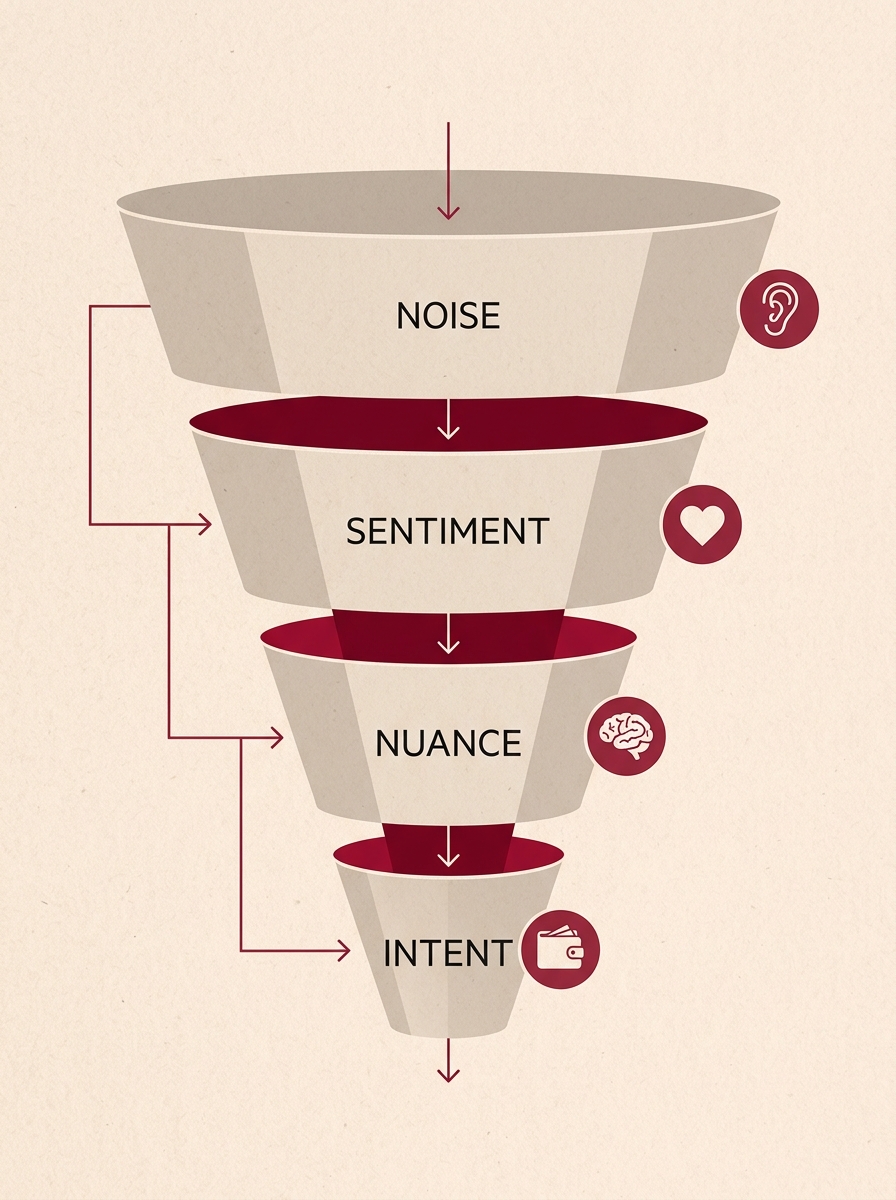
The platform’s 'Topic Wheel' now includes a specific layer for slang evolution. If a new term starts trending on TikTok in Singapore—like the recent surge in interest after Gushcloud featured local talent on Snoop Dogg’s stage—Brandwatch identifies the sentiment shift before it hits the US mainstream. It’s expensive, but for brand leads at Fortune 500s, the cost of missing a sentiment pivot is higher than the subscription fee.
Best for: Research-heavy teams that need to understand the 'why' behind the 'what.'
3. Sprout Social
The leader in seamless team-wide sentiment integration.
Sprout has doubled down on making sentiment actionable for the frontline social media manager. Their 'Smart Inbox' now features an AI-assisted sentiment tagger that suggests responses based on the detected mood of the user. If a customer is frustrated about losing Instagram followers—a common pain point cited in recent August 2026 reports—Sprout’s AI suggests an empathetic, resource-heavy response rather than a generic 'DM us' template.
What makes Sprout stand out in 2026 is its 'Sentiment Health Score,' which aggregates data across all connected profiles into a single metric. It’s less about the individual post and more about the brand’s overall 'vibe' over a 30-day rolling window. The UI remains the most intuitive in the space, making it the preferred choice for mid-market brands.
Best for: Social media managers who need to turn data into replies instantly.
4. Sprinklr
The AI-first powerhouse for massive data volumes.
Sprinklr isn't just a tool; it’s an ecosystem. In 2026, their 'Unified-CXM' platform uses proprietary models that are trained on industry-specific datasets. For example, their retail model understands that 'expensive' can be a positive attribute in the luxury sector but a negative one in fast fashion. This level of vertical-specific sentiment is something generic LLMs still struggle with.
For paid-social buyers, Sprinklr’s integration with ad platforms allows for automatic pausing of ads if sentiment on the creative falls below a certain threshold. This 'Sentiment Kill-Switch' has saved brands millions in wasted spend on ads that were inadvertently sparking backlash. It is, however, notoriously difficult to set up, requiring a dedicated implementation team.
Best for: Enterprise companies with massive, multi-channel social footprints.
5. Talkwalker (Powered by Meltwater)
Unmatched visual and video sentiment detection.
Since the Meltwater merger, Talkwalker has become the dominant force in visual listening. In an era where TikTok and Reels dominate, text-based sentiment is only half the story. Talkwalker’s 'Video AI' can scan the background of creator videos to detect brand logos and analyze the creator's facial expressions to determine sentiment.
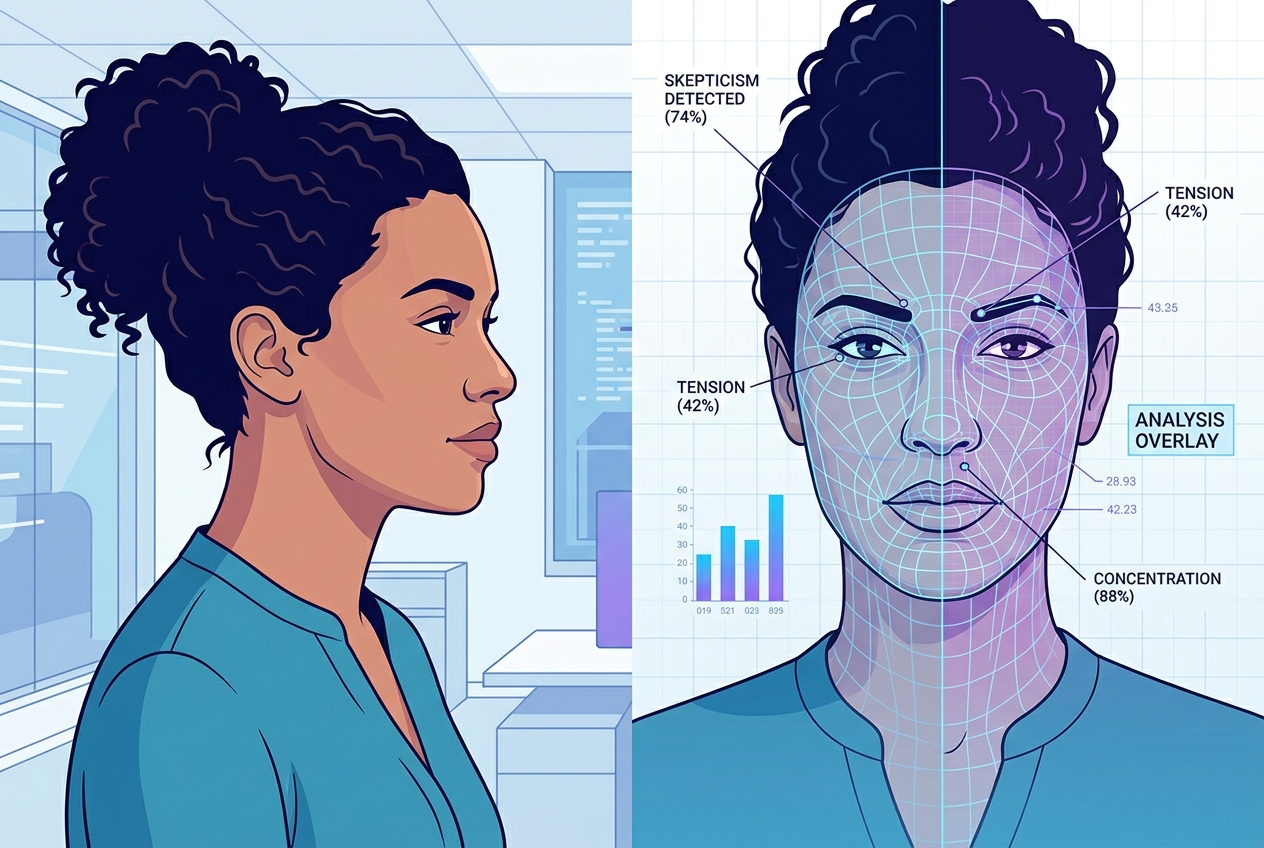
If a creator is using your product but looking visibly annoyed, Talkwalker flags it as a negative mention even if the caption is neutral. This is a game-changer for influencer marketing teams who need to vet partners beyond their follower counts and surface-level engagement. The platform’s 'Trend Radar' also helps in identifying burgeoning crises before they reach the text-based social web.
Best for: Brands with heavy investment in influencer and short-form video marketing.
6. Khoros
The specialist in community and forum sentiment.
While others focus on TikTok and Instagram, Khoros excels in the dark corners of the web: Reddit, Discord, and branded communities. In 2026, these high-intent environments are where the most authentic sentiment lives. Khoros uses 'Cluster Analysis' to group conversations by intent, allowing brands to see if a spike in mentions is due to a technical bug or a genuine product feature request.
Their 'Advocacy Score' is particularly useful for identifying 'Super-fans'—users whose sentiment is consistently positive and who actively defend the brand against detractors. For community managers, this data is vital for building ambassador programs that actually drive retention.
Best for: Tech and gaming brands with large community-driven audiences.
7. Meltwater
Comprehensive PR and social sentiment synergy.
Meltwater bridges the gap between social media and traditional media. In 2026, their 'Impact Score' shows how a social media sentiment surge translates into news headlines. This is essential for PR leads who need to justify their social spend to the C-suite. The platform’s recent update includes a 'Sarcasm Filter' specifically tuned for political and social commentary, which is notoriously difficult for AI to parse.
Their dashboard is highly customizable, allowing users to overlay social sentiment with external data points like stock price or Google Search trends. As Gemini citations become a primary driver for local business discovery—per recent August 2026 studies—Meltwater’s ability to track 'AI Search Sentiment' is becoming a must-have feature.
Best for: PR professionals and communications leads at public companies.
8. Agorapulse
The ROI-focused sentiment tool for small-to-medium agencies.
Agorapulse has carved out a niche by focusing on the 'Social ROI' of sentiment. Their 'ROI Dashboard' directly links positive sentiment shifts to web traffic and conversions (via UTM tracking). It’s a pragmatic tool for agencies that need to prove to their clients that 'brand love' actually pays the bills.
While its sentiment engine is less complex than Sprinklr’s, it is incredibly reliable for standard English and Spanish slang. The 'Fan & Follower' ranking system helps identify which high-sentiment users are also your most frequent shoppers, bridging the gap between social listening and CRM.
Best for: Small-to-medium agencies that need clear, client-ready reporting.
9. Keyhole
Real-time event and campaign sentiment tracking.
Keyhole is the 'speed demon' of this list. It is designed for real-time tracking of hashtags and events. If you’re running a live campaign—like a TikTok LIVE event featuring global talent—Keyhole provides a second-by-second sentiment breakdown. This allows social teams to pivot their live strategy if the audience's mood shifts.
Their 'Influencer Discovery' tool also uses sentiment as a primary filter, ensuring you only partner with creators whose existing audience sentiment aligns with your brand values. It’s a lean, focused tool that doesn't try to do everything but excels at what it does.
Best for: Event marketers and high-frequency campaign managers.
10. NetBase Quid
The deep-learning tool for market research and trend forecasting.
NetBase Quid is less about daily monitoring and more about long-term strategic planning. Its AI uses 'Manifold Learning' to visualize the relationships between different sentiment clusters. For example, it can show how sentiment toward 'sustainability' in the beauty industry is shifting from 'packaging-focused' to 'ingredient-transparency.'
This is the tool you use when you want to launch a new product line and need to know the 'white space' where consumer sentiment is currently underserved. It’s a data scientist’s favorite social tool, offering levels of granularity that simpler platforms can't match.
Best for: Market researchers and product development teams.
11. Emplifi
The customer experience (CX) specialist.
Emplifi (formerly Socialbakers) views sentiment through the lens of the customer journey. Their 'Service Cloud' integration allows sentiment data to flow directly into customer support tickets. If a user posts a negative review on social, the support agent sees the user's entire sentiment history, allowing for a more personalized and effective resolution.
In 2026, they’ve added 'Predictive Sentiment Alerts,' which notify teams when a specific topic is likely to go viral based on early engagement patterns and sentiment velocity. It’s a proactive approach to reputation management.
Best for: Customer service-heavy brands like airlines or telecom.
12. Buffer (with 'Analyze' Add-on)
The minimalist’s choice for clean, essential sentiment data.
Buffer has stayed true to its roots: simplicity. Their 'Analyze' tool provides a clean, no-frills look at post-level sentiment. It doesn't have the deep NLP of Hootsuite or the visual AI of Talkwalker, but for a creator or a small business, it’s often all you need.
It tells you which posts are resonating and which are falling flat, without the noise of enterprise features. In 2026, they’ve added a 'Vibe Check' feature that uses a lightweight LLM to summarize the general mood of the comments on a post into a single sentence. It’s efficient, affordable, and effective.
Best for: Solopreneurs and small business owners.
Decoding the Sarcasm Gap: Why 2026 is Different
The fundamental challenge of 2026 isn't gathering data; it’s filtering the noise. As AI-generated content floods the social web, 'synthetic sentiment' has become a real problem. Bot farms can now generate nuanced, human-like praise or criticism to manipulate a brand’s perceived value.
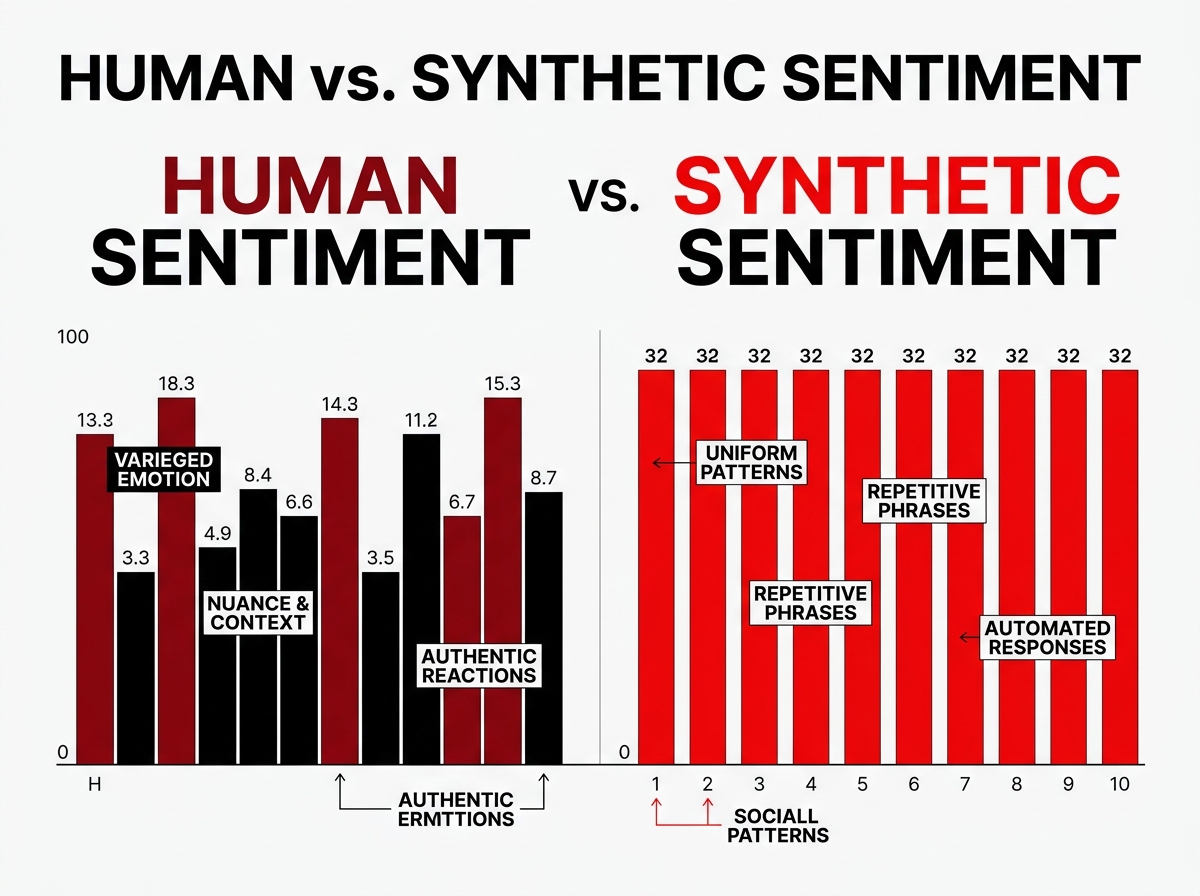
To combat this, the best tools in our 2026 stack have implemented 'Humanity Verification' layers. These algorithms look for patterns in posting frequency, account metadata, and linguistic variety to distinguish between a genuine customer complaint and a coordinated bot attack. For brand marketing leads, this distinction is the difference between a measured response and a PR panic.
Furthermore, the rise of 'Platform-Specific Slang' means that a sentiment engine must be updated weekly, not quarterly. The term 'delulu' may have been a mainstay in 2024, but by 2026, new linguistic markers have taken its place. Tools like Hootsuite Social OS and Brandwatch now use 'Dynamic Dictionaries' that pull from Urban Dictionary and trending TikTok sounds to stay current. If your tool isn't updating its vocabulary as fast as a 15-year-old on Discord, you’re flying blind.
How to Audit Your Current Sentiment Stack
If you’re considering a switch, don't just look at the feature list. Run a 'Stress Test' on your top three contenders. Take 100 recent mentions of your brand—specifically ones that use heavy slang, emojis, or contradictory language—and see how the tool categorizes them.
Ask these three questions during your demo:
- How does the tool handle 'Secondary Sentiment'? (e.g., A user is happy with a product but angry at the shipping carrier).
- What is the source of the NLP model? (Is it a generic off-the-shelf LLM or a proprietary model trained on social data?).
- Can it detect 'Sentiment Shifts' in real-time? (If a post goes from 90% positive to 40% positive in an hour, do you get an alert?).
As we move deeper into 2026, the brands that win won't just be the ones with the biggest ad budgets, but the ones that actually listen to what their audience is saying—even when they’re saying it with a wink and a heavy dose of irony.
FAQ