
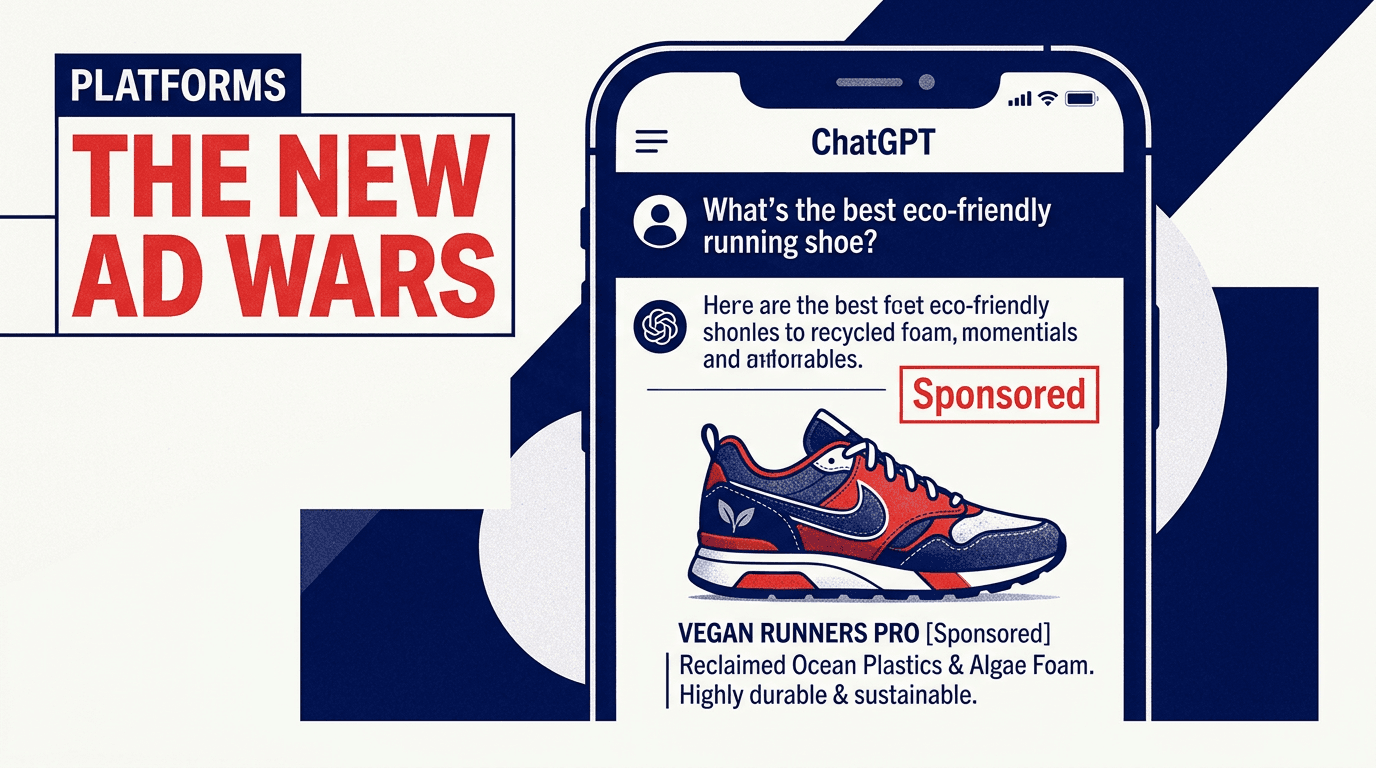
OpenAI is officially moving into the advertising business. The San Francisco-based AI giant has begun recruiting for an inaugural Head of Ad Partnerships, a role tasked with designing and scaling a monetization framework for its 200 million monthly active users. This shift marks the end of OpenAI’s pure-play subscription era and the beginning of a direct confrontation with Meta and Google for performance marketing budgets.
For social media marketers and paid-media buyers, this isn't just another platform launch. It represents the arrival of "intent-in-progress" targeting. While Meta excels at demographic-based discovery and Google captures static search queries, OpenAI is positioned to insert brand placements into the middle of live, multi-turn reasoning cycles. If a user is asking ChatGPT to plan a three-day itinerary in Tokyo, the opportunity for a travel brand to appear isn't just a banner—it’s a contextual recommendation within the flow of a decision.
TL;DR
- Intent-in-progress: OpenAI will target users during active decision-making, siphoning mid-funnel budget from Meta’s Discovery Commerce.
- Privacy First: The network is expected to rely on session-based context rather than the historical tracking cookies that have plagued Meta since iOS 14.5.
- Workflow Integration: Unlike traditional social ads, these placements will live within utility-driven conversations, potentially offering higher conversion rates for high-consideration purchases.
The shift from demographic targeting to conversational intent
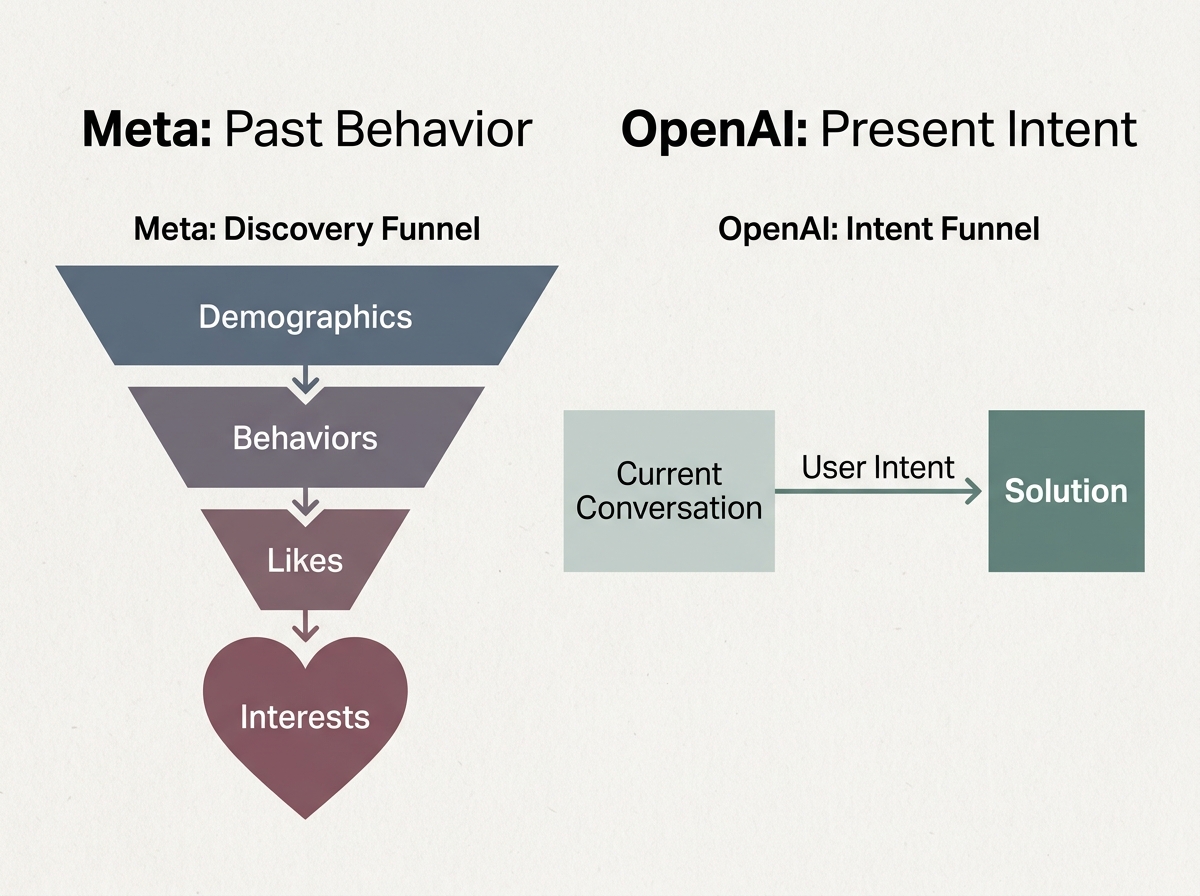
For the last decade, Meta has owned the mid-funnel. By leveraging the Facebook and Instagram social graph, brands could find customers who didn't even know they wanted a product yet. According to recent May 2026 data from Business.com, Instagram remains a cornerstone for business growth because of its visual discovery engine. However, that engine is built on past behavior—what you liked yesterday determines what you see today.
OpenAI’s impending network flips this. A conversational AI ad doesn't care what you liked last week; it cares what you are trying to solve right now. This is "intent-in-progress." When a user interacts with a GPT, they are providing a rich, real-time data stream of their current needs. If you're using ChatGPT to debug code for a new app, you’re a prime candidate for cloud hosting services. If you’re asking for recipes for a dinner party, you’re in the market for specific grocery brands or kitchenware.
This immediate context is far more valuable than the broad demographic buckets—like "Interests: Cooking"—that marketers currently buy on Meta. We are seeing a transition from probabilistic targeting (you might like this) to deterministic utility (you need this for the task you are doing right now). For brands, this means less wasted spend on users who are just browsing and more focus on users who are in the middle of a transaction or planning phase.
Why Meta’s mid-funnel is the primary target
Google Search has long held the bottom of the funnel—the "buy now" intent. But the space between "I’m curious" and "I’m buying" has been Meta’s playground. This is where brands use Reels and Stories to educate and persuade. However, as noted in the Vogue Business TikTok Trend Tracker from May 2026, the velocity of trends and the saturation of short-form video content are making it harder for brands to maintain organic or even paid resonance without massive creative overhead.
OpenAI’s ad products will likely bypass the creative fatigue issue by focusing on text and utility. If ChatGPT suggests a specific brand of hiking boots during a conversation about the best trails in the Pacific Northwest, that recommendation carries the weight of a trusted assistant rather than an intrusive interruption. This is a direct threat to Meta’s "Discovery Commerce" model.
[INTERNAL: How Meta is countering with its own AI-driven Advantage+ creative tools -> meta-ai-advantage-plus-updates]
Meta’s advantage has always been its scale and its pixel. But in a post-cookie world, the efficacy of the Meta Pixel has waned. OpenAI, by contrast, doesn't need to track you across the web if you are telling it exactly what you want within the chat interface. This "first-party intent" is the holy grail for performance marketers who have struggled with attribution since the deprecation of third-party cookies.
The technical architecture of a ChatGPT ad
How will these ads actually look? Industry insiders suggest OpenAI is looking at a model that mimics sponsored results in search but with a conversational twist. Think of it as "Sponsored Reasoning."
Instead of a static sidebar ad, imagine a brand's data being prioritized in the model's retrieval-augmented generation (RAG) process. If a user asks for the best CRM for a small real-time marketing agency, a brand could pay to ensure their latest feature set is included in the AI’s summary. This isn't just an ad; it's a contribution to the user's answer.
This creates a new challenge for social media managers. Your job may shift from creating 9:16 videos to managing "Brand Knowledge Bases" that AI models can ingest. The skill set moves from video editing to prompt engineering and structured data management. If your brand isn't indexable or readable by OpenAI’s crawlers, you won't just lose SEO ranking—you'll lose the entire conversational market.
The rise of Search Engine Optimization for AI (SAIO)
Budget reallocation: From SMM panels to AI placements
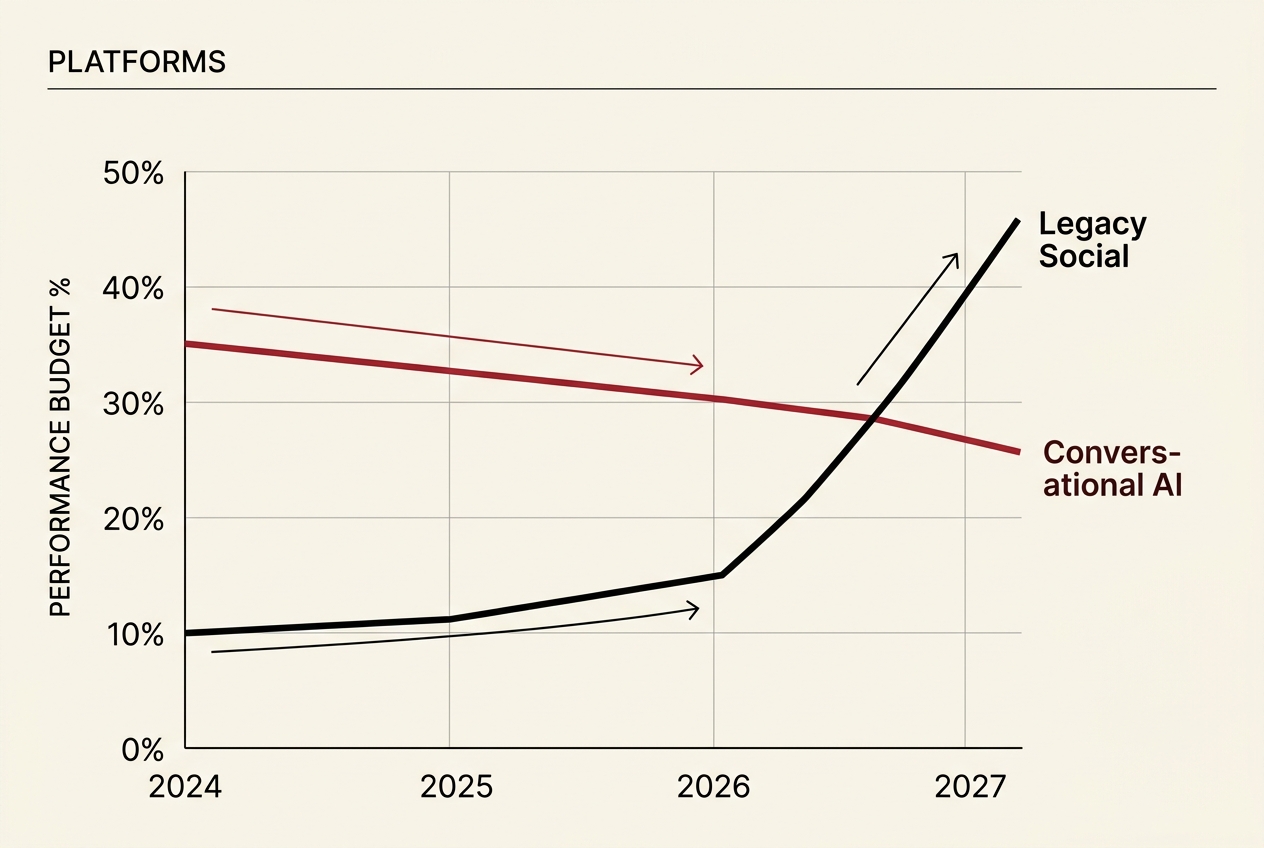
We are already seeing a shift in how small businesses allocate their digital spend. While traditional Social Media Marketing (SMM) panels—as highlighted in recent Programming Insider reports—continue to offer affordable ways to boost engagement on legacy platforms, the high-end performance budget is moving toward high-intent channels.
If you are a local business, as the Morning Sentinel recently noted, the focus is often on "skill and care" in community presence. But for national brands, the efficiency of spend is paramount. If OpenAI can prove that a sponsored mention in a ChatGPT session converts at 3x the rate of a standard Instagram feed ad, the budget migration will be swift.
We expect to see a "test-and-learn" phase in late 2026, where mid-market brands carve out 5-10% of their Meta budget to experiment with OpenAI’s early ad units. The danger for Meta is that this 10% isn't coming from the experimental bucket; it's coming from the core performance budget that usually fuels their quarterly growth.
The creator dilemma and the conversational ecosystem
One of Meta’s strengths is its creator ecosystem. Creators drive the content that makes the ads palatable. OpenAI lacks this. However, OpenAI has something else: the developer ecosystem. By integrating ads into the thousands of custom GPTs created by third parties, OpenAI can create a revenue-share model that rivals YouTube’s AdSense.
Imagine a world where a creator builds a "Personal Stylist" GPT. Instead of the creator having to hunt for brand deals, OpenAI’s ad network automatically inserts relevant product links from Nordstrom or Revolve into the GPT’s recommendations, splitting the revenue with the creator. This would be a massive draw for the "utility creator"—the person who builds tools rather than just filming videos.
This threatens Meta’s hold on the creator economy. If a developer can make more money building a helpful AI tool on OpenAI than a lifestyle influencer can make on Instagram, the talent—and the attention—will move. Social media managers need to start thinking about their brands as "services" that can be integrated into these tools, rather than just "content" to be consumed.
Privacy, ethics, and the brand safety hurdle
OpenAI’s biggest hurdle will be brand safety. On Meta, you can exclude your ads from appearing next to certain types of content. In a generative AI environment, the "content" is being created in real-time. If ChatGPT goes off the rails or provides a hallucinated answer, a brand doesn't want its name attached to that output.
OpenAI will likely launch with very conservative guardrails. Expect the first ad units to be limited to specific, "safe" categories like travel, shopping, and professional services. They cannot afford a "Microsoft Tay" moment with a sponsored logo attached to it.
Furthermore, the privacy implications are significant. While session-based intent is safer than cross-site tracking, users might feel uneasy if they realize their private queries are being used to serve ads. OpenAI will have to walk a fine line between being helpful and being creepy. If they get it right, they solve the attribution problem that has haunted the industry since 2021. If they get it wrong, they face the same regulatory scrutiny that has bogged down Meta’s growth in Europe.
What to watch in the next 12 months
As OpenAI fills its ad leadership roles, the first step will be a closed beta for a select group of Fortune 500 brands. Marketers should look for the following signals:
- SearchGPT Integration: How heavily will ads be integrated into their new search product versus the standard chat interface?
- API Monetization: Will developers be given the tools to monetize their own GPTs via an official OpenAI ad exchange?
- Attribution Tools: What kind of "conversion lift" metrics will OpenAI provide to prove their ads work better than Meta’s?
You don't need to move your budget today, but you do need to start preparing your data. Ensure your product catalogs are clean, your brand voice is documented, and you are experimenting with how your brand is perceived by LLMs. The battle for the mid-funnel is no longer just about who has the best video; it’s about who is the most useful in the moment of need.

Preparing your agency for the conversational era
The transition to an OpenAI-led ad environment will require a fundamental shift in agency structure. The "Social Media Department" may need to merge with the "Search and Data Department." The silos that currently separate paid social from SEO are a liability in a world where the search engine is a social chatbot.
Start by auditing your current mid-funnel performance on Meta. Identify the campaigns that rely on "educational" content. These are the most vulnerable to displacement by a conversational AI that can answer a user's questions more efficiently than a 30-second video can. If your value proposition is providing information, the AI will eventually do it better. Your ads must move toward providing a unique brand experience or a friction-less transaction.
We are entering an era of "Pull Advertising." Instead of pushing a message onto a user’s feed, we are waiting for the user to pull us into their conversation. It’s a more respectful, more efficient, and ultimately more lucrative form of marketing—if you’re prepared for it.
FAQ