
Flat-fee creator deals are effectively dead. If you are still paying a five-figure 'creative fee' based solely on follower count and a prayer, you are overpaying. In the 2026 landscape, brand marketing leads and agency strategists are shifting toward accountability. The rise of sophisticated AI-driven engagement solutions and Instagram's recent algorithm transparency—allowing users to manually reset their Reels feed—means that 'reach' is more volatile than ever.
You need a pricing model that reflects reality. This guide will show you how to build a hybrid contract: a structure that protects the creator’s time with a base fee while incentivizing actual business outcomes through performance kickers. By the end of this tutorial, you will be able to draft a contract that aligns creator incentives with your bottom line without alienating top-tier talent.
TL;DR
- Base vs. Bonus: Shift to a 60/40 split where 60% is a guaranteed base and 40% is tied to performance metrics.
- Trackable Signals: Move beyond promo codes to high-intent signals like 'Add to Cart' or 'Save' counts.
- Transparency: Use platforms like TikTok One or Famoid's 2026 AI-driven analytics to verify data in real-time.
Step 1: Establish the 'Floor' with a Production-First Base Fee
The first mistake marketers make in performance-based deals is offering $0 upfront. Professional creators are production houses. They have overhead, editors, and equipment. To secure top talent, you must cover their 'cost of goods sold' (COGS).
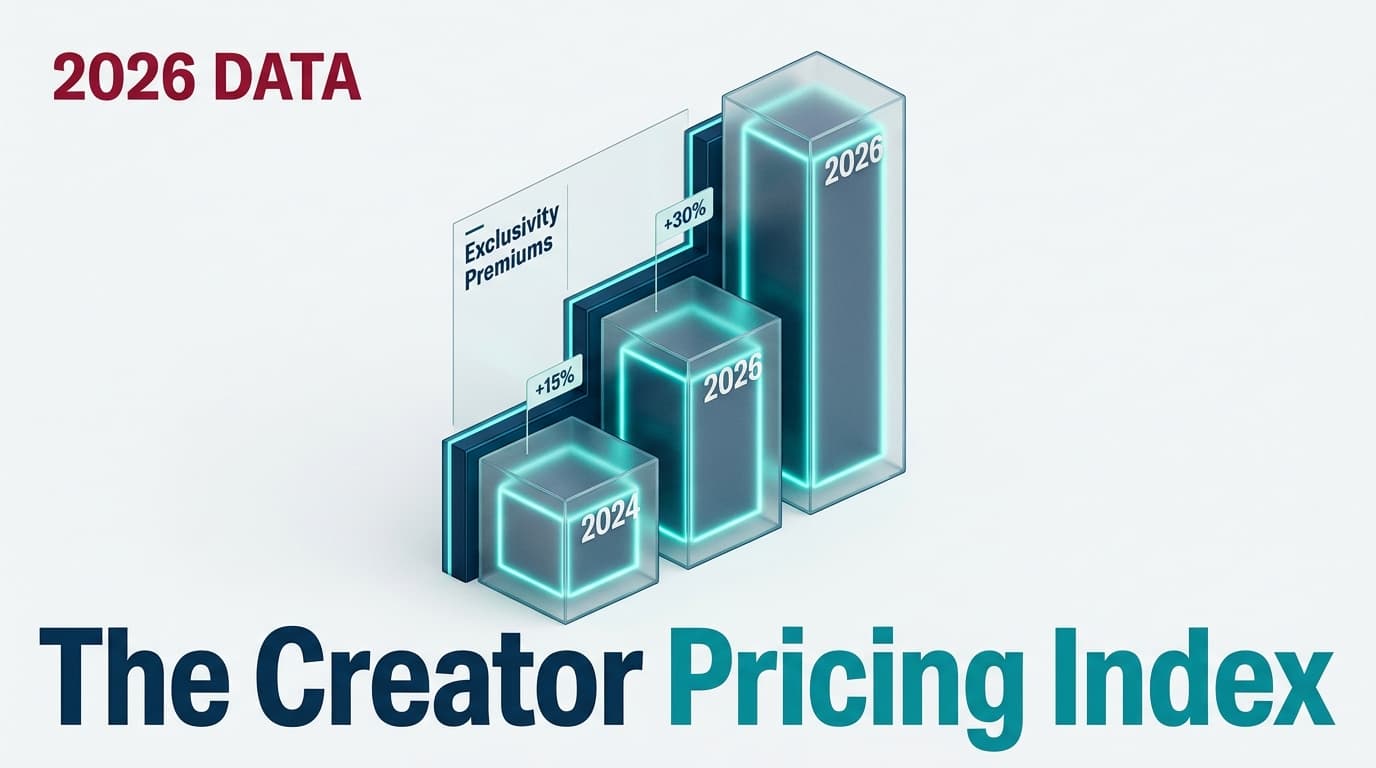
In 2026, the industry benchmark for a base fee is roughly 50-70% of their historical flat rate. This 'Floor' ensures the creator isn't working for free if the algorithm decides to bury a post, which is a real risk following Instagram's May 2026 update penalizing 'unoriginal' or low-engagement content. You are paying for the asset creation and the initial access to their audience.
Common Pitfall: Setting the base fee too low. If the base doesn't cover the creator's basic production costs, they will deprioritize your campaign for a competitor offering a guaranteed check. Aim for a 'Respect Fee' that secures their best creative energy.
Step 2: Define Your Performance Kickers and Tiers
Once the floor is set, you define the 'Ceiling.' This is where the performance kickers live. Instead of a vague 'bonus for good results,' create a tiered structure.
For example, if you are a DTC brand, your tiers might look like this:
- Tier 1 (Engagement): $X bonus if the post exceeds a 4% engagement rate (ER) within the first 72 hours.
- Tier 2 (Intent): $Y bonus for every 1,000 'Saves' or 'Shares'—metrics that signal high intent.
- Tier 3 (Conversion): $Z commission for every sale tracked via a dedicated link or pixel.
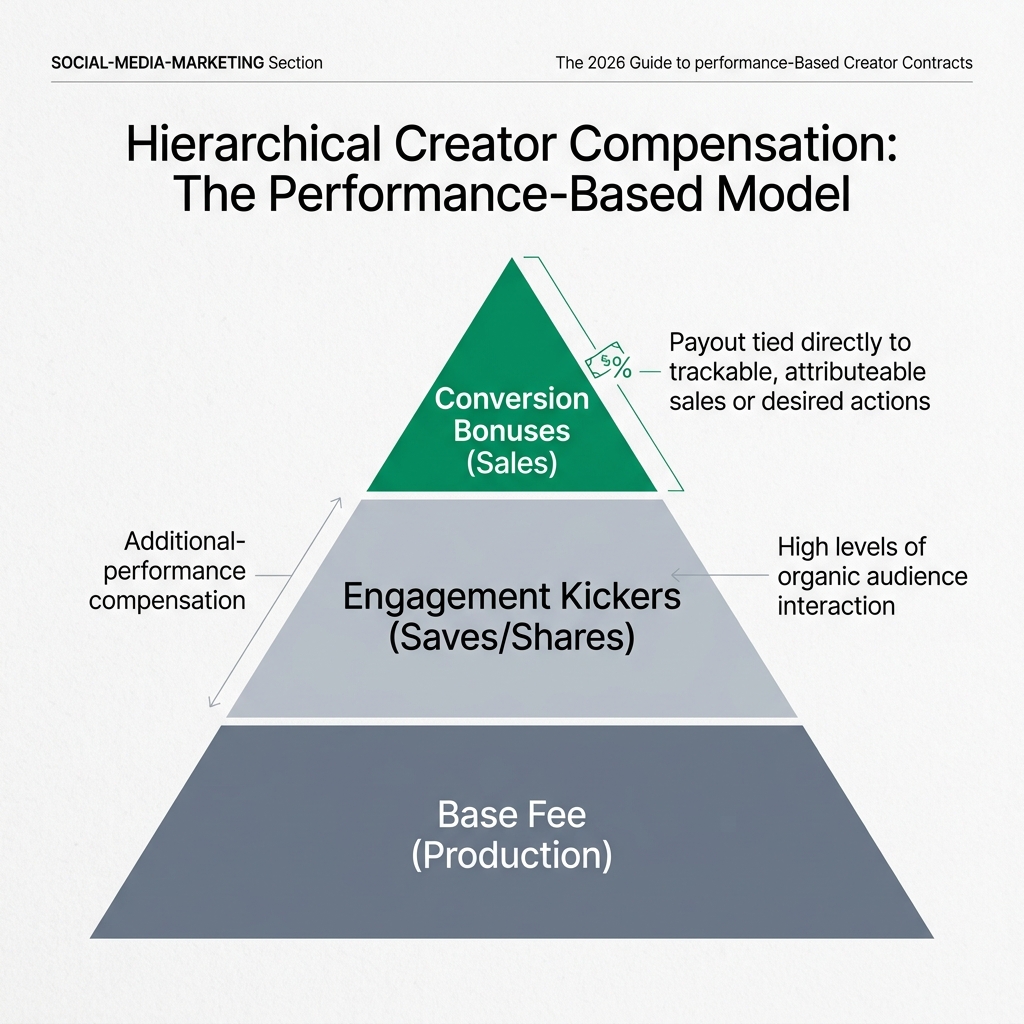
Why does this matter? It shifts the creator's mindset from 'posting and ghosting' to active community management. When their payout depends on engagement, they are more likely to respond to comments and share the content to their Stories, driving the algorithm further. Per Professor Watson’s 2026 analysis of advanced analytics in marketing, AI-powered strategies now allow brands to predict these kickers' costs with 90% accuracy before the campaign even launches.
Common Pitfall: Using too many tiers. Keep it to three. If the contract looks like a tax return, the creator’s agent will reject it immediately.
Step 3: Implement Multi-Touch Attribution and Tracking
Performance deals live or die by the data. In 2026, relying on a single 'link in bio' is amateur hour. You must use multi-touch attribution. This means providing the creator with a suite of tracking tools: a unique UTM-parameterized link, a specific promo code for 'view-through' conversions, and a tracking pixel if they are running the content as a 'Spark Ad' on TikTok.
With TikTok’s new AI ad formats announced in May 2026, you can now automatically turn high-performing organic creator content into paid ads with built-in performance tracking. Your contract must specify that the creator grants 'whitelisting' or 'partnership ad' access for at least 30 days. This allows you to scale the content that is actually converting, effectively paying the performance kicker on the volume you control.
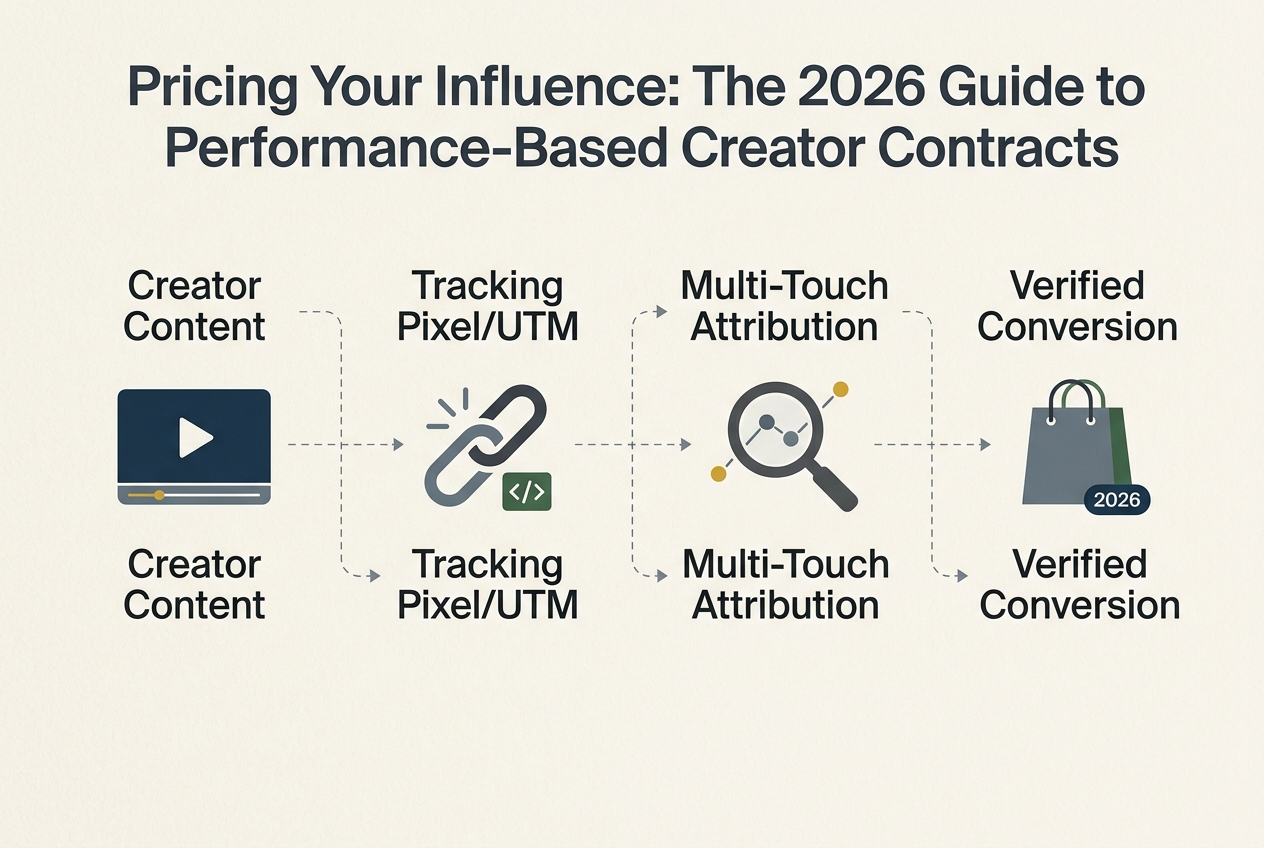
Common Pitfall: Failing to account for 'Dark Social.' Many conversions happen when a user sees a Reel, closes the app, and searches for the brand on Google. Use a 'How did you hear about us?' survey at checkout to capture the 15-20% of creator-driven sales that pixels often miss.
Step 4: Automate the Payout and Verification Process
Nobody wants to wait 90 days for a performance bonus. To maintain trust, use a workflow tool like Sprout Social or a dedicated creator management platform that integrates with your e-commerce backend (like Shopify or Amazon).
In your contract, specify a 'Verification Window'—usually 14 to 30 days post-campaign—to allow for returns and attribution lag. Once that window closes, the performance kicker should be paid out automatically. Famoid’s expansion into AI-driven engagement solutions now offers real-time verification of bot-free engagement, ensuring you aren't paying bonuses on fake likes or inflated metrics.
Common Pitfall: Manual reporting. If you ask a creator to send you screenshots of their analytics, you are adding friction to the relationship. Use 'Read-Only' API access to their professional dashboard instead.
Step 5: Verify Your ROI and Adjust the Model
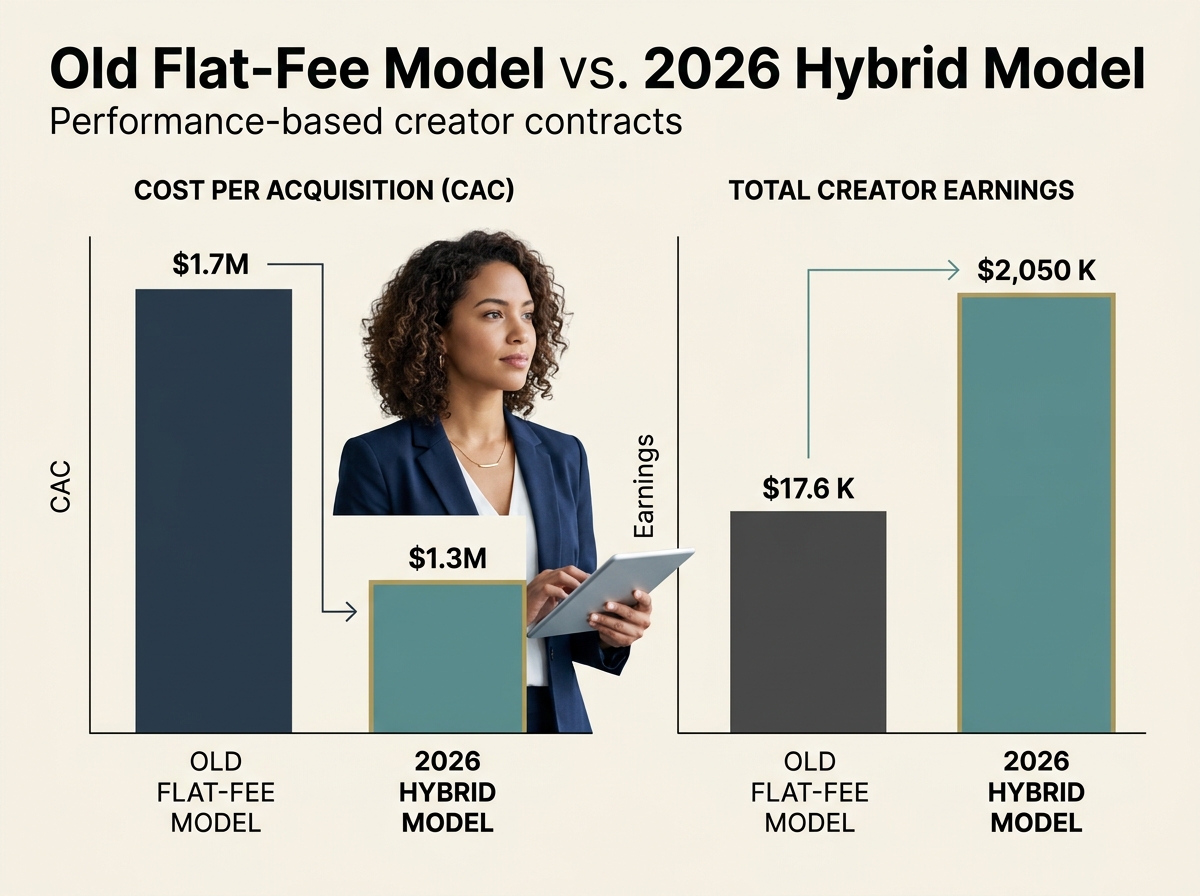
How do you know if the hybrid model worked? Compare your Effective CPM (eCPM) and Customer Acquisition Cost (CAC) against your previous flat-fee campaigns.
If your total spend (Base + Kickers) resulted in a 20% lower CAC than your previous flat-fee average, the model is a success. You have successfully de-risked your marketing spend while giving the creator a path to earn more than their usual rate. This 'win-win' is the foundation of long-term creator partnerships in 2026.
Related Tactics to Try Next:
- The 'Retention Bonus': Offer a kicker for creators whose audience has a high 90-day LTV (Life Time Value).
- Usage Rights Scaling: Tie the cost of extended usage rights (e.g., using the video in TV ads) to the organic performance of the post.
- Community Milestones: Pay a bonus if the creator’s post sparks a specific trending sound or hashtag challenge that reaches a certain threshold of UGC (User Generated Content).
FAQ