
The era of the 'accidental LinkedIn influencer' has ended. As we move through 2026, B2B brands have pivoted aggressively, reallocating budgets from stagnant LinkedIn Sponsored Content feeds toward direct partnerships with executive influencers. This isn't a trend driven by vanity; it's a response to the rising 'Authority Premium.'
Since Meta deprecated CrowdTangle in August 2024 and Snap began clamping down on AI-generated Spotlight videos in mid-2026 to favor authentic human-authored experiences, the value of a verified, human voice in the professional sphere has skyrocketed. While traditional social platforms struggle with bot-saturated feeds, LinkedIn’s walled garden of professional identity has become the premium inventory of choice for CMOS at Salesforce, HubSpot, and niche SaaS players alike.
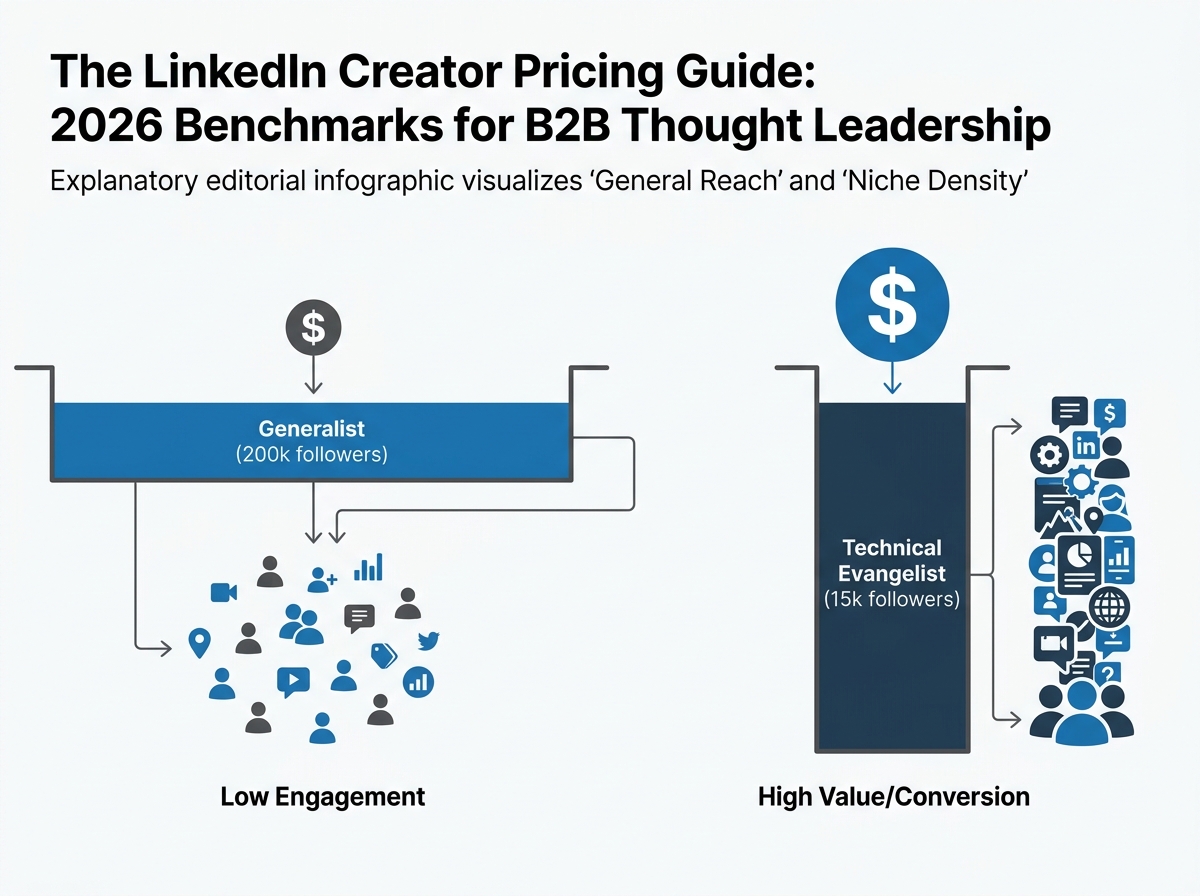
Why it matters: You can no longer buy B2B attention at scale through generic brand handles. The algorithm now heavily weights 'professional resonance'—a metric that tracks how many senior decision-makers engage with a post compared to the general user base. If you aren't paying for the creator's specific audience density, you're overpaying for reach that doesn't convert.
Key takeaways
- Niche Density > Follower Count: A creator with 10,000 CTO followers now commands a higher flat fee than a generalist with 200,000 followers.
- The Authority Premium: Expect to pay a 40-60% markup over standard CPMs for creators who hold C-suite titles in their day jobs.
- Multi-Format Licensing: 2026 contracts now standardly include 'dark social' usage rights for Slack and Discord communities.
- Performance-Based Floors: Flat fees are increasingly supplemented by 'quality lead' bonuses rather than just click-through rates.
The Shift to Niche Density and the Death of the Generalist
For years, B2B influencer marketing was a pale imitation of B2C. Brands looked for high follower counts and 'engagement rates' that were often inflated by pods. In 2026, the game is different. Data from internal agency benchmarks suggests that 'niche density'—the percentage of a creator’s audience that holds a specific job title—is the primary driver of cost.
If you are targeting DevOps leads at Series C startups, a creator like Sarah Jenkins (a pseudonymous example of the new breed) who has only 12,000 followers but a 70% density in that specific segment, will cost you more than a generic 'leadership coach' with a million followers. The market has realized that 100 of the right eyeballs are worth 100,000 of the wrong ones. This is particularly true as LinkedIn's algorithm has become more sophisticated at identifying and rewarding 'deep-domain expertise.'
How to measure niche density in B2B
We are seeing CPMs for general business influencers hover around $50-$80. However, for 'High-Density' creators (those with >50% audience concentration in a specific vertical), CPMs are regularly clearing $150. This is the 'Authority Premium' in action. You aren't just buying an impression; you're buying a transfer of trust that a generic ad unit cannot replicate.
1. The C-Suite Strategist (Followers: 5k–25k)
These are active executives who post 2-3 times a week. They aren't full-time creators; they are practitioners who happen to have an audience. Their value lies in their peer-to-peer influence.
Pricing Benchmark: $1,500 – $3,500 per post.
Because these individuals have high-paying day jobs, they don't need your sponsorship money. This creates a supply-side scarcity. You are paying for their professional reputation. In 2026, these deals often include a 'consultancy' component where the creator helps shape the whitepaper or product roadmap they are promoting.
Best for: High-ticket enterprise software where the sales cycle is 6-12 months and requires buy-in from other executives.
2. The Technical Evangelist (Followers: 20k–75k)
Common in cybersecurity, fintech, and AI infrastructure. These creators provide deep-dive tutorials, code reviews, or architectural critiques. They are the 'builders' that other builders follow.
Pricing Benchmark: $4,000 – $8,000 per deep-dive post or video.
Following the WooCommerce social login vulnerability scares of 2026, which saw unauthenticated attackers gaining full control of sites, the demand for 'security-first' influencers has peaked. Brands in the infrastructure space are paying top dollar for creators who can explain complex technical solutions without sounding like a sales pitch.
Best for: Developer tools, API services, and cybersecurity firms looking for 'bottom-up' adoption.
3. The Vertical News Curator (Followers: 50k–150k)
These creators act as the 'Morning Brew' of their specific niche—be it MarTech, HR-Tech, or Supply Chain. They aggregate news, provide commentary, and have a highly habitual audience that checks their feed every morning.
Pricing Benchmark: $5,000 – $12,000 for a multi-post 'takeover' or weekly sponsorship.
These creators are the workhorses of B2B awareness. While their 'Authority Premium' is lower than a C-suite executive, their reach is more predictable. They often offer 'bundle' packages that include a LinkedIn post, a mention in their private newsletter, and a shout-out on their podcast.
Best for: Mid-market SaaS companies looking for consistent brand presence and top-of-funnel traffic.
4. The 'LinkedIn Famous' Generalist (Followers: 250k+)
These are the household names of the platform. They talk about productivity, leadership, and 'the future of work.' While their niche density is low, their raw reach is massive.
Pricing Benchmark: $15,000 – $35,000 per post.
Interestingly, the market for these creators has softened slightly in 2026. As brands move toward specialized influence, these generalists are being used more like traditional TV ads—great for broad awareness, but harder to track to a specific B2B lead. To stay relevant, many are now offering 'Series' sponsorships where they track a specific theme over a month.
Best for: Large consumer-facing brands (like Jazzercise, which recently tapped into nostalgia to reach new generations) or massive B2B brands like Microsoft or Google Cloud that need to maintain 'top of mind' status across all business segments.
5. The Industry Analyst (Followers: 15k–40k)
Think 'Gartner, but on social.' These are former analysts or consultants who provide data-driven takes on market shifts. They often use tools like Brandwatch’s topic-clustering view to show their audience exactly where a market is heading.
Pricing Benchmark: $3,000 – $7,000 per report or data-backed post.
Their audience consists of strategists and planners. A recommendation from an analyst creator carries a different weight than a recommendation from a peer; it feels like an 'official' endorsement. In 2026, these creators are increasingly being used for 'Market Validation' campaigns before a product launch.
Best for: New category creators or companies looking to pivot their brand perception through data.
6. The Talent Brand Ambassador (Internal Employee)
This is a rising category where companies pay their own employees to build their personal brands on LinkedIn. While the 'fee' is often handled via bonuses or specialized salary bumps, the internal 'transfer price' is becoming a line item in marketing budgets.
Pricing Benchmark: $500 – $2,000 'stipend' per month for consistent posting.
Setting up an employee advocacy program that actually works
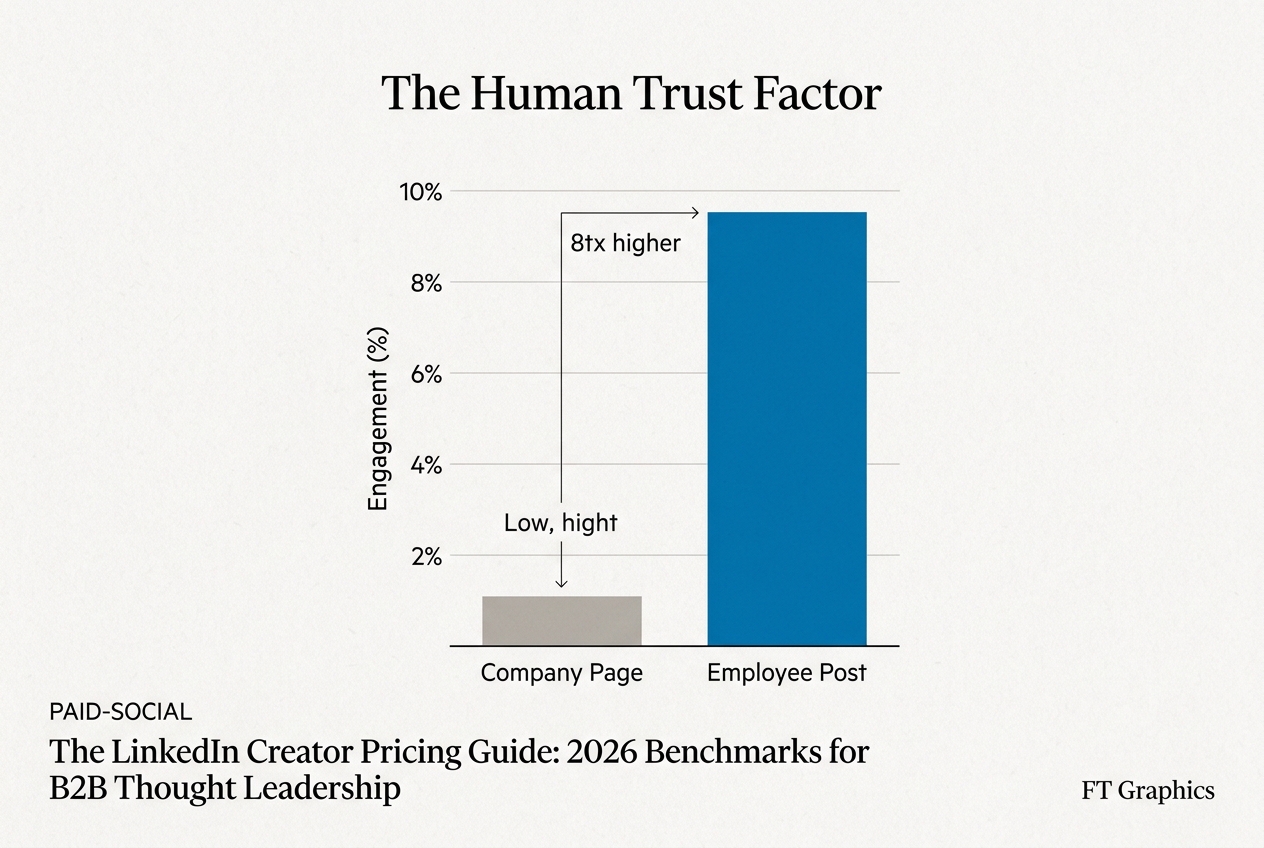
Brands have realized that an employee's post gets 8x more engagement than a post from the company page. By 2026, the 'Executive Social Program' has become a standard part of the CMO's toolkit, especially for recruiting top-tier talent in competitive fields like AI engineering.
Best for: Recruitment marketing and humanizing large, faceless corporations.
7. The Video-First Creator (Followers: 30k–100k)
With LinkedIn’s dedicated video tab becoming a primary traffic driver in late 2025, creators who can produce high-quality, short-form B2B video are in extreme demand. These aren't TikTok-style dances; they are 'talking head' insights or 'day in the life' professional vlogs.
Pricing Benchmark: $6,000 – $10,000 per video.
Production value matters here. While Snap is removing wholly AI-generated videos to favor authenticity, LinkedIn users still expect a level of professional polish. A creator with a high-end home studio setup can command a 30% premium over one just using their phone.
Best for: Demonstrating software UI, showcasing company culture, or explaining complex regulatory changes.
The Three Pillars of B2B Pricing in 2026
When you sit down to negotiate your next LinkedIn creator contract, throw out the old influencer calculators. They don't account for the B2B reality. Instead, use these three pillars to determine if the price is fair.
Pillar 1: The Scarcity of the Audience
If you are targeting 'VP of Logistics at Global Shipping Firms,' there might only be 2,000 people in the world who fit that description. If a creator has 500 of them in their comments section every week, their price is untethered from their follower count. You are paying for a direct line to a closed room.
Pillar 2: Content Longevity (The SEO Long-Tail)
LinkedIn posts in 2026 have a longer shelf life than ever before. The 'Suggested for You' algorithm now resurfaces high-performing professional content for up to three weeks after it’s posted. When pricing, ask for the creator's 'Average 14-day Reach,' not just the 24-hour spike. You are paying for a slow-burn asset, not a flash-in-the-pan tweet.
Pillar 3: IP and Usage Rights
This is where most B2B marketers lose money. In 2026, the value of the creator’s face and voice on your own paid ads is often higher than the post on their feed. A 'Whitelisting' or 'Partnership Ads' agreement—where you run spend behind their post through their handle—should typically add 20-40% to the base fee. Don't let them keep the IP for free if you plan to use that video in your Q4 retargeting funnel.
Negotiating the 'Authority Premium'
How do you talk an executive down from a $10,000 quote? You don't. Instead, you change the scope. In the B2B world, these creators are often sensitive to 'brand alignment.' If you can prove that your product genuinely helps their audience, they are more likely to accept a 'Performance + Base' model.
We recommend offering a 'Floor Fee' that covers their production time, plus a 'Quality Lead' bonus. A 'Quality Lead' is defined not by a form fill, but by a match against your Ideal Customer Profile (ICP). If they bring in a Lead from a Fortune 500 company, they get a $500 kicker. This aligns their incentives with your actual business goals, moving away from the 'vanity metrics' that plagued the early 2020s.
The Future of B2B Creator Measurement
As we look toward 2027, the integration of CRM data with social platforms will be the final frontier. We are already seeing early-adopter agencies using 'Social-to-Salesforce' attribution models that track a LinkedIn creator's influence across the entire deal cycle.
If you are still measuring your LinkedIn influencers by 'Likes' and 'Shares,' you are playing a 2022 game in a 2026 world. The winners are those who understand that in B2B, influence is about depth, not breadth.
The rise of B2B social attribution models
Start by identifying 5-10 'High-Density' creators in your niche. Don't look at their follower counts. Look at who is commenting on their posts. If you see your target customers there, you've found your influencers. Now, use the benchmarks above to make sure you aren't leaving money on the table—or insulting the very experts who hold the keys to your next big enterprise contract.
FAQ