
By the time you finish this guide, you will have a functional framework for measuring how often your brand is cited by large language models (LLMs) and, more importantly, how to attach a dollar value to those citations. You don't need a PhD in data science to start, but you will need access to your brand’s Search Console, a dedicated LLM monitoring tool like BrightEdge's Generative Parser, and a willingness to stop obsessing over blue links.
Traditional search is no longer the sole gatekeeper of discovery. Since the widespread adoption of AI-integrated search engines in early 2025, the click-through rate (CTR) for informational queries has dropped by an estimated 35% across many sectors, according to internal agency benchmarks. Users aren't clicking through to your blog post; they're reading the summary generated by SearchGPT, Perplexity, or Gemini. If your brand isn't the source of that summary, you're invisible. This is the era of Generative Engine Optimization (GEO).
TL;DR
- Shift Focus: Stop tracking keyword rankings and start tracking 'Citation Share' within LLM responses.
- The GEO Stack: Use structured data and authoritative citations to become the 'preferred source' for AI.
- Revenue Mapping: Use multi-touch attribution to identify 'zero-click' brand lift generated by AI summaries.
- The Audit: Perform a 5-layer audit to verify your brand's footprint across Perplexity, Gemini, and ChatGPT.
Step 1: Establish Your Baseline Citation Share
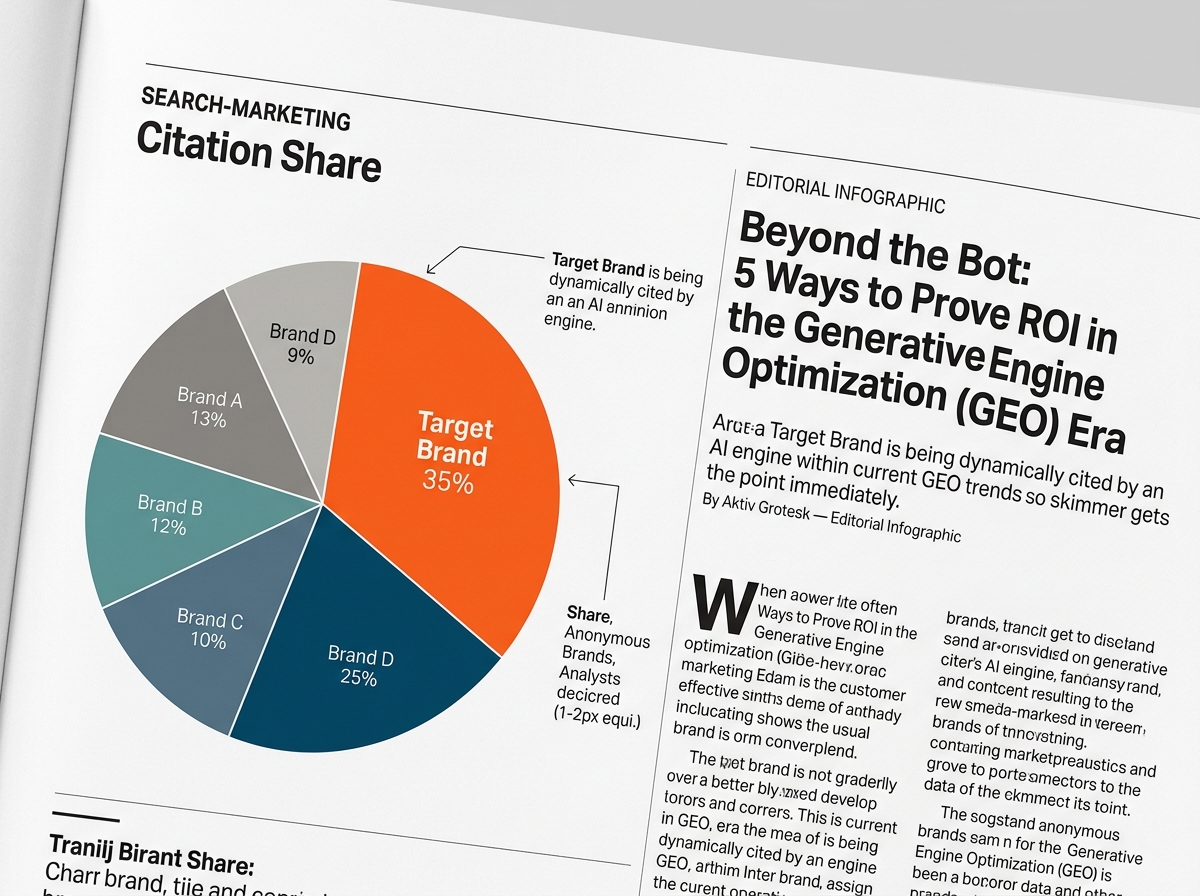
You cannot optimize what you cannot see. In the world of GEO, your primary KPI isn't 'Position 1'; it is 'Citation Share.' This represents the percentage of time an LLM chooses your content as the primary source for a query related to your industry. Unlike traditional SEO, where Google's crawlers are the only audience, GEO requires you to understand how different models interpret your brand authority.
Start by identifying your top 50 high-value commercial intent keywords. Instead of checking a SERP tracker, run these through a generative audit tool. You want to see which domains the AI is pulling from. Are they citing your competitors? Are they citing Wikipedia? Or are they citing niche industry reports? If you are a B2B SaaS company, for example, and you see that Gemini consistently cites G2 or Capterra instead of your own whitepapers, your problem isn't content quality—it's source trust.
Why it matters: Information in a generative response is often presented as objective truth. If a competitor is the only cited source for a "how-to" query, they own the top of the funnel entirely. You need to know your starting point to justify the budget for GEO-specific content updates.
Common Pitfall: Don't treat all LLMs as a monolith. Perplexity tends to favor recent news and structured data, while ChatGPT’s search functionality leans heavily on established web authority and Reddit threads. Audit each model separately.
Step 2: Implement the 'Authoritative Fact' Content Layer
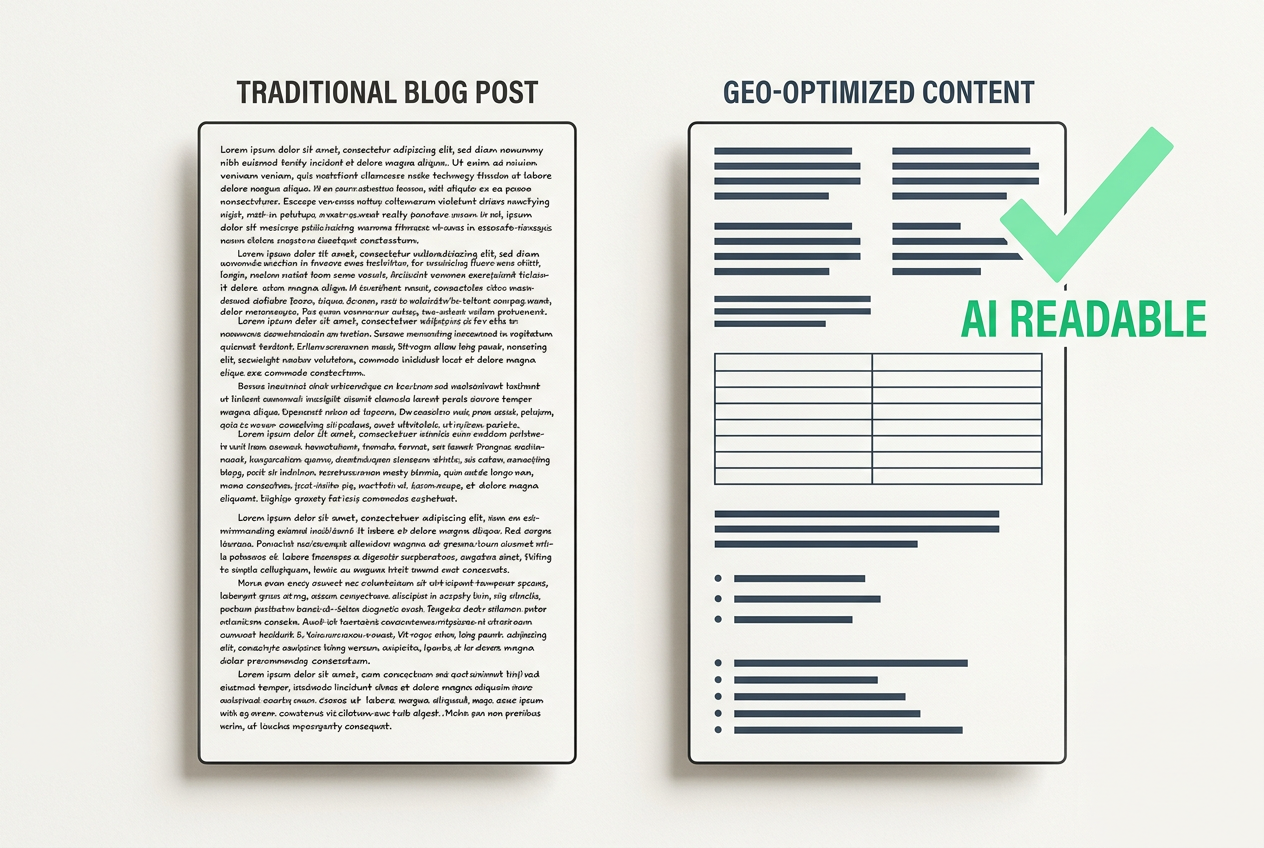
LLMs are designed to minimize hallucinations by anchoring their responses in 'facts.' To win in GEO, you must structure your content so it is easily digestible as a series of verifiable claims. This is the 'Authoritative Fact' layer. It involves moving away from long-winded storytelling and toward high-density information blocks.
Look at how the NFL successfully marketed the Super Bowl in the UK by leveraging TikTok-style punchy delivery [S3]. They didn't just post game footage; they provided context that was easily indexed and repeated. For your website, this means using H2s and H3s that explicitly answer common questions, followed by a 'Fact Box' or a summary table.
For example, if you're a movie marketing firm—a sector TikTok is currently reshaping [S2]—don't just write a review. Create a structured data block that lists 'Release Date,' 'Cast,' 'Streaming Platform,' and 'Critical Consensus.' LLMs love tables. They are the most efficient way for a model to extract data without wasting tokens.
Why it matters: When an LLM 'reads' your page, it looks for the path of least resistance. Clear, tabular data or bulleted lists with high factual density are more likely to be quoted verbatim in a generative summary.
Common Pitfall: Avoid flowery language and 'marketing speak.' Adjectives like 'groundbreaking' or 'innovative' are ignored by LLMs. Focus on nouns and verifiable numbers. If you say you are the 'best-selling,' back it up with a dated statistic that the model can verify elsewhere.
Step 3: Map Zero-Click Brand Lift to Revenue
The hardest part of GEO is proving it makes money. When a user asks an AI 'What is the best CRM for small law firms?' and the AI lists your brand but doesn't provide a link, you've won the impression but lost the click. This is 'zero-click' discovery. To measure this, you need to shift toward a 'Brand Lift' attribution model.
Monitor your 'Direct' and 'Branded Search' traffic in Google Analytics 4. When you see a spike in users typing your brand name directly into Google or their browser bar, but no corresponding increase in paid ad spend or social media viral moments, that is often the 'GEO Echo.' The user saw your brand in an AI response, didn't click the source link, but searched for you specifically five minutes later.
By tagging these branded search arrivals with a specific 'GEO-attribution' segment in your CRM, you can track them through to a closed-won deal. Based on internal data from mid-market agencies, brands that optimize for LLM citations see a 12-18% increase in branded search volume within three months of implementation.
Why it matters: If you only track clicks from AI engines (which are currently low), you will conclude that GEO is a waste of time. Tracking the downstream branded search is the only way to prove the actual ROI.
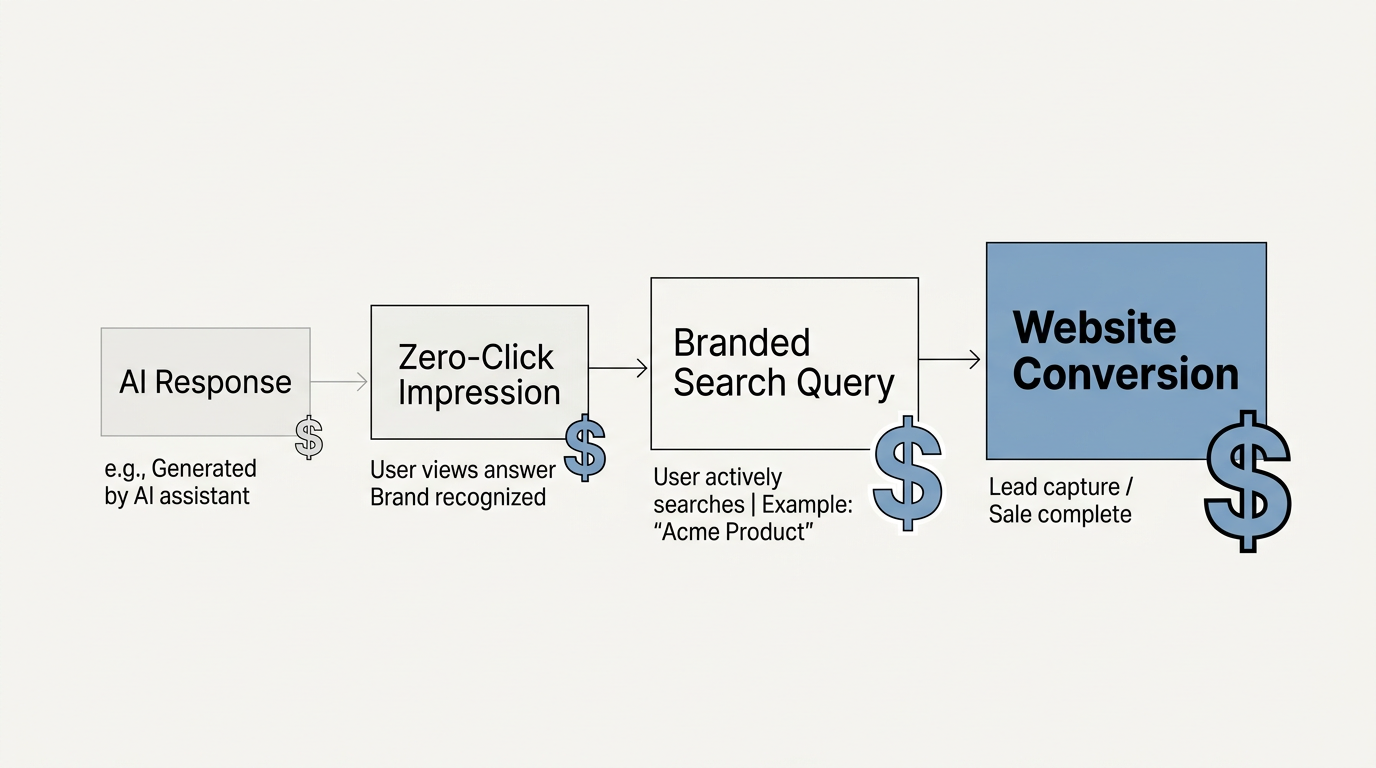
Common Pitfall: Failing to exclude existing brand awareness. You must establish a 'pre-GEO' baseline of branded search to ensure you aren't just counting the results of your existing PR efforts.
Step 4: Audit Your Third-Party Trust Signals
LLMs don't just look at your website; they look at what the rest of the internet says about you. This is where 'unethical' marketing history, like the purchase of fake TikTok fans [S1], can actually hurt you in the long run. Modern LLMs are increasingly trained to identify 'sentiment clusters.' If your brand has 10,000 five-star reviews on a site that the AI identifies as a 'review farm,' the model may lower your authority score.
To prove ROI, you must audit your presence on the platforms the LLMs trust most: Reddit, Wikipedia, Quora, and major trade publications. If you are mentioned favorably in a recent Ad Age piece about TikTok tips [S3], that mention carries more weight in a Gemini response than five blog posts on your own site. Your GEO strategy must include a 'Digital PR' component that targets these high-authority nodes.
Why it matters: Generative engines use 'consensus' as a proxy for truth. If five different reputable sources say your product is the best for 'X,' the AI will state it as a fact. If only your website says it, the AI will ignore it.
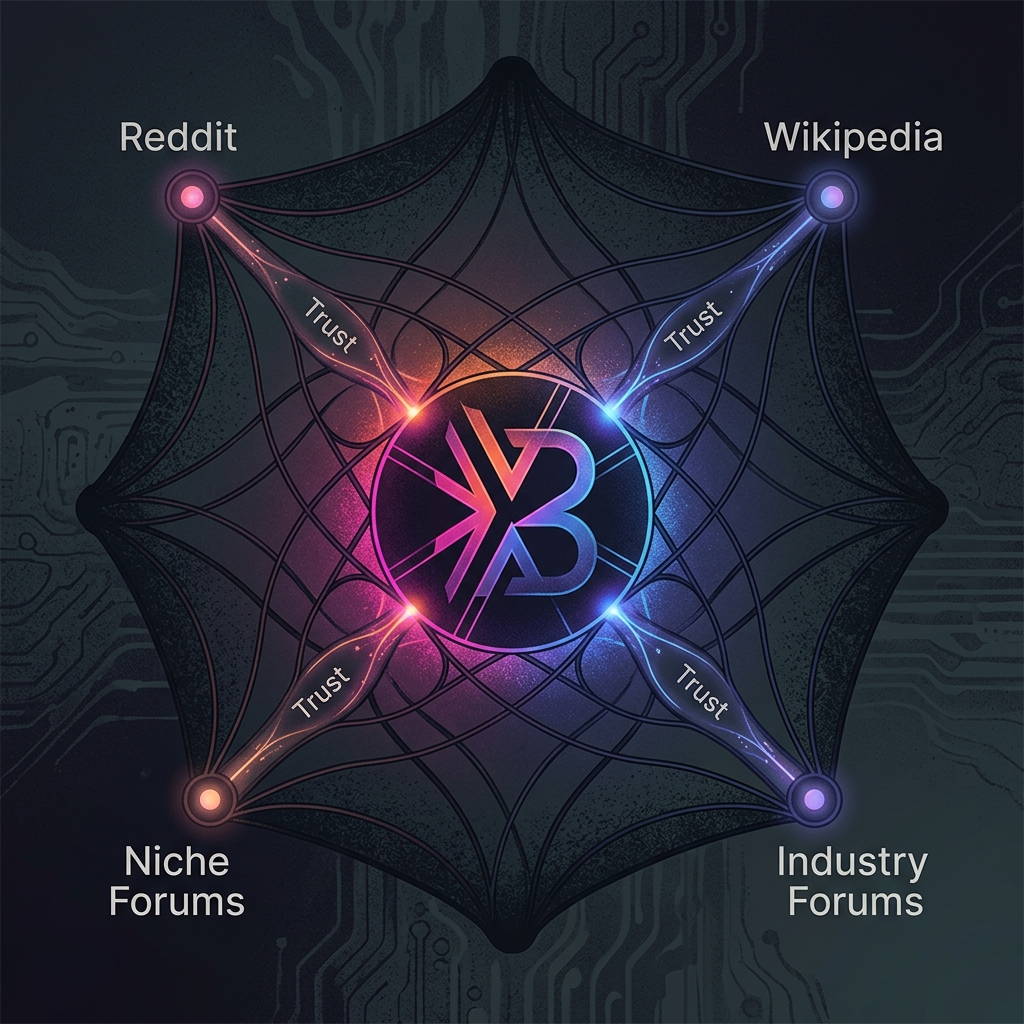
Common Pitfall: Over-optimizing your own site while ignoring your 'off-page' AI footprint. You can't win GEO in a vacuum; you need a chorus of external voices.
Step 5: Verification and Iterative Refinement
How do you know it’s working? The final step is a monthly 'Generative Visibility Audit.' You should see three specific trends if your GEO strategy is successful:
- Citation Frequency: An increase in the number of times your URL appears in the 'Sources' or 'References' section of Perplexity and SearchGPT.
- Sentiment Shift: When you ask an LLM 'What do people think of [Brand Name]?', the response should become more specific and aligned with your key value propositions.
- Branded CPC Reduction: As your 'zero-click' brand lift increases, your reliance on expensive branded search ads should decrease, as users find you organically via AI discovery.
According to Statista, the most used TikTok ad objectives in Q1 2025 focused heavily on video views and reach [S4]. This top-of-funnel activity feeds the LLMs with the 'buzz' they need to recognize a brand as relevant. Use your social data to inform your GEO strategy—if a specific video is trending, ensure the transcript is available on your site for LLMs to index.
Why it matters: GEO is not a 'set it and forget it' tactic. Algorithms change. Models are updated. Regular verification ensures you aren't optimizing for a version of an LLM that no longer exists.
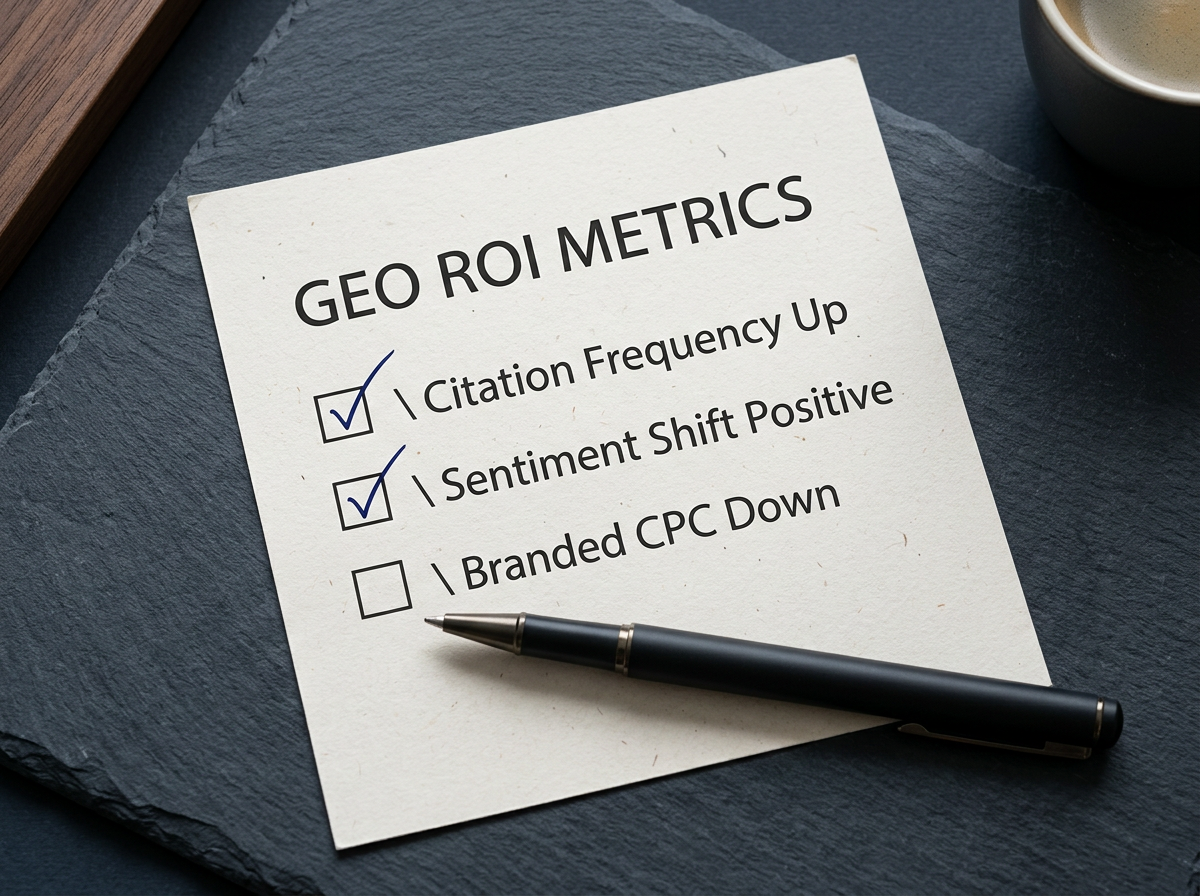
Verification: How to Know Your GEO Strategy is Winning
You’ve done the work, but the board wants proof. To verify your GEO success, perform a 'blind test.' Have a team member who hasn't been involved in the project query five different LLMs with broad industry questions. If your brand appears in the top 3 recommendations or citations in at least 3 of those models, you have achieved 'Generative Dominance.'
Compare this against your GA4 'Direct' traffic and 'Branded Search' impressions in Search Console. A positive correlation (R > 0.7) between LLM citations and branded search volume is the 'smoking gun' for GEO ROI. Finally, check your conversion rates for these branded searchers; they typically convert at 2x the rate of cold traffic because the AI has already 'sold' them on your solution before they even reached your site.
Three Related Tactics to Try Next
Once you have mastered the 5-layer GEO framework, consider these advanced tactics to further solidify your lead:
- Synthetic Persona Testing: Create 'synthetic personas' in a tool like Claude to simulate how different customer types might interact with an AI to find your product. Use these insights to tweak your 'Authoritative Fact' layer.
- Video Transcript Optimization: Since platforms like TikTok are becoming search engines in their own right [S5], ensure every video you produce has a high-quality, keyword-rich transcript on your site. LLMs are increasingly indexing video content via these transcripts.
- The 'Wikipedia' Play: Identify gaps in Wikipedia entries related to your niche. While you shouldn't edit your own page, contributing factual, sourced information to broader industry pages (with citations back to your original research) is the fastest way to boost your authority in the eyes of an LLM.
How to adapt your social strategy for AI search Measuring the impact of TikTok on branded search [INTERNAL: The future of multi-touch attribution in 2026 -> attribution-modeling-2026] Why structured data is the new SEO
FAQ