
OpenAI has officially expanded its ChatGPT advertising pilot into the Latin American market this week, introducing a suite of performance tools including automated bidding and view-through conversion tracking. The rollout, targeting high-growth markets like Brazil and Mexico, marks the platform's transition from a limited search experiment into a sophisticated, full-funnel competitor to Meta and Google.
For U.S.-based social media managers and paid buyers, this isn't just another platform expansion. It represents the first real-world stress test of a "conversational" ad unit operating with the same automated efficiency as Meta’s Advantage+ or Google’s Performance Max. If you have been treating ChatGPT as a niche search play, the LATAM rollout suggests it is time to re-evaluate it as a core performance channel.
Key takeaways:
- Automated Bidding Arrives: OpenAI is moving away from manual fixed-rate testing to a dynamic auction model similar to the Facebook Ad Manager environment.
- Full-Funnel Attribution: The introduction of view-through conversions allows marketers to measure the impact of conversational ads even when a user doesn't click immediately.
- LATAM as a Sandbox: The region serves as a high-volume testing ground for OpenAI to refine its algorithm before a broader global rollout later this year.
The shift from search to conversational performance
Until now, the conversation around OpenAI's monetization has focused on SearchGPT—a direct threat to Google’s search monopoly. However, the latest updates in the LATAM market suggest OpenAI is looking at the social media budget, not just the search budget. By integrating automated bidding, OpenAI is essentially telling buyers that its AI can optimize for outcomes (leads, sales, app installs) better than a human manual bidder can.
This mirrors the trajectory of Meta’s Advantage+ suite. When Meta moved toward automation, it initially faced skepticism from buyers who wanted granular control. Yet, as the algorithm proved it could find high-value users more efficiently, the industry shifted. OpenAI is betting on the same outcome. In the LATAM pilot, early reports indicate that the system is prioritizing "conversational depth"—rewarding ads that lead to longer interactions between the user and the AI—as a proxy for intent.
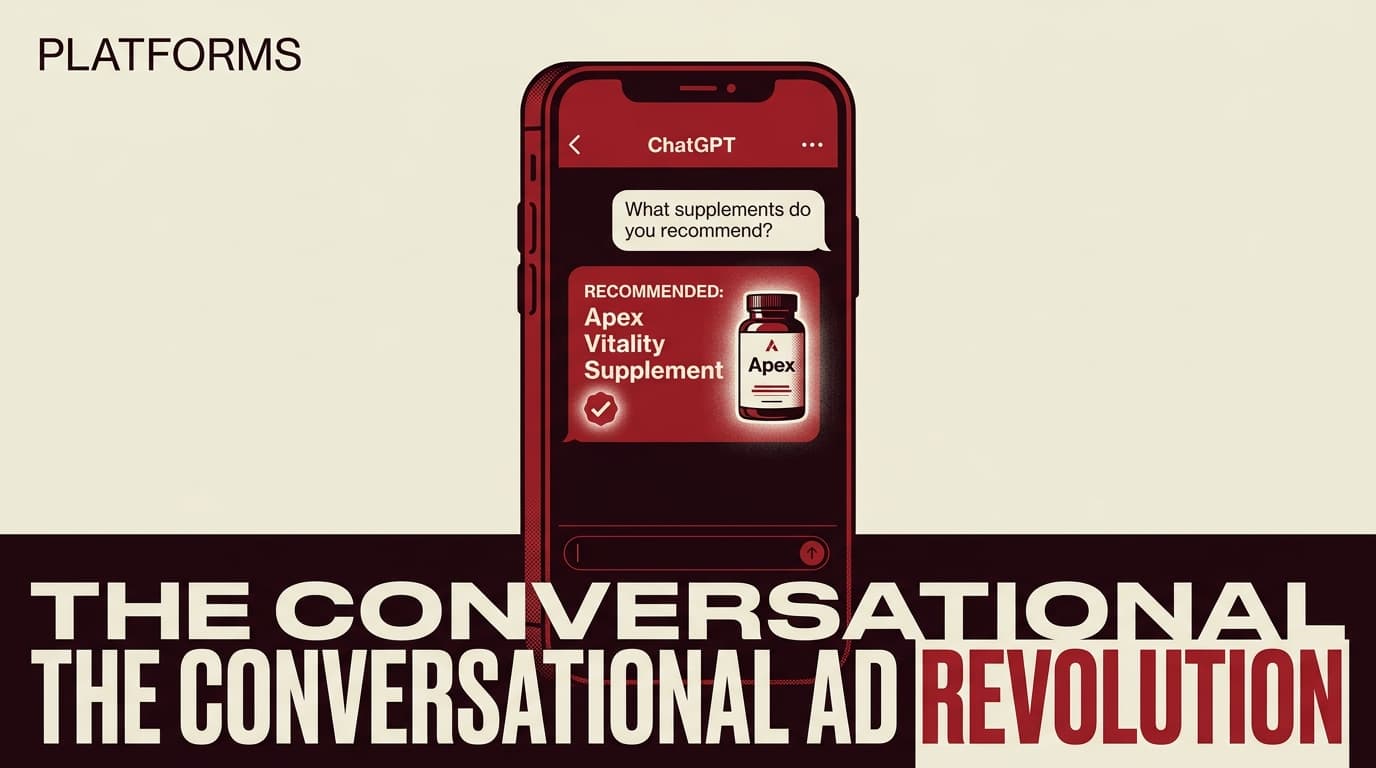
For a brand marketing lead, this changes the creative requirement. You aren't just designing a static image for a feed; you are designing a prompt-response loop. If a user asks ChatGPT for supplement recommendations, a brand like AG1 or Grüns [S3] isn't just appearing as a sponsored link. It’s appearing as a verified suggestion within a trusted dialogue. The automated bidding engine then determines the value of that specific placement based on the likelihood of the user following through with a purchase.
Why LATAM is the perfect stress test for OpenAI
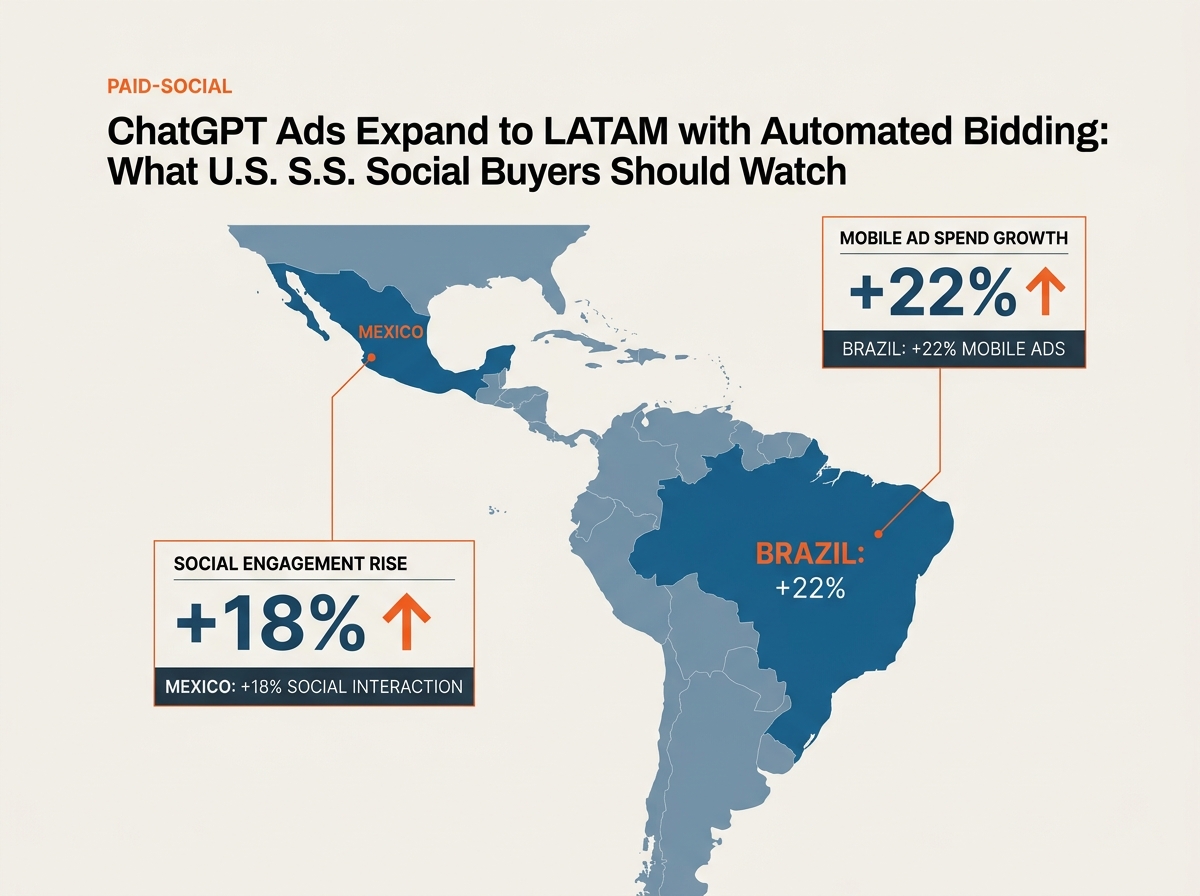
Choosing Latin America for this expansion is a strategic masterstroke. The region has some of the highest social media engagement rates globally, particularly on mobile-first platforms. According to internal data from regional agencies, mobile ad spend in Brazil has seen consistent double-digit growth year-over-year. By testing here, OpenAI can gather massive amounts of interaction data at a lower CPM than in the U.S. or UK.
How emerging markets dictate social ad trends
This volume is critical for training an automated bidding system. AI needs data to fail, learn, and optimize. In a market like Mexico, where conversational commerce (via WhatsApp) is already the standard for small and medium businesses, users are naturally inclined to interact with an AI in a transactional way. This provides OpenAI with a "clean" data set of how users move from a question to a conversion.
Furthermore, the prevalence of SMM panels and automated growth services in these regions [S2] has created a noisy environment where authentic engagement is hard to find. OpenAI’s walled garden offers a reprieve for brands. Because the ads are served within a private, authenticated chat session, the risk of bot-driven fraud—which Pew Research suggests is increasingly difficult to detect as 1 in 10 webpages now show signs of AI authorship [S1]—is significantly mitigated. For a performance buyer, the "cleanliness" of the traffic in ChatGPT might soon justify a premium over the open web.
View-through conversions and the attribution problem
One of the most significant hurdles for "new" platforms is proving they actually drive sales. OpenAI is addressing this head-on by launching view-through conversion (VTC) tracking in this update. This allows marketers to see if a user saw a brand mention in a ChatGPT response and then purchased on the brand’s website later, even if they didn't click the specific sponsored link.
This is a direct shot at the attribution models used by agencies like True North Social [S4], which emphasize comprehensive digital presence. If a buyer can see that ChatGPT is influencing the top of the funnel, they are more likely to shift budget away from traditional awareness channels like Pinterest or even certain types of YouTube pre-roll.
However, this also introduces the "attribution wars" we saw post-iOS 14. As OpenAI builds its own measurement stack, it will inevitably clash with third-party tools like Northbeam or Triple Whale. Marketers will need to decide if they trust OpenAI’s self-reported numbers. The platform is reportedly working on integrations with major social management tools like Sprout Social and Sprinklr to provide a more unified view, but those API connections are still in the early stages.
The creative challenge: Prompt-based ad units
In a traditional social environment, you worry about the first three seconds of a video. In ChatGPT, you worry about the "intent trigger." The automated bidding system doesn't just look at who the user is; it looks at what the user is currently thinking about. This is the ultimate contextual targeting.
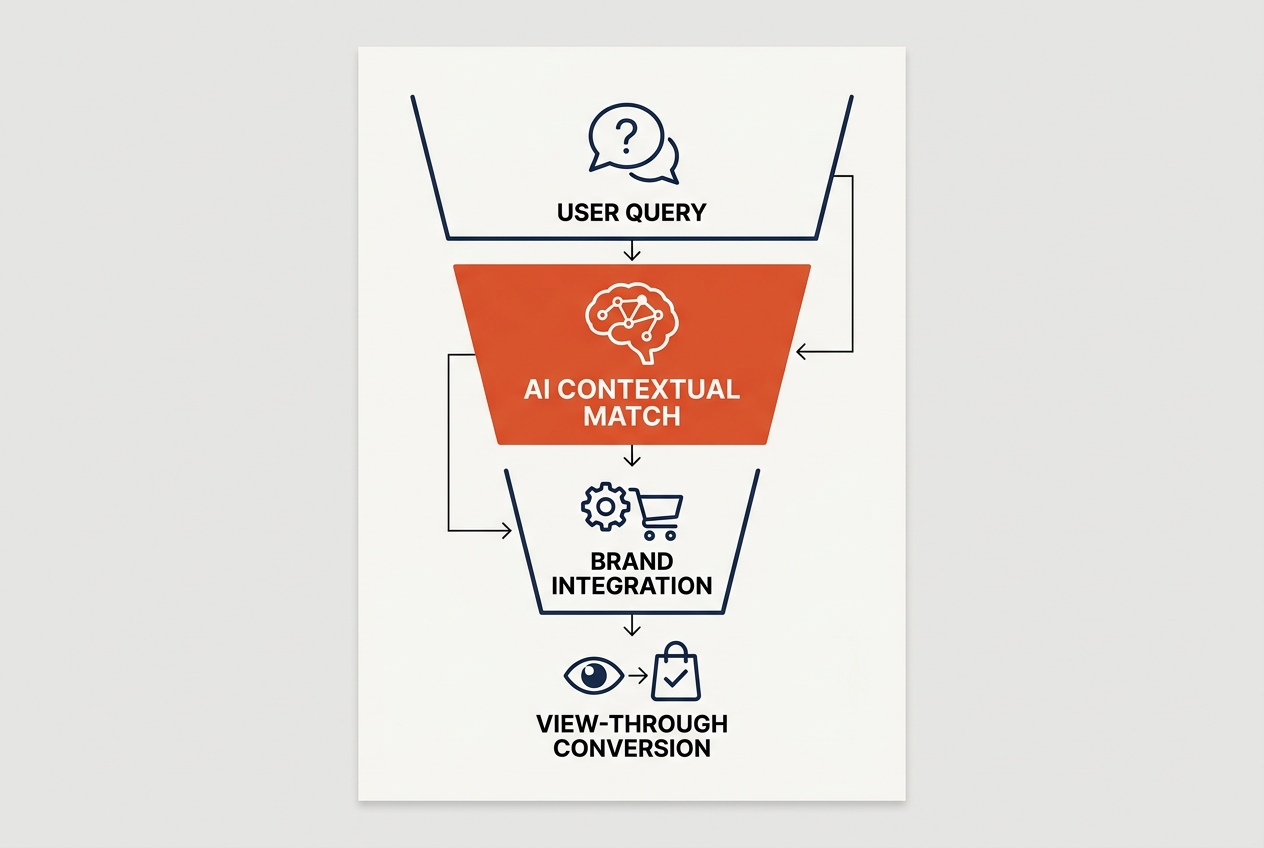
If you are a strategist at a supplement brand, your creative isn't just a photo of the bottle. It’s a set of data points that the AI can use to answer questions like "What's the best way to improve my gut health?" or "Are gummy vitamins effective?" [S3]. The "ad" is the information. If the automated bidding system sees that your brand’s information leads to a high VTC rate, it will bid more aggressively for those specific types of health-related queries.
This requires a radical shift in how we think about "ad creative." We are moving toward a world of "Structured Brand Data." Agencies that specialize in this—like those mentioned in recent Manila Times reports [S4]—are already pivoting to offer "AI Optimization" services that ensure a brand’s values and product specs are correctly ingested by large language models. It’s SEO, but for the latent space of an LLM.
What U.S. buyers should do right now
While the full automated suite is currently limited to the LATAM pilot and select U.S. enterprise partners, the global rollout is expected before the Q4 holiday season. U.S. buyers should not wait for the general release to prepare.
- Audit your "AI Readability": Use tools to see how ChatGPT currently describes your brand. If the AI doesn't "know" your unique selling points, your future ads will underperform regardless of your budget.
- Prepare for a CPM Spike: As automated bidding goes live globally, the cost of entry will rise quickly. Early adopters in the LATAM pilot are seeing lower costs now, but that window is closing.
- Diversify Attribution: Don't rely solely on OpenAI's view-through data. Ensure your UTM structures are robust and that you have a way to track "How did you hear about us?" surveys to capture the conversational lift.
OpenAI is no longer a research lab; it is a media company. The LATAM rollout proves they have the infrastructure to handle complex global auctions. For the social media practitioner, the task is now to master a new language of marketing—one where the algorithm doesn't just show an ad, but explains why the brand is the right choice.
[INTERNAL: The rise of AI-driven attribution models -> ai-attribution-2026]
Future Outlook: The Convergence of Search and Social
The most interesting aspect of the ChatGPT ads expansion is how it blurs the line between search and social. A search is an intent; a social feed is a discovery. ChatGPT is both. You go there with a question (search), but the follow-up suggestions and conversational flow lead you to discover new things (social).
By adding automated bidding, OpenAI is effectively creating a hybrid marketplace. We expect to see Meta respond by further integrating Llama-based conversational elements into Instagram DMs for businesses. The battle for the "conversational layer" of the internet has begun, and the LATAM pilot is just the opening salvo. Marketers who ignore this shift risk being left behind in a landscape where the most valuable ad placement isn't a banner or a video, but a trusted recommendation in a private chat.

As we look toward the end of 2026, the question won't be whether you are running ChatGPT ads, but how much of your automated budget is being diverted from traditional social to these new conversational hubs. The data from the current expansion suggests the answer will be "a significant amount."
FAQ