
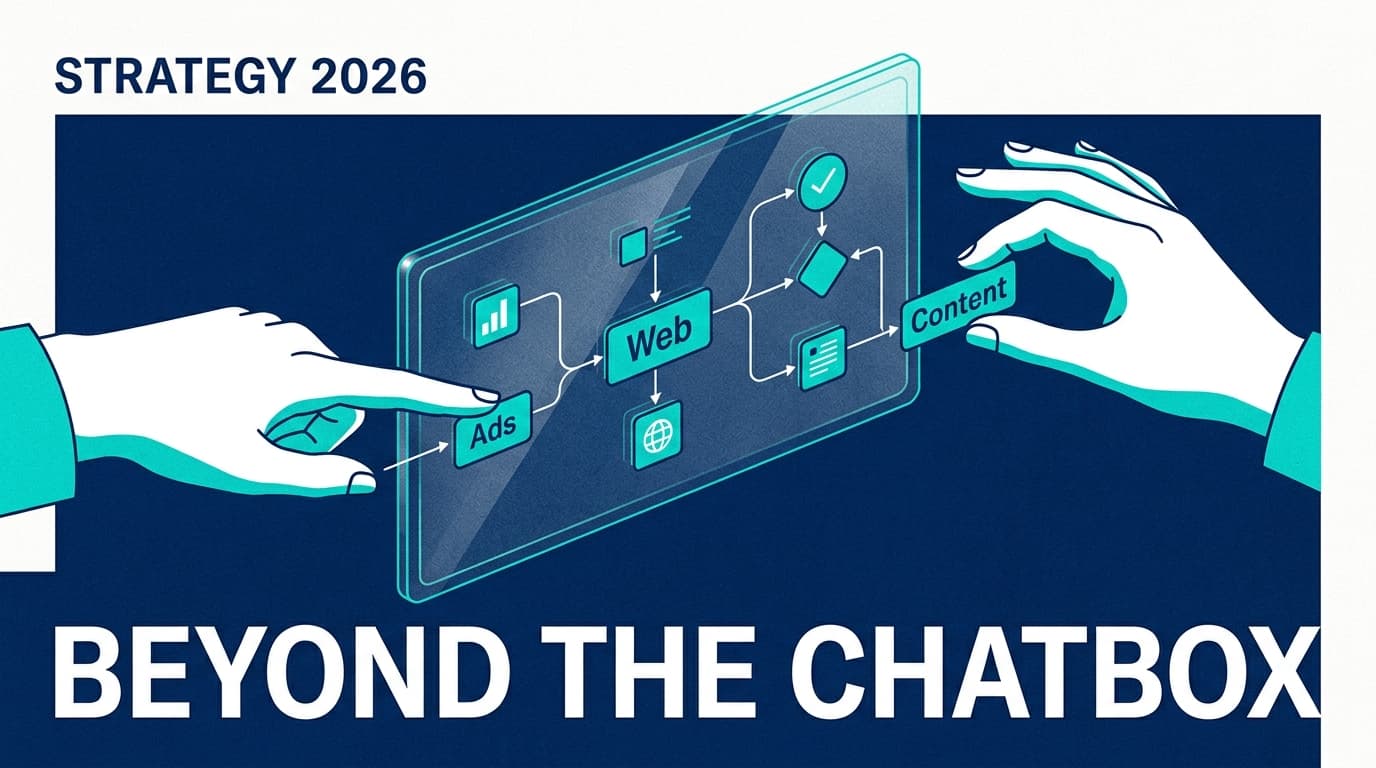
The era of the 'chatbox as an assistant' is ending. If you're still just using ChatGPT to draft captions or brainstorm blog titles, you're working at a 2023 pace in a 2026 market. The shift toward agentic AI—systems that don't just talk but actually execute tasks across different environments—has fundamentally changed the role of the social media manager and the performance buyer.
Why it matters: In a landscape where TikTok’s ownership remains a volatile variable and platforms like Instagram are increasingly relying on aggressive, often flawed AI moderation (as seen in recent reports of legacy content being incorrectly flagged for nudity), marketers need tools that offer control and execution, not just suggestions. We are seeing a move from 'AI-assisted' to 'AI-operated' workflows.
TL;DR
- Claude AI has overtaken ChatGPT for technical marketing tasks like website cloning and deployment.
- Specialized agents are now handling the heavy lifting of TikTok ad bid management and creative iteration.
- Workflow automation is shifting from Zapier-style triggers to autonomous decision-making loops.
1. Anthropic’s Claude: The New Gold Standard for Technical Execution
While OpenAI’s GPT-4o remains a capable generalist, Anthropic’s Claude (specifically the 3.5 Sonnet and 3.7 Opus models) has become the preferred choice for marketers who need to bridge the gap between a creative brief and a live URL. The standout feature here isn't just the large context window—it's the 'Artifacts' UI and the model's superior coding logic.
Recent practitioner feedback highlights a specific shift: marketers are using Claude to clone existing Webflow sites, modify them for specific landing page tests, and deploy them directly to Vercel in under ten minutes. This eliminates the $50-$100/hour freelancer cost for simple front-end iterations. Unlike ChatGPT, which often requires multiple prompts to fix broken CSS, Claude’s agentic approach to code generation tends to produce production-ready results in a single shot.
For a social media manager, this means the ability to spin up a custom link-in-bio page or a high-converting lead magnet site without waiting on the dev team. It isn't just about writing the copy; it's about the agent building the container the copy lives in.
Best for: Social media managers and growth hackers who need to deploy technical assets (landing pages, scrapers, custom calculators) without a developer.
2. YATOP: The Specialized TikTok Ad Agent
As the TikTok ecosystem becomes more complex—evidenced by Youxin Technology’s recent $10.8 million investment in TikTok partner YATOP—the need for dedicated execution agents has spiked. YATOP doesn't just suggest which videos might perform well; it functions as an autonomous performance buyer.
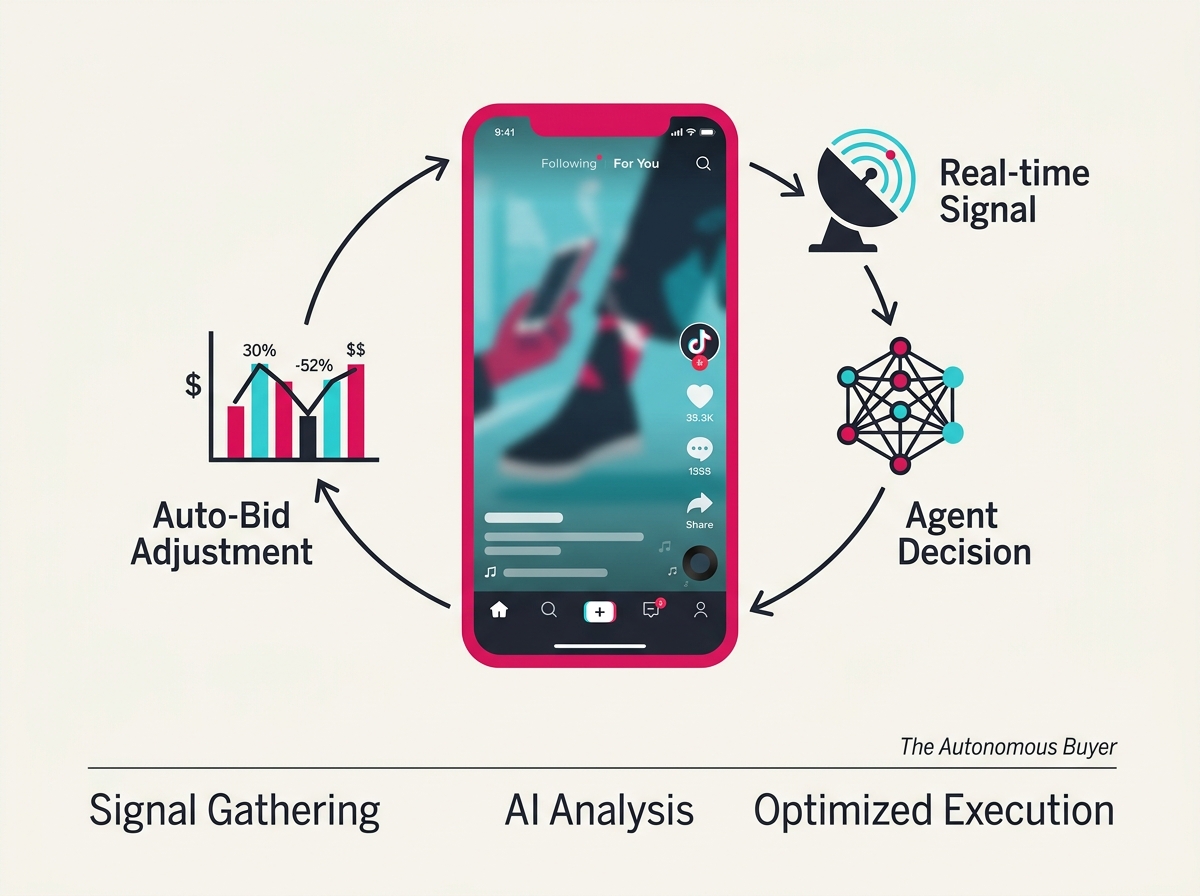
These types of agentic tools connect directly to the TikTok Ads Manager API. They monitor real-time signals like ROAS and thumb-stop rates, then autonomously adjust bids or swap out creative assets based on pre-set guardrails. In an environment where TikTok whiplash is a real concern for 2026 budgets, having an agent that can pivot spending across regions or audiences in milliseconds is a massive competitive advantage.
We're seeing a trend where agencies are no longer hiring junior media buyers to monitor dashboards. Instead, they are hiring 'agent orchestrators' who set the strategy for tools like YATOP to execute. This is a fundamental shift in the labor economy of paid social.
Best for: Performance marketing agencies and high-spend brand teams looking to automate TikTok bid management and creative testing.
3. Brandwatch with AI Autopilots: Social Listening That Acts
Social listening used to be a passive activity—you’d get a report on Friday about what happened on Tuesday. Agentic integration within platforms like Brandwatch has changed that. The new 'Autopilot' features don't just cluster topics; they can be programmed to trigger specific responses or alerts based on sentiment shifts.
For example, if a brand's legacy content is caught in an Instagram moderation sweep (a recurring issue in mid-2026), an agentic social listener can immediately identify the spike in 'content removed' complaints, draft a support ticket with the necessary metadata, and alert the legal team. This moves beyond 'monitoring' into 'incident response.'
How social listening tools are evolving. The value is no longer in the data visualization; it's in the autonomous triage. If your tool isn't suggesting—and then executing—the next step in a crisis, it’s already obsolete.
Best for: Enterprise social media managers and PR teams who need to manage brand reputation at scale across fragmented platforms.
4. Relevance AI: Building Your Own Marketing Agent Workforce
If Claude is a Swiss Army knife, Relevance AI is the factory that builds the knives. This platform allows marketers to create 'low-code' agents that handle multi-step workflows. A common use case we’re seeing in 2026 is the 'Content Repurposing Agent.'
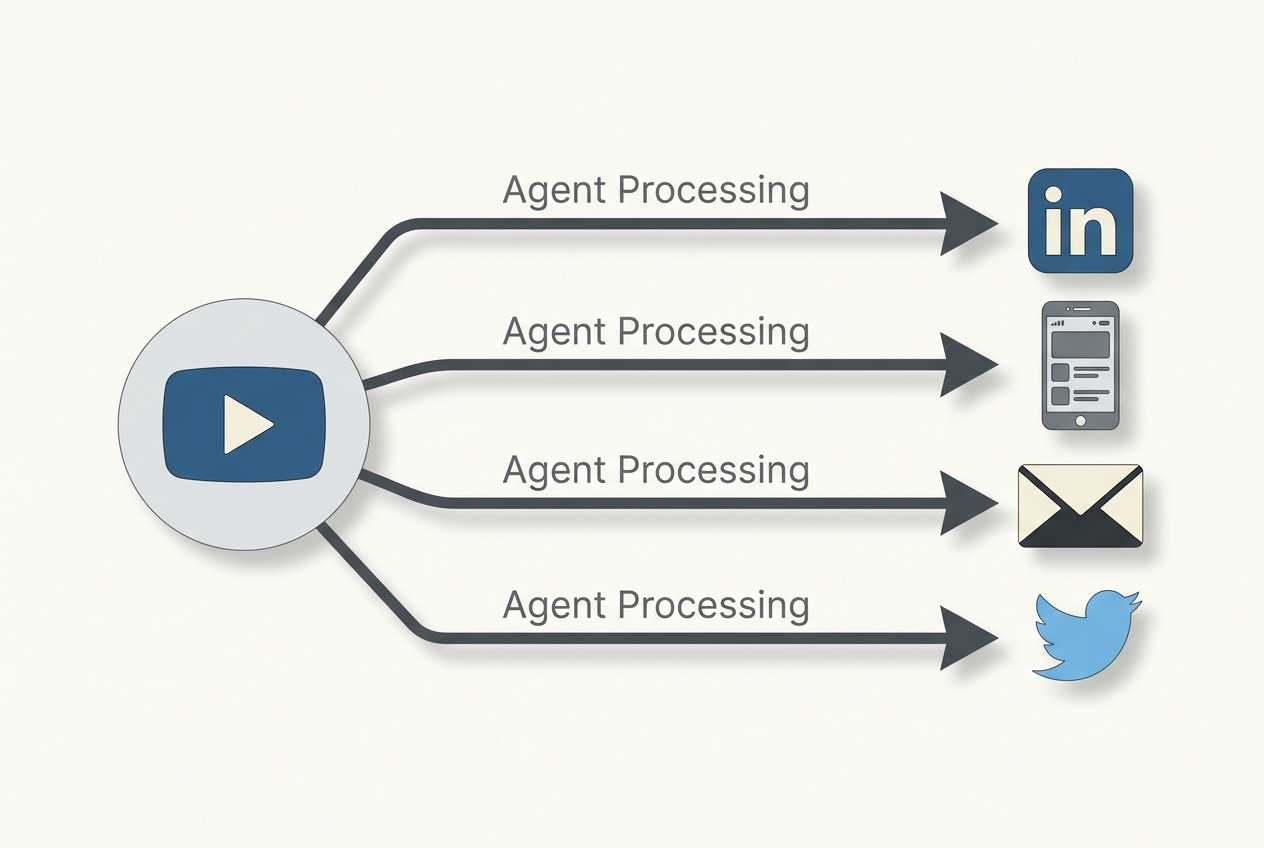
A user drops a YouTube URL into the agent. The agent then:
- Transcribes the video.
- Identifies the top 3 'viral' hooks.
- Edits the video into vertical shorts (using integrated APIs like HeyGen or Captions).
- Writes the platform-specific captions for LinkedIn, X, and TikTok.
- Schedules them in a tool like Sprout Social or Buffer.
This isn't just a sequence of triggers; the agent makes qualitative decisions about what constitutes a 'hook' based on your brand's historical performance data. It is the pinnacle of AI marketing automation workflows. By moving the decision-making from the human to the agent, a single creator can now manage the output of what used to be a five-person agency team.
Best for: Full-time creators and lean marketing teams who need to scale content production without increasing headcount.
5. Perplexity Pages: The SEO Content Executioner
Perplexity has moved from a search engine to a content creation powerhouse with 'Pages.' For SEO and social strategists, this tool acts as an agent that researches, structures, and publishes high-authority content.
The 'agentic' part comes in the research phase. Unlike ChatGPT, which may hallucinate or rely on outdated training data, Perplexity’s agents browse the live web, cite sources (like recent Digiday reports on TikTok whiplash), and organize the information into a layout that is already optimized for search intent.
For social media managers, this is a tool for rapid authority building. You can take a trending topic on X, run it through a Perplexity Page agent, and have a comprehensive, cited, and formatted article ready for your newsletter or LinkedIn Pulse in three minutes. It solves the 'blank page' problem by providing a research-backed foundation that is 90% ready for publication.
Best for: Content strategists and SEO leads who need to turn trending news into long-form authority content quickly.
The Strategic Shift: Managing Agents Instead of Tasks
Adopting these tools requires a mental shift. You are no longer the person doing the work; you are the manager of the entities doing the work. This requires a different set of skills: prompt engineering, API literacy, and strategic oversight.
As platforms like Instagram continue to struggle with automated moderation—sometimes removing deeply personal, non-violating content—the human element must shift toward advocacy and high-level strategy. You use the agents to handle the volume so you can handle the exceptions.
In 2026, the competitive edge doesn't go to the person who writes the best prompts. It goes to the person who builds the most robust agentic workflows. Whether it's Claude deploying your code or YATOP buying your ads, the goal is to remove yourself from the repetitive middle and focus on the creative and strategic edges.
What to Watch Next: The Rise of Multi-Agent Systems
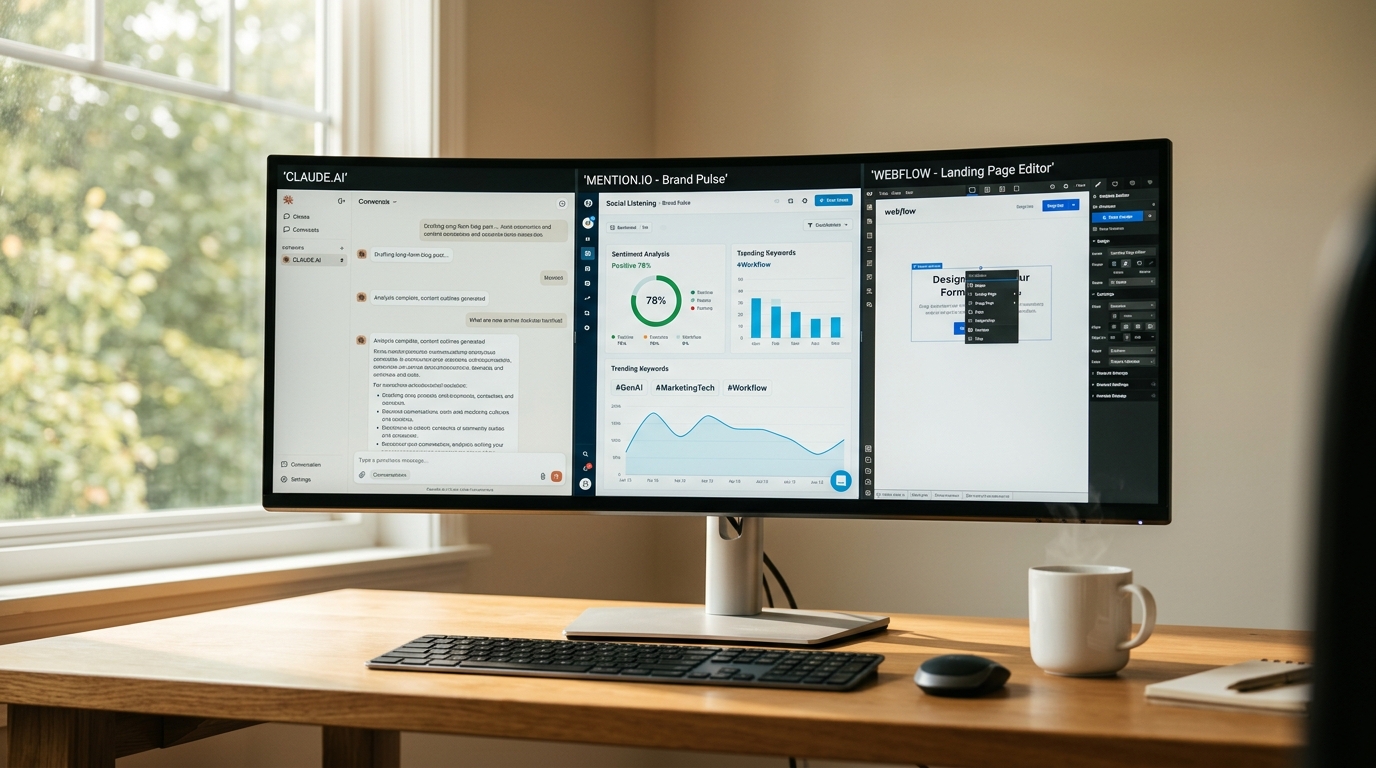
The next frontier is 'Agentic Swarms'—where your TikTok agent talks to your CRM agent, which then informs your Claude-powered landing page agent to change a headline based on the lead quality coming in. We are already seeing the early stages of this in high-spend environments.
To stay ahead, begin by auditing your weekly tasks. Anything that involves moving data from one window to another or making repetitive 'if-this-then-that' decisions is a candidate for an agent. Start small with a tool like Claude for a single deployment, then scale as you gain confidence in the agent's decision-making logic. The bots are no longer just for chatting; they're for doing. Stop talking to them and start putting them to work.
FAQ