
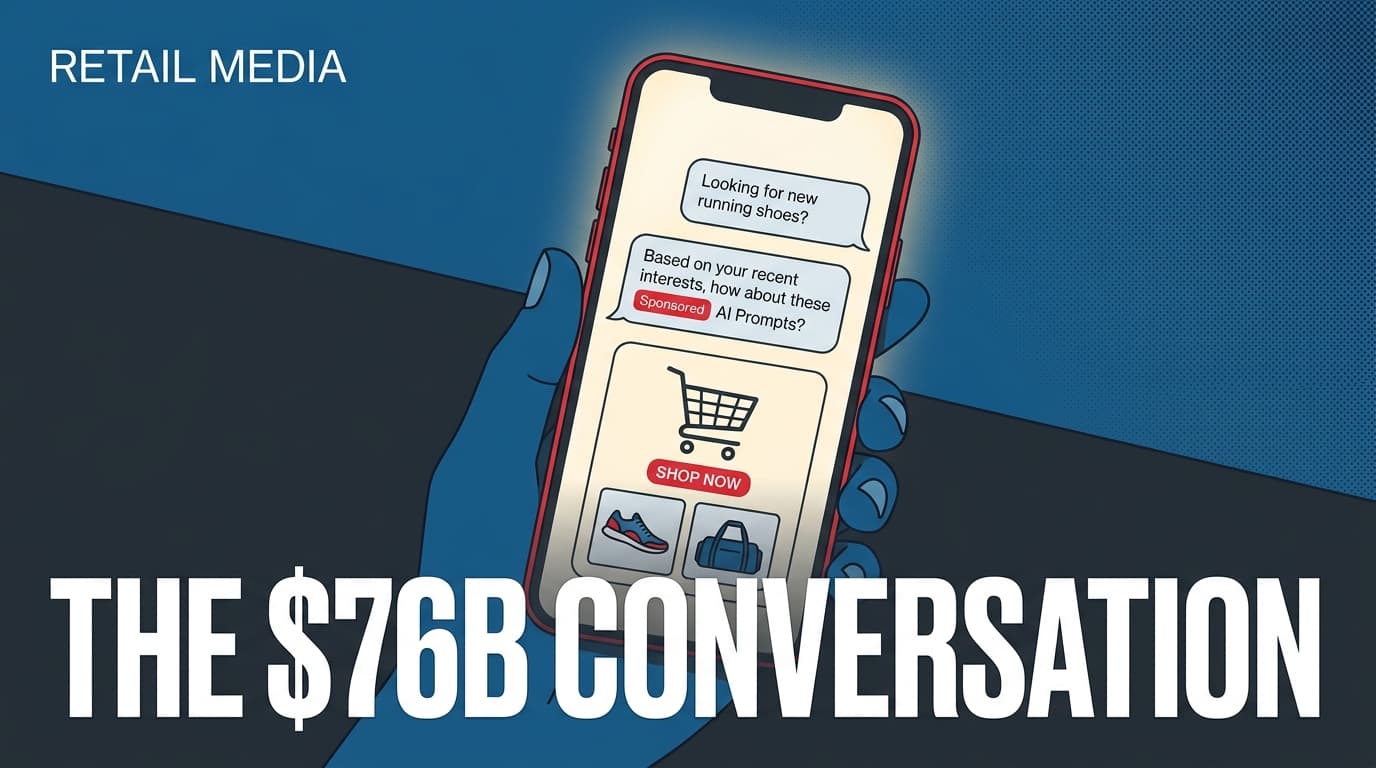
Amazon’s advertising division is projected to reach a staggering $76 billion in annual revenue by the close of 2026, driven by a fundamental shift in how consumers interact with search. The platform’s latest offensive, Sponsored AI Prompts, integrates paid placements directly into Rufus, its generative AI shopping assistant, transforming passive product discovery into a conversational commerce engine.
For social media marketers, this isn't just another line item in the retail media budget. As the wall between social discovery and retail conversion thins—evidenced by recent industry moves like AMZ Advisers’ acquisition of Reach Social Commerce—social buyers are increasingly tasked with managing off-platform retail media. The skill set required to win on TikTok Shop is now the primary prerequisite for winning on Amazon’s AI-driven interface.
The $76B Inflection Point: Why Retail Media is Eating Social Budgets
Amazon’s growth trajectory isn't just about volume; it’s about efficiency. While Meta and TikTok grapple with regulatory scrutiny—such as the recent Indian government inquiry into Meta’s public order impacts—Amazon has built a closed-loop ecosystem where attribution is a feature, not a bug. According to internal projections and market analysis of the platform's Q2 2026 performance, the ad business is growing at a mid-20% clip, significantly outpacing its retail operations.
The shift to Sponsored AI Prompts represents a departure from the traditional grid-of-products search result. In the old model, you bid on "waterproof running shoes." In the new model, your brand pays to be the suggested follow-up when a user asks Rufus, "What do I need for a rainy marathon in Seattle?" This moves the needle from keyword matching to intent-based conversation.
For the social media strategist, this feels familiar. It is essentially a "For You Page" logic applied to a search bar. You aren't just buying space; you're buying relevance within a narrative. As social media strategist salaries continue to climb in 2026, the premium is being placed on those who can navigate these hybrid environments where creative storytelling meets bottom-funnel conversion data.
Adapting Social Creative for the AI Prompt Environment
Social buyers often treat Amazon as a static repository for product shots. That approach is failing in the age of Sponsored AI Prompts. The AI assistant synthesizes reviews, product descriptions, and community Q&A to generate its responses. If your social creative—the videos that went viral on Instagram or the UGC that converted on TikTok—isn't being fed into the Amazon ecosystem via Brand Stories or Premium A+ Content, the AI has nothing to work with.
How to sync TikTok Shop creative with Amazon A+ content
The key is "conversational assets." Instead of high-gloss studio photography, Amazon’s AI thrives on structured data that mirrors human speech. Buyers are now using tools like Sprout Social’s centralized asset libraries to ensure that the messaging used to handle customer inquiries on social is mirrored in the metadata of their Amazon listings. This ensures that when Rufus generates a prompt, it uses the brand's specific voice rather than a generic summary.
The Accessibility Gap in AI-Generated Commerce
As Amazon leans harder into AI-generated interfaces, a significant risk emerges: accessibility. A July 2026 report from AudioEye highlights that while AI is building more of the digital experience, it often carries over existing accessibility gaps. For social buyers, this means that if your Sponsored AI Prompts rely on visual cues or complex interactive elements that aren't properly tagged, you are excluding a portion of the market.
"AI is generating more of the web, and it's carrying the same accessibility gaps with it," the AudioEye report notes. Marketers have the leverage to close these gaps by demanding that platform tools prioritize inclusive design. In the context of Amazon, this means ensuring that the alt-text for product images and the captions for video ads are robust enough for the AI to parse correctly for visually impaired users. If the AI can't "see" the benefit of your product, it won't prompt it.
Managing the Multi-Platform Workflow
We are seeing a consolidation of tools to handle this complexity. Platforms like Sprout Social have introduced features to help teams move at the "speed of social" without juggling disconnected tools. For a social buyer managing an Amazon budget, the ability to see social sentiment and retail performance in one dashboard is no longer a luxury; it’s a requirement for survival.
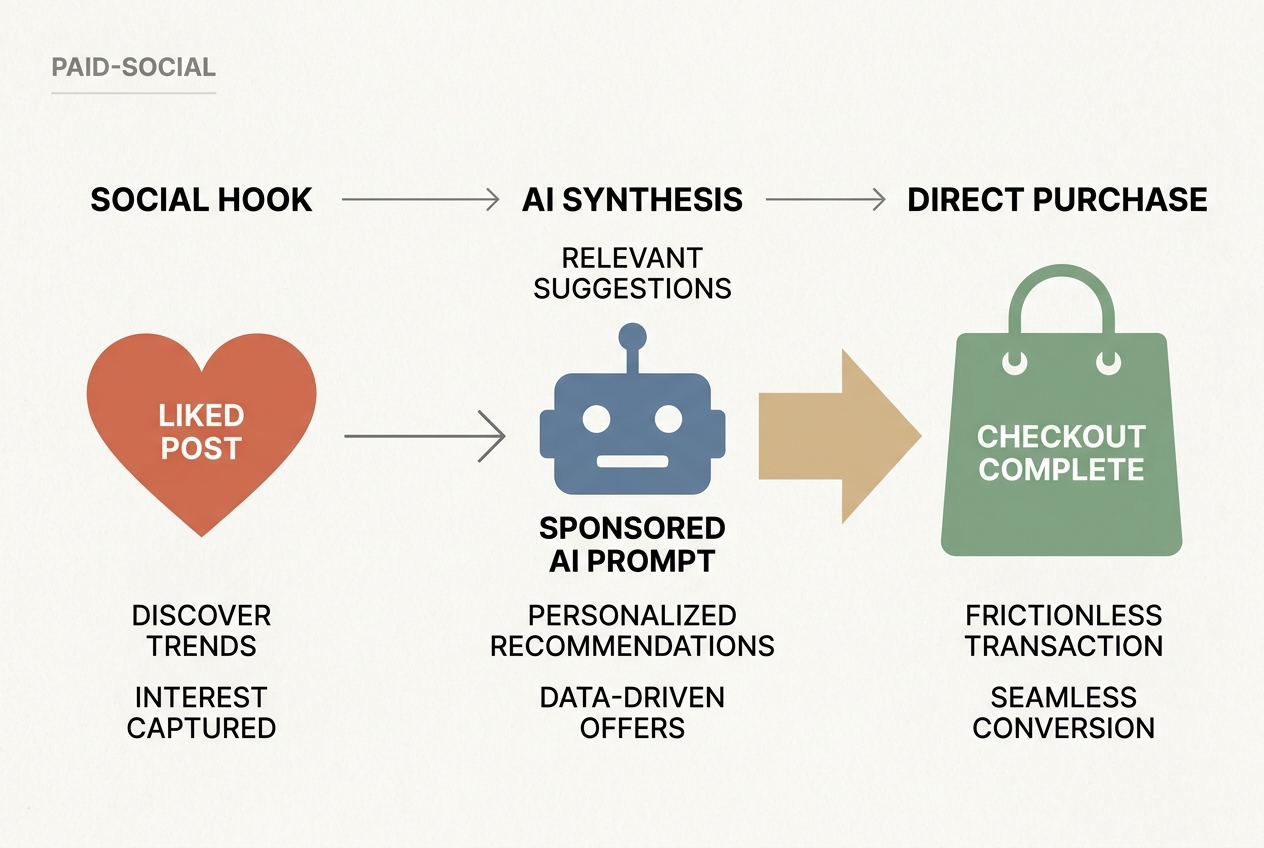
Consider the workflow: A trend spikes on X (formerly Twitter) or Threads. Historically, the social team would make a post, and the Amazon team would never hear about it. In 2026, that trend data should immediately trigger a bid adjustment on specific Sponsored AI Prompts. If "quiet luxury" is trending, your AI prompt bids for neutral-toned home goods should scale instantly. This is the "Social-to-Shelf" pipeline that the $76B juggernaut is designed to exploit.

The Competitive Collision: TikTok Shop vs. Amazon Rufus
The acquisition of Reach Social Commerce by AMZ Advisers is the loudest signal yet that the industry views Amazon and TikTok as two sides of the same coin. TikTok is moving down-funnel with its fulfillment centers; Amazon is moving up-funnel with Rufus and social-style feeds like Inspire.
Social buyers must now decide where the first dollar goes. Amazon offers the intent, but TikTok offers the spark. The most successful strategies we’ve seen in H1 2026 involve using social media to test creative hooks at a lower CPM, then moving the winning "hooks" into the Amazon Sponsored AI Prompt metadata. You aren't just guessing what the AI will find relevant; you are proving it on social first.
What to Watch: The Future of Conversational Bidding
Looking ahead to the final quarter of 2026, we expect Amazon to roll out "Voice-First Prompts" for Alexa, further integrating the Sponsored AI Prompt playbook into the home. For the media buyer, this introduces a new variable: phonetics. How does your brand sound when spoken by an AI?
[INTERNAL: The rise of voice-search optimization in retail media -> voice-commerce-strategy]
We also anticipate a tightening of the relationship between Amazon Marketing Cloud (AMC) and social signals. The ability to upload social engagement audiences into AMC to refine who sees your Sponsored AI Prompts will be the ultimate competitive advantage. If you can target a user on Amazon who has already liked three of your Reels, the conversion isn't just likely—it's nearly guaranteed.
Stop thinking of Amazon as a search engine. Start thinking of it as the world’s largest moderated conversation about what to buy. Your job is to make sure your brand is the most helpful participant in that talk.
FAQ